Summary
Biography
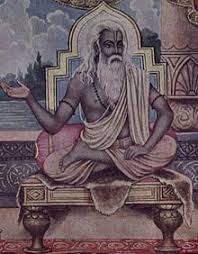
Sage Vyasa, also known as Vedavyasa, is one of the most revered sages in Hinduism and holds a central position in the religious, philosophical, and literary traditions of the religion. Vyasa is credited with the monumental task of compiling the Vedas, composing the epic Mahabharata, and composing the Puranas, which include narratives on the creation of the world, genealogies of gods and sages, and instructions for moral living. He is considered one of the greatest scholars and spiritual leaders in Hindu tradition, known for his immense contribution to preserving and disseminating the sacred texts that form the foundation of Hinduism.
Birth and Lineage:
Vyasa’s birth story is unique and rooted in both mythological and historical significance. He was born to the sage Parashara and the fisherwoman Satyavati, making his lineage both divine and earthly. Vyasa’s birth is a product of a divine union, as his father, Parashara, was a great sage, and his mother, Satyavati, later became the queen of Hastinapura. The birth of Vyasa was marked by auspicious circumstances, and he is often said to have been born with great wisdom and spiritual power, predestined to play a vital role in the preservation of ancient knowledge.
Vyasa’s name, Vedavyasa, means "the compiler of the Vedas," and this title reflects his primary role in organizing and preserving the sacred texts that constitute the foundation of Hinduism. He is regarded as a rishi who is both a direct contributor to the Vedas and a figure who helped shape and spread their teachings.
Vyasa and the Compilation of the Vedas:
Vyasa’s most significant contribution to Hinduism is his role in compiling the four Vedas: Rigveda, Yajurveda, Samaveda, and Atharvaveda. According to Hindu tradition, the Vedas were originally passed down orally, and they were vast and complex, consisting of hymns, rituals, and philosophical discussions. Vyasa’s task was to divide these large texts into smaller, more manageable sections to make them accessible for study and recitation.
Each of the four Vedas was divided into four parts—Samhitas (hymns), Brahmanas (rituals), Aranyakas (theological discussions), and Upanishads (philosophical teachings)—and Vyasa is credited with establishing this systematic approach to the preservation and transmission of sacred knowledge. This effort to organize the Vedic knowledge into sections ensured its continued existence for future generations and cemented Vyasa's legacy as the preserver of Vedic wisdom.
Vyasa and the Mahabharata:
Vyasa is perhaps most famous as the author of the Mahabharata, one of the two great Indian epics (the other being the Ramayana by Sage Valmiki). The Mahabharata is a monumental epic that narrates the history of the Kuru dynasty, focusing on the conflict between the Pandavas and Kauravas, culminating in the great battle of Kurukshetra. It is a vast and intricate work that contains not only stories of kings, warriors, and sages but also important philosophical discourses, including the Bhagavad Gita, which is considered one of the most significant texts in Hinduism.
The Mahabharata is much more than just a story of war; it is a comprehensive work that discusses ethics, morality, dharma (righteousness), karma (action), devotion, and the pursuit of self-realization. Vyasa is credited with being the author of this epic, and his role as a sage who both composed and dictated this work highlights his deep wisdom and spiritual insight.
The Mahabharata spans approximately 100,000 verses and is considered the longest epic poem ever written. Vyasa is believed to have recited it to his disciple Ganesha, the elephant-headed god, who wrote down the epic as Vyasa narrated it. The Mahabharata is not only a literary masterpiece but also a treasure trove of philosophical teachings, providing timeless wisdom on human nature and the divine.
Vyasa and the Creation of the Puranas:
Vyasa’s contributions to Hindu literature and spirituality extend beyond the Vedas and the Mahabharata. He is also credited with composing the Puranas, a genre of texts that narrate the stories of gods, goddesses, heroes, sages, and cosmic events. The Puranas serve as important sources of mythology, cosmology, and theology and are widely revered in Hindu tradition.
Vyasa is believed to have compiled the Puranas to make the teachings of the Vedas more accessible to the common people. The Puranas are written in a more narrative style, with stories that explain the moral principles and cosmic order outlined in the Vedas. Some of the most well-known Puranas include the Vishnu Purana, Shiva Purana, Bhagavata Purana, and Markandeya Purana.
In addition to creating the Puranas, Vyasa is also said to have authored several other texts that outline rituals, ethics, and teachings for the betterment of humanity. He is often regarded as the figure responsible for consolidating the diverse strands of Hindu knowledge and preserving them for future generations.
Vyasa and His Spiritual Legacy:
Vyasa’s spiritual legacy is profound, not only because of his intellectual contributions but also because of his role as a spiritual teacher and guide. Vyasa is depicted as an immortal figure who has transcended the limitations of time, having attained the highest form of spiritual knowledge and realization. His wisdom is said to have been passed down through generations of disciples, and his teachings continue to form the basis for many aspects of Hindu philosophy and practice.
Vyasa’s teachings emphasize the importance of dharma (righteousness), karma (action), and bhakti (devotion). In the Mahabharata, he is depicted as a wise sage who provides counsel to the Pandavas, particularly during their time of exile and the preparations for war. His role as an advisor to the kings and heroes in both the Mahabharata and the Puranas highlights his deep understanding of the moral complexities of life and the importance of living in accordance with divine principles.
Vyasa’s Connection to the Bhagavad Gita:
One of the most significant spiritual teachings associated with Vyasa is the Bhagavad Gita, which forms a part of the Mahabharata. The Gita is a dialogue between Prince Arjuna and Lord Krishna, and it addresses the key philosophical questions of life, duty, and the nature of the self. Vyasa is regarded as the compiler and transmitter of this conversation, and his teachings in the Mahabharata serve as a foundation for understanding the Gita's message.
The Bhagavad Gita explores the concept of selfless action (karma yoga), devotion (bhakti yoga), and the pursuit of knowledge (jnana yoga). These teachings continue to be a source of inspiration for millions of Hindus and spiritual seekers around the world, and Vyasa's role in preserving and transmitting these teachings underscores his central importance in Hindu philosophy.
Vyasa’s Legacy and Influence:
Vyasa’s legacy is vast and enduring. As the compiler of the Vedas, author of the Mahabharata, and creator of the Puranas, he is regarded as the figure who preserved and codified the vast body of Hindu knowledge. His contributions have shaped the very foundation of Hinduism, influencing religious practices, philosophy, and culture for millennia.
Vyasa’s teachings continue to inspire scholars, practitioners, and spiritual seekers who look to the Vedic texts, the Mahabharata, and the Puranas for wisdom and guidance. His emphasis on the importance of dharma, devotion, and spiritual wisdom has left a lasting impact on Hindu thought and continues to resonate in the lives of millions of people today.
Conclusion:
Sage Vyasa, also known as Vedavyasa, is one of the most important figures in Hindu tradition. His monumental contributions—compiling the Vedas, authoring the Mahabharata, and creating the Puranas—have shaped Hinduism as we know it. Vyasa’s deep spiritual wisdom, his role as a teacher and advisor, and his dedication to preserving sacred knowledge have made him a central figure in the preservation and transmission of Hindu scriptures. Vyasa’s legacy continues