Summary
Biography
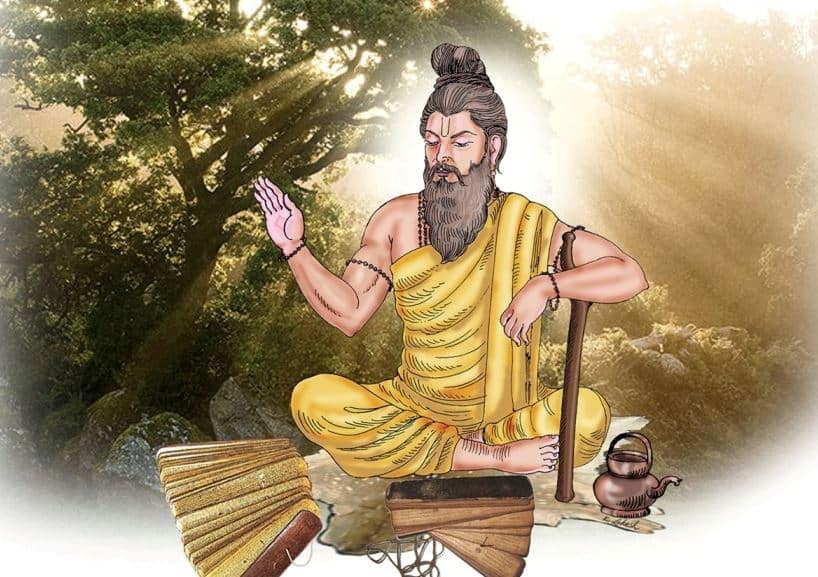
Rishi Gautama is one of the revered sages in Hindu tradition, known for his immense contributions to spiritual knowledge and the establishment of dharma through his teachings. He is closely associated with the Gautama Dharma Sutras, which are considered important texts for the study of the ethical and moral code in Hinduism. Gautama's life, spiritual practices, and philosophical teachings have greatly impacted the development of Hindu dharma (righteousness) and are integral to the Vedic tradition.
Birth and Lineage:
Rishi Gautama is regarded as one of the ancient sages of Vedic India. He is believed to have been a descendant of the great sage Bhrigu, one of the Saptarishi, the seven great sages of Hindu mythology. Gautama's life and teachings were rooted in the principles of dharma, karma, and yajna (sacrifice). As a scholar, he was deeply devoted to studying the sacred scriptures, particularly the Vedas, and through his spiritual discipline, he attained profound wisdom and insight.
Gautama's lineage and teachings contributed significantly to the philosophical and ritualistic traditions that form the foundation of Hinduism. He is mentioned in various Vedic texts, and his name is associated with several important rituals and practices.
The Gautama Dharma Sutras:
Rishi Gautama is primarily credited with composing the Gautama Dharma Sutras, a set of texts that focus on the moral and ethical duties of individuals within society. These sutras are one of the most important texts in the Smriti literature, which deals with codes of conduct and law. The Gautama Dharma Sutras provided guidance on various aspects of life, such as rituals, dharma, social obligations, and personal morality.
The Sutras emphasize the importance of living in accordance with dharma (righteousness) and provide detailed instructions on how individuals should conduct themselves in various stages of life. This includes rituals for marriage, family life, social duties, and the pursuit of spiritual wisdom. Gautama’s work in codifying these principles helped shape the social and spiritual fabric of Hindu society, ensuring that future generations had a clear path to follow in accordance with divine principles.
The Gautama Dharma Sutras also emphasized the role of women, the importance of purity in thought and action, and the sacredness of the Vedic rituals. They became a guiding text for those seeking to understand the ethical duties that govern both individual lives and society at large.
Gautama and Ahalya:
Rishi Gautama’s personal life, particularly his relationship with his wife Ahalya, plays an important role in Hindu mythology, especially in the Ramayana. Ahalya is known for her tragic story of being cursed by her husband due to a misunderstanding involving the god Indra.
According to the legend, Ahalya was a woman of extraordinary beauty and wisdom. She was the wife of Gautama, and the couple lived in a secluded ashram. One day, Indra, the king of the gods, lusted after Ahalya and disguised himself as her husband Gautama to seduce her. When Gautama returned and discovered the deception, he became enraged. He cursed Ahalya, turning her into stone, a curse that could only be lifted by Lord Rama, the incarnation of Vishnu.
Ahalya’s story is famous for its themes of temptation, punishment, and redemption. While the curse was harsh, Ahalya's eventual redemption by Rama symbolizes divine mercy and the power of righteousness. Gautama’s reaction, while severe, was rooted in his strict adherence to dharma and the protection of marital fidelity. However, the eventual clearing of Ahalya's curse by Lord Rama highlights the triumph of virtue and the possibility of redemption for all beings.
This story is significant not only in the Ramayana but also in demonstrating Gautama’s role in upholding dharma and the moral complexities of human life. It also underscores the idea of divine justice, as Rama’s intervention in freeing Ahalya is seen as an act of restoring purity and virtue.
The Role of Gautama in Hindu Scriptures:
Rishi Gautama is mentioned in several major Hindu scriptures, including the Mahabharata, Ramayana, and the Puranas. In the Mahabharata, he is often cited as a sage of great wisdom who contributed to the development of Hindu philosophy and dharma. He is also associated with several hymns in the Rigveda, where his spiritual teachings on morality and justice are reflected.
Gautama’s spiritual insights are also referenced in the context of the early stages of the Karma philosophy, where the focus is on performing righteous actions in accordance with divine law. His teachings highlight the importance of doing one's duty, adhering to the codes of dharma, and maintaining purity of thought and action.
In the Ramayana, Gautama’s association with Ahalya’s story emphasizes his role as a teacher of moral integrity, as his actions set in motion the events that ultimately lead to Ahalya's redemption through the grace of Lord Rama.
The Legacy of Rishi Gautama:
Rishi Gautama’s legacy in Hinduism is marked by his contributions to the ethical and legal aspects of dharma, as well as his role in the stories that form the bedrock of Hindu mythology. The Gautama Dharma Sutras remain a key text for understanding the moral and ethical codes that shape Hindu society, especially in terms of duties, social obligations, and personal conduct.
Additionally, his story with Ahalya brings forward the themes of divine justice and redemption, important concepts in Hindu thought. Gautama’s life and work underscore the idea that dharma can sometimes involve harsh decisions, but that ultimate redemption is always possible through divine intervention and spiritual progress.
Conclusion:
Sage Rishi Gautama is a central figure in Hindu mythology and philosophy, known for his contributions to the Gautama Dharma Sutras, which have shaped the moral framework of Hindu society. His life is intertwined with the legend of his wife Ahalya, whose curse and subsequent redemption at the hands of Lord Rama form a key story in the Ramayana. Gautama’s teachings on dharma, ethics, and social obligations continue to influence Hindu thought and practice, making him an important figure in the preservation and transmission of Vedic knowledge and Hindu law. Through his life, Gautama embodies the balance between strict adherence to dharma and the mercy that comes with divine grace and redemption.