Summary
Biography
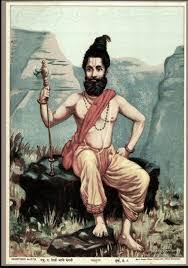
Sage Jamadagni is a revered figure in Hindu mythology, known for his fiery temper and incredible spiritual prowess. He is most famous for being the father of Parashurama, one of the ten avatars of Lord Vishnu, and for his legendary role in several important mythological stories. Jamadagni’s life is full of significant events that illustrate the complex and sometimes violent nature of the world of the Vedic sages.
Birth and Lineage:
Jamadagni was born to the great sage Richika and Satyavati. His family was known for its deep spiritual wisdom and adherence to dharma (righteousness). He belonged to the lineage of the Angirasas, a clan of highly revered sages, known for their knowledge of rituals and the divine. From a young age, Jamadagni was blessed with great intellectual capacity and was trained in the ancient scriptures, mantras, and rituals by his father.
Jamadagni’s family was also closely associated with Vedic traditions, and they were well-versed in performing sacrifices (yajnas) and other religious rites. This divine heritage made Jamadagni an exceptionally powerful and knowledgeable sage.
Jamadagni’s Fiery Temper and Spiritual Prowess:
While Jamadagni was revered for his knowledge and spiritual powers, he was also known for his fierce and sometimes uncontrollable temper. His temperament played a crucial role in many of his actions, which often had far-reaching consequences. His fiery nature was not just a symbol of anger but also a reflection of his intense devotion to dharma and his dedication to the protection of sacred knowledge.
Jamadagni was a master of many powerful mantras and had the ability to perform extraordinary feats. One of the most notable powers he possessed was the ability to invoke divine weapons, including the Axe (Parashu), which was used by his son Parashurama. This weapon became an emblem of Parashurama’s avatar of vengeance and justice.
The Birth of Parashurama:
Jamadagni is most famous for being the father of Parashurama, who is one of the ten avatars of Lord Vishnu. Parashurama was born to Jamadagni and his wife, Renuka, who was known for her purity and devotion. According to legend, Renuka was the daughter of King Prasenajit and was known for her deep spiritual insight.
When Parashurama was born, it is said that Jamadagni, as a sage, performed intense penance to invoke the divine axe (Parashu) and imparted it to his son. The weapon, gifted by Lord Shiva, became the tool through which Parashurama would fulfill his mission of eradicating the evil Kshatriyas from the earth.
The Conflict with King Kartavirya:
One of the most significant stories involving Jamadagni is his conflict with King Kartavirya Arjuna, a powerful Kshatriya ruler known for his 1,000 arms, who was a devotee of Lord Dattatreya. King Kartavirya visited Jamadagni's ashram, and during his visit, he demanded the cow Kamadhenu, which was a divine cow capable of fulfilling any wish.
Jamadagni, being a sage of immense power, offered King Kartavirya the cow, but the king, with his excessive pride, took the cow and left. Upon returning, Jamadagni became enraged, not only because his valuable cow was taken but also due to the insult to his family’s honor. In a fit of rage, Jamadagni instructed his sons to get the cow back from Kartavirya, but when the king refused to return it, Jamadagni cursed him.
This led to a confrontation between Jamadagni and King Kartavirya, who ultimately had Jamadagni killed while he was meditating in his ashram. This act sparked a series of events that led to the famous legend of Parashurama, who avenged his father’s death.
Parashurama’s Revenge:
After the murder of Jamadagni, Parashurama, with his divine axe (Parashu), took on a vow of vengeance and began a campaign to rid the earth of corrupt and evil Kshatriyas, as they were responsible for his father's death. This act of revenge, while violent, is said to have been a means of restoring dharma (righteousness) in the world.
Parashurama, with his fierce resolve, is said to have wiped out the entire Kshatriya race several times, making him a figure both of immense power and righteousness. His mission was to restore balance in the world and ensure that the forces of evil would not dominate the righteous.
Jamadagni’s Role in the Vedas and Religious Practices:
Sage Jamadagni, despite his fiery nature, is remembered as a great teacher and a master of Vedic rituals and yajnas. His deep knowledge of the sacred texts and his ability to invoke divine powers made him a respected figure among other sages. His family, particularly his son Parashurama, is said to have carried forward his legacy, establishing important rituals and practices that were instrumental in shaping the religious traditions of Hinduism.
Jamadagni is also credited with helping establish the traditions of sacrifice and the importance of ritual purity in Vedic practices. His role as a teacher of martial arts and his association with divine weapons contributed to the military aspect of the Hindu warrior culture, which was integral to the protection of dharma.
Jamadagni’s Legacy:
Sage Jamadagni’s legacy, though often overshadowed by his son Parashurama’s acts of vengeance, remains significant in the history of Hinduism. Jamadagni is remembered for his intense devotion to dharma, his spiritual power, and his role in the creation of the warrior-ascetic tradition.
He is revered as a sage who exemplified the delicate balance between anger and wisdom, destruction and creation. His story is a reminder of the complexities of righteous anger and the importance of devotion to one’s dharma, even in times of adversity.
Jamadagni’s legacy is also tied to the great contributions his family made to the spiritual and martial traditions of ancient India, with Parashurama carrying forward his father's teachings on the importance of defending dharma through both spiritual and physical means.
Conclusion:
Sage Jamadagni is a legendary figure in Hindu mythology, known for his fiery temper, great spiritual powers, and deep wisdom. As the father of Parashurama, he played an integral role in shaping the narrative of the Kshatriya warrior tradition and in establishing the role of sages in maintaining dharma. His story, marked by conflict, vengeance, and spiritual discipline, continues to resonate in Hindu thought, symbolizing the complex nature of righteousness and the power of devotion in times of adversity.