Summary
Biography
Kaushika, who later became known as Vishwamitra, is one of the most fascinating and revered figures in Hindu mythology. His story of transformation from a warrior king to a great sage embodies the power of spiritual aspiration, penance, and devotion. Vishwamitra is widely known as the creator of the Gayatri Mantra, one of the most powerful and revered mantras in Hinduism, and his journey to attain the status of Brahmarishi is one of the most inspiring spiritual narratives in Hindu scriptures.
Birth and Early Life:
Kaushika was born into the royal Kshatriya lineage, the son of King Gadhi of the Kushika dynasty, and he was thus originally called Kaushika. He was a fierce and powerful king, known for his valor and military prowess. Kaushika’s early life was marked by leadership and strength, as he ruled with a sense of duty towards his kingdom and people. However, despite his material success, Kaushika longed for something beyond worldly power: he sought a deeper spiritual truth and the status of a Brahmarishi, the highest spiritual level attainable by a sage.
Conflict with Sage Vashishta:
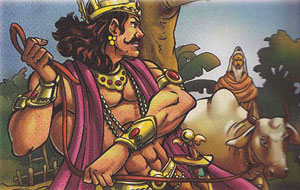
One of the most defining moments in Kaushika’s life came when he had an encounter with the great sage Vashishta. Kaushika invited Vashishta to his kingdom to offer hospitality, and the sage accepted. However, when Kaushika sought to feed Vashishta’s immense entourage, the sage's divine cow, Nandini, miraculously produced an endless supply of food. Enraged by this, Kaushika felt humiliated and vowed to defeat Vashishta’s spiritual power.
He attempted to overpower Vashishta through his military might, but despite his strength, Kaushika was unable to defeat the sage. This episode marked a turning point in Kaushika's life. He realized that material power and strength alone could not grant him the divine status he sought. This humbling experience spurred his decision to give up his royal life and pursue spiritual growth through meditation and penance.
Transformation into Vishwamitra:
Determined to achieve spiritual greatness, Kaushika renounced his kingdom and began a journey of intense penance (tapasya) to gain the divine knowledge and powers that would elevate him to the status of Brahmarishi. For years, he endured hardships, performing austere practices in the pursuit of higher wisdom. His rigorous penance attracted the attention of various gods and sages, and soon, he became known as Vishwamitra, meaning "friend of the world."
Vishwamitra’s journey toward Brahmarishi was filled with challenges, as he had to face not only physical hardships but also internal struggles with ego and desire. One of the most significant aspects of his penance was his effort to surpass the great sage Vashishta, whom he considered his spiritual rival. Vishwamitra’s determination eventually paid off when he gained the status of Brahmarishi, the highest title a sage can attain in Hinduism. His transformation from a warrior king to a revered sage is considered one of the most powerful stories of spiritual evolution in Hindu mythology.
Creation of the Gayatri Mantra:
One of Vishwamitra’s most enduring contributions to Hinduism is the Gayatri Mantra. During his intense meditation, Vishwamitra received the divine revelation of this mantra, which is considered the essence of Vedic wisdom. The Gayatri Mantra, a hymn to the divine light of the universe, is believed to have the power to purify the mind, body, and soul, and it remains one of the most revered prayers in Hinduism. It is recited daily by millions of Hindus around the world and is regarded as a tool for spiritual awakening.
The Gayatri Mantra is as follows:
"Om Bhur Bhuvah Svaha,
Tat Savitur Varenyam,
Bhargo Devasya Dhimahi,
Dhiyo Yo Nah Prachodayat."
This mantra invokes the divine radiance of the sun and asks for guidance and illumination of the intellect. It is a universal prayer that signifies the oneness of all creation and the light of knowledge that dispels ignorance.
Vishwamitra’s Role in the Ramayana:
Vishwamitra’s story is also closely connected to the Ramayana, where he plays an important role in the early life of Lord Rama. Vishwamitra is the one who takes the young prince Rama and his brother Lakshmana on a journey to the forest to protect the sage Vishvamitra’s yajna (sacrificial ritual) from the demoness Tataka. During this journey, Vishwamitra trains Rama in the use of divine weapons and teaches him the essential knowledge of the Brahmastra.
Vishwamitra’s relationship with Rama is one of the most significant in the Ramayana, as he not only guides and mentors Rama but also becomes an integral part of the events leading to the destruction of the demon king Ravana in later stages of the epic. Vishwamitra’s devotion to the welfare of the world and his wisdom were crucial in guiding Rama and Lakshmana to greater spiritual heights.
Vishwamitra’s Teachings and Legacy:
Vishwamitra’s teachings revolve around the central idea that true greatness is achieved through spiritual dedication, penance, and devotion to dharma. His story teaches the power of transformation and redemption, as he rose from being a proud king to a humble sage. Vishwamitra also emphasizes the importance of self-control, perseverance, and overcoming obstacles to reach spiritual enlightenment.
As a teacher, Vishwamitra imparted critical lessons to his disciples, including the significance of humility, the importance of selfless action, and the need for deep devotion to the Divine. His role as the creator of the Gayatri Mantra also places him at the heart of Vedic spiritual practice, as the mantra he revealed is believed to have the power to lead the practitioner towards ultimate wisdom and liberation.
Vishwamitra in Hindu Scriptures:
Vishwamitra is mentioned in several Hindu scriptures, including the Mahabharata, the Ramayana, and the Vishnu Purana. His life and teachings have had a profound impact on Hindu philosophy and practice. In the Mahabharata, Vishwamitra is cited as a symbol of perseverance and spiritual growth. His story serves as a source of inspiration for those who seek to overcome obstacles in the path of dharma and spiritual awakening.
Conclusion:
Vishwamitra, originally known as Kaushika, is one of the most revered figures in Hindu mythology. His transformation from a powerful king to a sage of the highest order symbolizes the power of devotion, penance, and self-realization. As the creator of the Gayatri Mantra, Vishwamitra’s influence continues to shape the spiritual lives of millions. His legacy is one of profound wisdom, illustrating the potential for spiritual growth in all beings, regardless of their beginnings. His life story serves as a powerful reminder of the importance of perseverance, humility, and devotion in the journey toward divine knowledge and enlightenment.