Summary
Biography
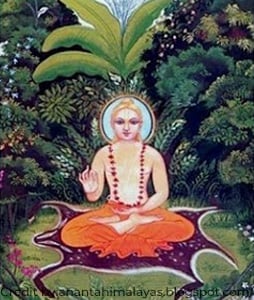
Sage Kapila is one of the most important figures in the history of Hindu philosophy. Known as the founder of Samkhya, one of the six classical schools of Indian philosophy, Kapila’s teachings have had a profound influence on both Hinduism and Buddhist thought. His teachings, which emphasize the dualism of Purusha (consciousness) and Prakriti (material nature), laid the foundation for many subsequent philosophical and spiritual systems in India.
Birth and Lineage:
The exact details of Sage Kapila’s birth are somewhat shrouded in mystery, but he is traditionally considered to be the son of Rishi Kardama and Devahuti, who is the daughter of Swayambhuva Manu, the first of the Manus in Hindu cosmology. Kapila is said to have been a highly enlightened sage from a very young age, showing signs of spiritual wisdom and divine knowledge early in his life.
Kapila’s lineage, as described in the Puranas, connects him to a noble and divine heritage, positioning him as a figure who was not only a spiritual guide but also one who understood the intricate workings of the cosmos. His philosophical teachings are believed to be divinely inspired, passed down from the gods themselves.
Kapila and the Foundation of Samkhya Philosophy:
Sage Kapila is credited with the establishment of Samkhya philosophy, one of the oldest systems of Indian thought. Samkhya, which means “number” or “enumeration,” is a dualistic philosophy that focuses on the enumeration of the different elements that make up the universe. The central concept of Samkhya is the division between Purusha (pure consciousness or the soul) and Prakriti (the material world or nature).
Kapila's teachings on Samkhya emphasize that the universe is composed of these two distinct, eternal realities:
- Purusha – The eternal, passive, and unchanging consciousness or spirit. Purusha is the observer, the experiencer, and the ultimate reality, beyond time and space. It is pure awareness and devoid of any attributes.
- Prakriti – The eternal, active, and changing material nature. Prakriti is composed of three fundamental qualities (gunas): sattva (goodness), rajas (activity), and tamas (inertia). Prakriti is the cause of all creation, and it is through its interaction with Purusha that the physical universe and experiences arise.
Kapila’s Samkhya philosophy posits that the ultimate goal of human life is to achieve liberation (moksha) by realizing the distinction between Purusha and Prakriti. This realization helps individuals detach from the material world, cease the cycle of suffering, and attain spiritual enlightenment.
Kapila Samhita:
Sage Kapila is often regarded as the author of the Kapila Samhita, a text that elaborates on his Samkhya teachings and spiritual doctrines. The Kapila Samhita is a collection of philosophical teachings and hymns, detailing the nature of the soul, the universe, and the ultimate reality. While the text is not as widely preserved or studied as some other ancient scriptures, it plays a significant role in understanding the roots of Samkhya and the philosophical framework Kapila established.
In the Kapila Samhita, Kapila expounds on several key concepts:
- The Nature of the Universe: Kapila’s cosmology describes the unfolding of the universe from Prakriti, with each element of creation originating from the interactions of the gunas. Everything in the physical world is an expression of Prakriti, and the ultimate purpose of life is to transcend it.
- The Soul (Purusha): Kapila's dualism emphasizes the role of the soul (Purusha) as distinct from the body and mind. The soul is eternal, pure, and unchanging, while the mind and body are merely temporary manifestations of Prakriti.
- The Path to Liberation (Moksha): The ultimate goal of human existence, according to Kapila, is liberation from the cycle of birth, death, and rebirth (samsara). This liberation is achieved through the realization of the separation between the soul (Purusha) and the material world (Prakriti). Meditation, self-inquiry, and the cultivation of knowledge (jnana) are the means by which an individual can transcend the physical and mental realms.
Kapila’s Influence on Other Philosophies:
While Samkhya is distinct in its dualism, it has had a significant influence on other schools of Hindu philosophy, particularly Vedanta and Yoga:
- Vedanta: Vedantic philosophy, which explores the nature of the soul and ultimate reality, shares many similarities with Samkhya. The idea of distinguishing between Purusha (the soul) and the material world (Prakriti) echoes through Vedantic texts. However, Vedanta further posits that the ultimate reality (Brahman) is non-dual, unlike Samkhya’s dualism.
- Yoga: The Yoga Sutras of Patanjali are heavily influenced by Samkhya philosophy, especially in terms of the practice of meditation and the goal of detachment from the material world. In the Yoga tradition, the goal is to silence the mind and experience the true nature of the soul (Purusha), much like the aims of Samkhya.
Kapila’s Teachings on the Soul and the Universe:
Kapila’s teachings are rooted in understanding the nature of reality and the self. He believed that:
- The Soul (Purusha) is eternal, pure, and detached from the material world. It is the witness to all experiences but does not participate in them directly. The soul is distinct from the body, mind, and intellect, which are all manifestations of Prakriti.
- Prakriti (Material Nature) is the source of all creation and is made up of three gunas: sattva (goodness), rajas (activity), and tamas (inertia). The interplay of these gunas gives rise to all phenomena in the material world. The aim of spiritual practice is to transcend Prakriti and realize one’s true nature as Purusha.
- Liberation (Moksha): The path to liberation is through self-realization and the understanding that the soul is separate from the material world. This involves the cultivation of jnana (knowledge), bhakti (devotion), and dhyana (meditation) to transcend the influence of the gunas and achieve union with the pure consciousness of the soul.
Legacy and Influence:
Sage Kapila's legacy as the founder of Samkhya philosophy is immense. His teachings have been foundational in shaping the Yoga and Vedanta traditions. The concepts of Purusha and Prakriti, and the focus on liberation through knowledge and meditation, remain central to many philosophical schools in Hinduism.
Kapila’s ideas also had a profound impact on Buddhism and Jainism, both of which share the emphasis on the distinction between the soul and the material world. His dualistic philosophy influenced the development of metaphysical systems in ancient India and continues to be studied in contemporary philosophy.
Conclusion:
Sage Kapila is one of the foremost philosophers in Hindu history, credited with founding Samkhya, one of the oldest and most influential systems of thought. His philosophy of dualism, emphasizing the distinction between the eternal soul (Purusha) and the ever-changing material nature (Prakriti), remains a cornerstone of Hindu thought. Through his teachings in the Kapila Samhita, Kapila provided a framework for understanding the nature of the universe, the self, and the path to spiritual liberation. His profound insights continue to influence various schools of thought in Hinduism, Buddhism, and Jainism, making him one of the most significant sages in Indian philosophical tradition.