Summary
Biography
Sage Asita is a fascinating and revered figure in both Hindu and Buddhist traditions. While his life and contributions are not as widely documented as other great sages, his appearances in the Mahabharata, Ramayana, and certain Buddhist texts have solidified his place in the spiritual history of India. Asita is known for his deep wisdom, his role as a teacher, and his prophetic abilities. His predictions, spiritual guidance, and connection with Lord Buddha make him an important figure in both Hindu and Buddhist traditions.
Appearance in the Mahabharata:
In the Mahabharata, Sage Asita is regarded as one of the great rishis who played an important role in the narrative. He is not one of the main figures like Vyasa or Vashishta, but his wisdom and spiritual stature are respected. Asita is mentioned as a seer and a sage of great repute, known for his devotion to meditation and his profound understanding of the world.
One of the most significant mentions of Asita in the Mahabharata involves his connection to the birth of Lord Krishna. According to the text, Sage Asita was one of the sages who came to visit Yashoda and Nanda after the birth of Krishna. He predicted that Krishna, even though born to humble parents, would one day be the savior of the world and would play a key role in the destruction of the evil Kauravas.
Asita's Prophetic Role:
In addition to his wisdom and spiritual pursuits, Sage Asita is renowned for his prophetic abilities. One of the most famous prophecies attributed to him is the prediction of King Ashoka’s downfall. According to some texts, Asita foresaw that the Maurya Dynasty would face challenges, and King Ashoka, despite his initial success and conquests, would experience a significant downfall due to his actions.
This prophecy is significant because it highlights Ashoka’s transition from a conqueror to a pacifist after his conversion to Buddhism. Ashoka's life is marked by his initial violent conquests, including the Kalinga War, but after the war's devastating effects, he embraced Buddhism and became a promoter of peace and non-violence. Some Buddhist texts suggest that Asita’s prophecy was not just about Ashoka’s downfall in the traditional sense but also his eventual moral and spiritual transformation, making it a nuanced prediction.
Asita and His Connection to Lord Buddha:
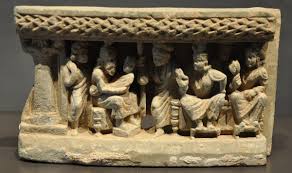
One of the most interesting aspects of Sage Asita’s life is his connection to Lord Buddha. In Buddhist texts, Asita is sometimes described as the sage who was one of the first to recognize the divine nature of Siddhartha Gautama (who would later become Buddha) shortly after his birth. It is said that when Siddhartha was born, Asita saw a divine light and realized that the child was destined for greatness.
Asita is depicted in the Buddhist tradition as a prophet who foresaw Siddhartha’s path to enlightenment. It is said that when he met the young Buddha, Asita cried, expressing sorrow that he would not live to see Siddhartha's full spiritual journey unfold. Asita’s tears were believed to be a mixture of joy at the Buddha’s potential and sadness at not being able to witness the full fruition of his spiritual awakening.
Some texts suggest that Asita played a role in Siddhartha's early spiritual education, imparting wisdom about the nature of existence and the path to enlightenment. Though specific accounts of Asita teaching Siddhartha are not as prominent as those of Sakyamuni Buddha’s more famous teachers, his role in recognizing Siddhartha’s potential is significant in Buddhist lore.
The Prophecy of Ashoka’s Downfall:
The prophecy regarding King Ashoka is one of the most famous aspects of Sage Asita’s legacy. According to some accounts, Sage Asita predicted that Ashoka, after his violent conquest of the Kalinga region, would be overwhelmed by the suffering caused by his war. Ashoka’s overwhelming guilt and sorrow following the war are said to have led him to embrace Buddhism.
However, in some interpretations of Asita’s prophecy, it is suggested that the sage foresaw that Ashoka’s attempts at spreading peace and dharma would be tested, and that Ashoka’s reign, while initially marked by violence, would be followed by a period of introspection and spiritual transformation. This transformation into a Buddhist ruler, as well as Ashoka’s subsequent efforts to build infrastructure, promote non-violence, and spread the teachings of the Buddha, are viewed as part of the unfolding of Asita’s prophecy.
Sage Asita in Hindu and Buddhist Contexts:
Sage Asita’s role in both Hinduism and Buddhism demonstrates his multifaceted significance. In Hindu texts, particularly in the Mahabharata and Ramayana, he is considered a sage with deep wisdom and insight, contributing to the spiritual and ethical teachings that guided kings and sages. His prophecy concerning the downfall of Ashoka highlights his ability to perceive the spiritual trajectories of great rulers.
In Buddhist traditions, Asita is remembered as a sage who recognized the Buddha’s divine nature at birth and saw Siddhartha’s potential for spiritual greatness. His early recognition of Siddhartha as a being destined for enlightenment adds to the significance of Asita in the Buddhist world, marking him as a witness to the profound spiritual changes that would shape the course of Indian history.
Sage Asita’s Teachings and Influence:
Sage Asita is often depicted as a deeply spiritual and meditative figure. His teachings are rooted in karma, dharma, and spiritual discipline. His prophetic nature and his recognition of the deeper spiritual truths of the world make him an important figure in both Hindu and Buddhist thought.
Though not as frequently mentioned as some of the other great rishis of ancient India, Asita’s role as a guide, prophet, and spiritual teacher has had a lasting impact on the way kings, sages, and common people have viewed their relationship with fate, divine law, and spiritual transformation.
Conclusion:
Sage Asita is an important and multifaceted figure in both Hindu and Buddhist traditions. His prophetic abilities, spiritual wisdom, and connection to pivotal figures like Lord Buddha and King Ashoka make him a revered sage in ancient Indian history. Through his predictions, teachings, and recognition of divine potential, Asita remains a symbol of spiritual insight and a reminder of the deep connection between prophecy and spiritual transformation in both the Mahabharata and Ramayana, as well as in Buddhist lore. His legacy lives on through his contributions to the ethical and spiritual narratives that shaped the spiritual fabric of India.