Summary
Biography
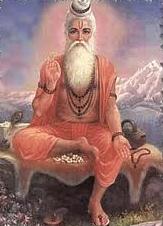
Sage Bhrigu is one of the most respected rishis in the Hindu tradition and is widely regarded for his deep wisdom, his contributions to astrology, and his pivotal role in shaping the concepts of karma and astrology in Vedic philosophy. He is one of the Saptarishi, the seven great sages who are said to have lived during the creation of the world and serve as spiritual guides for humanity.
Early Life and Lineage:
Bhrigu is believed to be one of the sons of Brahma, the Creator God, and was born with divine knowledge and extraordinary intellectual powers. He is often regarded as one of the Manasaputras (mind-born sons) of Brahma, who were born from his mind. As a young sage, Bhrigu had the privilege of receiving sacred knowledge from some of the most revered sages of the time and quickly established himself as a scholar and a powerful figure in Vedic rituals.
Bhrigu’s family lineage includes several other notable sages, and he is often associated with his brothers Atri, Vashishta, and others from the Bhrigu Gotra. His teachings, like those of the other Saptarishis, were passed down through generations, influencing a wide range of spiritual, philosophical, and ritual practices.
Role in the Vedas:
Bhrigu’s name is mentioned frequently in the Rigveda, where his hymns and contributions to Vedic thought are considered to have significant importance. He was a master of the Yajurveda, Samaveda, and Rigveda, and his teachings on meditation, cosmic order, and divine knowledge helped shape the foundation of Vedic philosophy.
Bhrigu is credited with creating one of the earliest and most important philosophical concepts in Hinduism: karma (action and its consequences). According to Bhrigu, every action, whether physical, mental, or spiritual, has a corresponding effect. This idea, which later became central to Hindu, Buddhist, and Jain thought, was revolutionary in its time and laid the foundation for the vast spiritual and ethical system that would later be developed in the Bhagavad Gita and other texts.
The Creation of the Concept of Karma:
Bhrigu is often credited with formalizing the concept of karma in Hindu philosophy. The doctrine of karma holds that every action generates consequences—good or bad—that affect an individual’s present and future circumstances. This idea is based on the law of moral causation, wherein one’s actions directly influence their fate.
In Bhrigu’s teachings, karma is not seen as a simple notion of reward and punishment but as a deeper understanding of the interconnectedness of all actions, whether in the material world or spiritual realms. He believed that by understanding and mastering the laws of karma, one could break the cycle of rebirth (samsara) and attain liberation (moksha). This was one of Bhrigu’s greatest contributions to Hindu philosophy.
Bhrigu Samhita:
One of the most important texts associated with Sage Bhrigu is the Bhrigu Samhita. This ancient work is a compilation of astrological knowledge and is considered one of the most significant texts in Vedic astrology. The Bhrigu Samhita is a comprehensive astrological scripture that contains predictions and analyses based on the positions of celestial bodies at the time of one’s birth. It is believed to have been authored by Bhrigu, who used his spiritual powers and profound insight to create a system of astrology that is still studied and practiced today.
The Bhrigu Samhita contains individual horoscopes for countless people and is said to predict the course of an individual’s life, from birth to death, including their karmic journey. It is also an important source for understanding the celestial influences that govern human existence, relationships, and destiny. The text is not only significant for its predictive power but also for its role in illustrating the interconnectedness between astrology, karma, and spirituality.
The Curse of Lord Vishnu:
One of the most well-known stories in Bhrigu’s life is his interaction with Lord Vishnu, which further illustrates the sage’s philosophical depth. According to the Bhrigu Purana, Bhrigu once tested the patience of the three major gods—Brahma, Vishnu, and Shiva—by visiting them in turn. When he went to Vishnu’s abode, Vishnu, who was in deep meditation, did not immediately acknowledge his presence. This slight angered Bhrigu, who, in a fit of rage, cursed Vishnu for his perceived arrogance.
Vishnu, ever the embodiment of patience and humility, accepted the curse and did not retaliate, demonstrating the principle of humility in the face of adversity. Later, Bhrigu realized the wisdom of his actions and, in an act of reconciliation, blessed Vishnu. The story symbolizes the complexities of relationships between divine forces and the profound lessons one can learn from their interactions.
Bhrigu and the Celestial Planets:
Bhrigu is also associated with the planetary influences in astrology. According to various traditions, he was responsible for mapping the relationship between human affairs and the planetary positions, which laid the foundation for the astrological system known as Jyotisha (Vedic astrology). His work in mapping the effects of celestial movements on human life is a key part of the Bhrigu Samhita and other texts that followed.
In astrology, Bhrigu is said to have had a deep understanding of the influence of each planet—Graha—on human life, including the concept of planetary periods (Dasha) that are central to Hindu astrology.
Legacy and Influence:
Sage Bhrigu’s legacy endures through his work in the field of astrology and the Bhrigu Samhita. His teachings on karma, as well as his emphasis on righteous living, continue to guide individuals in their spiritual journeys. As one of the Saptarishi, Bhrigu’s wisdom is considered timeless, influencing not only astrology but also broader concepts of morality, ethics, and spiritual practice.
His concept of karma, the idea that every action leads to a corresponding effect, remains a central tenet of Hindu philosophy and has been adopted by other spiritual traditions. The Bhrigu Samhita remains a key text in Vedic astrology, consulted by scholars and practitioners around the world to understand the influence of the planets and celestial bodies on human destiny.
Conclusion:
Sage Bhrigu’s contributions to Hindu philosophy, particularly in the areas of karma and astrology, have left an indelible mark on the spiritual traditions of India. His wisdom, as captured in the Bhrigu Samhita and other works, continues to guide millions of individuals in their understanding of the cosmos and their place within it. Through his life, teachings, and texts, Bhrigu remains an enduring figure of profound insight and spiritual enlightenment.