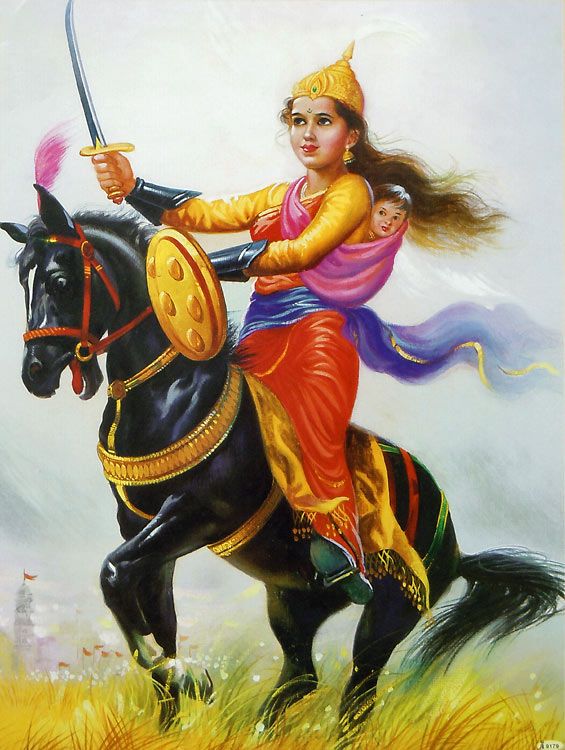
Personal Information
- Date of Birth: 19 Nov 1828
- Place of Birth: Varanasi, Uttar Pradesh, India
- Date of Death: 18 Jun 1858
- Place of Death: Gwalior, Madhya Pradesh, India
- Nationality: Indian
- Occupation: Queen, Warrior, Military Leader, Freedom Fighter, Strategist, Administrator
- Era: Mid-19th Century, Indian Rebellion of 1857, Pre-Independence Freedom Movement
Summary
Biography
Rani Lakshmibai, born Manikarnika Tambe on 19 November 1828 in Varanasi, Uttar Pradesh, India, is celebrated as one of the most iconic figures in India’s struggle against British colonial rule. Known as the Jhansi Ki Rani or Queen of Jhansi, she emerged as a fearless warrior, strategic leader, and symbol of resistance during the Indian Rebellion of 1857. Her life, courage, and sacrifice have made her a national icon and a role model for generations.
Early Life and Education
Born into a Marathi Brahmin family, Manikarnika received the nickname “Manu.” From childhood, she displayed remarkable courage, intelligence, and physical agility. She was trained in martial arts, horse riding, swordsmanship, and the use of weapons—skills that would later define her military career. She also received a strong education in literature, history, and administration, which helped her navigate complex political situations as a ruler.
Her early upbringing instilled in her a sense of independence and resilience, making her exceptionally prepared to face the challenges of her later life. Manikarnika’s strong personality earned her respect and admiration from her family and peers.
Marriage and Ascension to Queenship
In 1842, Manikarnika married Maharaja Gangadhar Rao, the ruler of Jhansi, and became Rani Lakshmibai. She was an intelligent and capable queen who took an active interest in state affairs, learning about governance, diplomacy, and military strategy from her husband. Their partnership strengthened the administration of Jhansi, and she gained the loyalty and admiration of her subjects.
The couple had a son, Damodar Rao, who tragically died at a young age. After the death of her son, the issue of succession became critical, especially as the British East India Company was enforcing the Doctrine of Lapse, which allowed the Company to annex states without a male heir.
Conflict with the British
After the death of Maharaja Gangadhar Rao in 1853, the British refused to recognize Damodar Rao as the legitimate heir under the Doctrine of Lapse and attempted to annex Jhansi. Rani Lakshmibai protested vehemently, asserting her son’s rights and the sovereignty of her kingdom. Despite her appeals, the British proceeded with annexation, which fueled her determination to resist colonial domination.
Her leadership during this crisis earned her widespread respect and recognition. She prepared to defend Jhansi, gathering loyal troops, training women in combat, and fortifying the city’s defenses.
Role in the Indian Rebellion of 1857
Rani Lakshmibai emerged as a central figure during the Indian Rebellion of 1857. She led her troops with exceptional bravery, personally participating in battles and inspiring soldiers through her courage and leadership. Her strategic acumen allowed her to resist British advances, even when outnumbered and facing well-equipped forces.
She formed alliances with other rebel leaders and coordinated military campaigns to defend Jhansi and nearby territories. Her leadership was marked by a combination of valor, intelligence, and determination, making her one of the most formidable opponents of the British.
The Battle of Jhansi and Gwalior
In 1858, British forces attacked Jhansi, resulting in intense fighting. Despite her efforts, the city eventually fell. Rani Lakshmibai escaped with her troops and continued to fight alongside other rebel leaders. She reached Gwalior, where she played a key role in defending the fort and inspiring resistance against the British.
Her final battle occurred on 17–18 June 1858, during which she fought valiantly and died in combat on 18 June 1858. Her death marked a significant moment in the rebellion, and she became a symbol of courage, patriotism, and sacrifice.
Legacy and Historical Significance
Rani Lakshmibai’s historical significance is immense. She represents the bravery and determination of Indian women in the fight against colonial rule. Her life challenges traditional gender norms, demonstrating that women could lead armies, make strategic decisions, and inspire entire communities to resist oppression.
Her courage inspired subsequent generations of freedom fighters and continues to serve as a symbol of India’s struggle for independence. Monuments, memorials, books, and films commemorate her legacy, ensuring that her story remains a central part of Indian history.
Cultural Impact
Rani Lakshmibai’s life has inspired countless works of literature, poetry, and popular media. In India, she is celebrated as a Veerangana, a heroic woman who fought for justice and sovereignty. Folk songs, plays, and educational curricula frequently highlight her bravery, ensuring that her story continues to resonate with people across generations.
Her iconic image on horseback, leading troops into battle, has become a symbol of resistance, courage, and patriotism. She embodies the spirit of defiance against injustice and remains one of the most beloved figures in India’s historical narrative.
Conclusion
Rani Lakshmibai (1828–1858), the Queen of Jhansi, remains one of India’s most celebrated freedom fighters. Known for her courage, leadership, and unwavering determination, she led her kingdom and troops against the British East India Company during the Indian Rebellion of 1857. Her life exemplifies bravery, patriotism, and the empowerment of women in Indian history. Rani Lakshmibai continues to inspire generations, earning her a permanent place as a symbol of resistance and heroism in India’s fight for independence.
