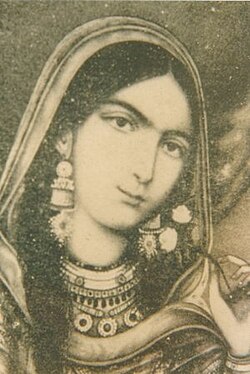
Personal Information
- Place of Birth: 1820, Amethi district, Uttar Pradesh, India
- Place of Death: 1879, Nepal (exile)
- Nationality: Indian
- Occupation: Queen, Political Leader, Rebel Commander, Freedom Fighter, Administrator
- Era: 19th Century, Indian Rebellion of 1857, Pre-Independence Freedom Movement
Summary
Biography
Begum Hazrat Mahal, born in 1820 in Amethi, Uttar Pradesh, was a legendary figure in India’s struggle for independence. She rose to prominence as the queen of Awadh during a time of political upheaval, becoming one of the most celebrated female leaders of the Indian Rebellion of 1857. Her leadership, courage, and resilience made her a symbol of female empowerment and national pride.
Early Life and Background
Begum Hazrat Mahal was born into a noble family in Amethi. Details of her early life are limited, but it is known that she was educated and trained in administration, diplomacy, and social affairs—skills that would later prove essential during the rebellion. Her upbringing emphasized values such as courage, leadership, and responsibility.
She married Wajid Ali Shah, the Nawab of Awadh, and became the queen, gaining experience in governance and court politics. Through her marriage, she became deeply involved in the administration and affairs of Awadh, developing a keen understanding of political strategy and statecraft.
Rise to Leadership
In 1856, the British East India Company annexed Awadh, deposing Nawab Wajid Ali Shah. Begum Hazrat Mahal refused to accept British rule and became a central figure in mobilizing resistance. Her leadership was particularly remarkable because it broke societal norms regarding female involvement in warfare and politics.
She gathered loyal soldiers, allies, and citizens to defend Awadh, taking administrative control and organizing military strategies to challenge British forces. Her ability to inspire both men and women played a key role in sustaining the rebellion in Lucknow and surrounding regions.
Role in the Indian Rebellion of 1857
During the 1857 uprising, Begum Hazrat Mahal emerged as one of the most capable leaders in northern India. She actively participated in military campaigns, coordinated attacks on British positions, and defended the city of Lucknow. Her strategic decisions and personal bravery earned her respect among rebels and common citizens alike.
She also collaborated with other prominent leaders, including Tatya Tope and Rani Lakshmibai of Jhansi, forming alliances to strengthen resistance against British forces. Begum Hazrat Mahal’s leadership ensured that Awadh remained a significant center of rebellion, posing a serious challenge to British colonial authority.
Administration and Governance
Apart from her military role, Begum Hazrat Mahal administered Lucknow and surrounding territories with efficiency and justice. She managed supplies, maintained law and order, and motivated local leaders to resist British annexation. Her governance during the rebellion demonstrated her capability as both a political and military leader.
Her leadership extended to protecting civilians and coordinating the evacuation and defense of populations affected by warfare. This balanced approach earned her admiration and loyalty from the people of Awadh.
Later Life and Exile
After the British regained control of Lucknow and Awadh in 1858, Begum Hazrat Mahal was forced into exile. She fled to Nepal, where she lived until her death in 1879. Even in exile, she remained a symbol of defiance against British colonialism and inspired future generations of Indian freedom fighters.
Her exile highlights the sacrifices made by women leaders who challenged the might of the British Empire. Despite losing her kingdom, Begum Hazrat Mahal’s legacy as a fearless leader continued to inspire nationalistic movements in India.
Legacy and Historical Significance
Begum Hazrat Mahal is remembered as a pioneering female freedom fighter who broke societal and gender barriers to lead a major rebellion against British rule. Her courage, leadership, and strategic acumen make her an enduring symbol of India’s fight for independence.
She represents the critical role of women in India’s freedom struggle and is celebrated for her ability to lead armies, administer territories, and inspire collective resistance. Her legacy continues to be commemorated in literature, education, and popular culture.
Cultural Impact
Begum Hazrat Mahal’s life has inspired numerous books, plays, films, and scholarly studies. She is remembered as Veerangana of Awadh, a fearless queen whose commitment to her people and country exemplified courage and patriotism. Monuments and memorials in Uttar Pradesh and historical accounts celebrate her contributions, ensuring her story remains central to India’s historical narrative.
Conclusion
Begum Hazrat Mahal (1820–1879) was a legendary queen of Awadh and a key leader of the Indian Rebellion of 1857. Her leadership, courage, and strategic brilliance made her one of India’s most celebrated female freedom fighters. Despite facing British annexation and eventual exile, she remained committed to resisting colonial rule and protecting her people. Begum Hazrat Mahal’s life and legacy continue to inspire generations, making her a timeless symbol of patriotism, courage, and female empowerment in India.
