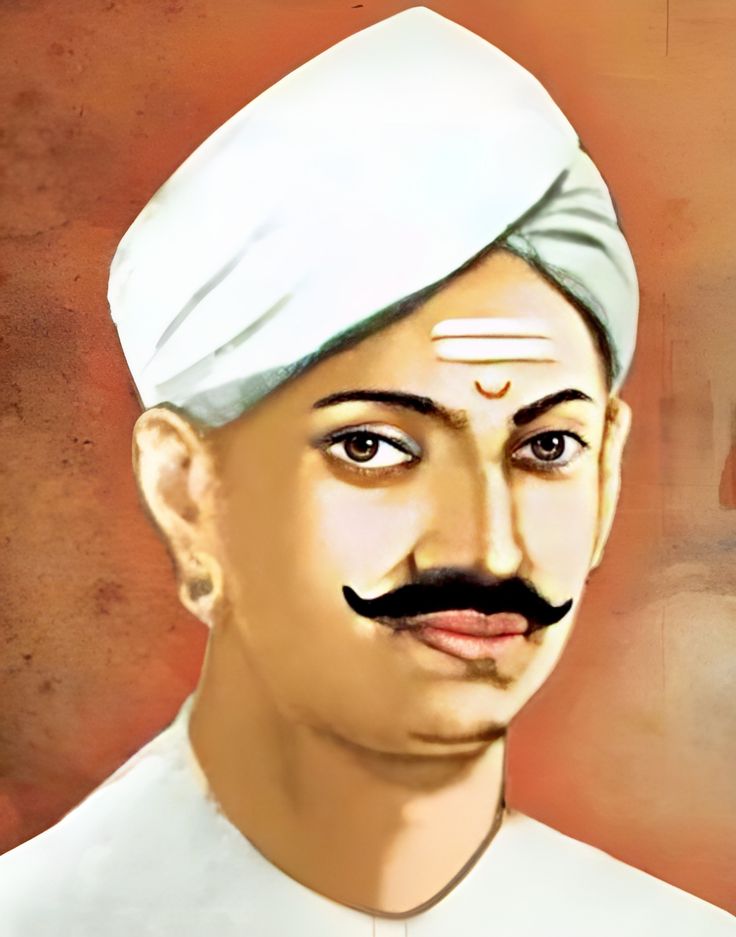
Personal Information
- Date of Birth: 17 Jul 1827
- Place of Birth: Nagwa, Ballia district, Uttar Pradesh, India
- Date of Death: 08 Apr 1857
- Place of Death: Barrackpore, West Bengal, India
- Nationality: Indian
- Occupation: Sepoy (Soldier), Revolutionary, Freedom Fighter, Military Activist
- Era: Mid-19th Century, Indian Rebellion of 1857, Pre-Independence Freedom Movement
Summary
Biography
Mangal Pandey, born on 19 July 1827 in Nagwa, Ballia district, Uttar Pradesh, India, is celebrated as one of the earliest martyrs in India’s struggle against British colonial rule. His courageous actions in 1857 triggered a chain of events that became the Indian Rebellion of 1857, widely regarded as India’s first war of independence. Known for his bravery, patriotism, and defiance, Mangal Pandey’s legacy continues to inspire generations.
Early Life and Background
Mangal Pandey was born into a Brahmin family in Nagwa village. From an early age, he displayed discipline, courage, and a strong sense of justice. Little is known about his early education, but it is clear that he was raised with traditional values emphasizing honor, loyalty, and service. His family background and cultural upbringing shaped his character, preparing him for the challenges he would later face in the British army.
In 1849, Mangal Pandey joined the Bengal Army of the British East India Company as a sepoy, or foot soldier. He was trained in military tactics, firearms, and discipline. Although he served the Company, he grew increasingly aware of the exploitative nature of colonial rule and the injustices faced by Indian soldiers.
Rising Tensions in the Army
By the mid-1850s, discontent was widespread among Indian sepoys. The introduction of new Enfield rifles required soldiers to bite cartridges that were rumored to be greased with cow and pig fat, offending Hindu and Muslim religious beliefs. This issue, combined with poor pay, harsh treatment, and lack of respect for Indian customs, created an atmosphere ripe for rebellion.
Mangal Pandey became deeply troubled by these policies and began speaking out against the injustices faced by his fellow sepoys. His sense of duty to his religion and country led him to take a courageous stand against the oppressive practices imposed by the British.
The Barrackpore Incident
On 29 March 1857, Mangal Pandey openly attacked British officers at the Barrackpore cantonment in Bengal. He tried to incite his fellow soldiers to join him in resisting the use of the greased cartridges and broader colonial oppression. Although the rebellion at Barrackpore was quickly suppressed, his actions became the spark for a larger uprising.
Mangal Pandey’s bravery demonstrated that ordinary soldiers could defy imperial authority. Despite being surrounded and outnumbered, he fought with exceptional courage, challenging the might of the British East India Company.
Arrest, Trial, and Execution
After the incident, Mangal Pandey was arrested by the British authorities. He was tried for mutiny and executed by hanging on 8 April 1857. His execution was intended to serve as a warning to other sepoys, but it had the opposite effect. His martyrdom inspired widespread rebellion among Indian soldiers and civilians, leading to the outbreak of the Indian Rebellion of 1857.
Legacy and Historical Significance
Mangal Pandey is remembered as the first martyr of India’s freedom struggle. His courage, patriotism, and defiance symbolized the growing resistance against British colonialism. He played a critical role in awakening national consciousness and inspiring others to fight for India’s independence.
Historically, Mangal Pandey’s actions demonstrated the power of individual courage in challenging oppression. His rebellion, though small in scale initially, set off a wave of uprisings across northern and central India. It highlighted the grievances of Indian soldiers and became a turning point in the fight against British rule.
Cultural and National Impact
Mangal Pandey’s life and sacrifice have been immortalized in Indian history books, literature, songs, and films. Monuments and memorials have been erected in his honor, especially in Ballia and Barrackpore, commemorating his bravery. He is studied in Indian school curricula as a symbol of courage, resistance, and patriotism.
His story is also a reminder of the importance of standing against injustice, even in the face of overwhelming odds. Mangal Pandey’s legacy continues to inspire generations of Indians and remains central to the narrative of India’s struggle for freedom.
Conclusion
Mangal Pandey (1827–1857) was a brave sepoy whose defiance against the British East India Company ignited the Indian Rebellion of 1857. Known as the first martyr of India’s freedom movement, he embodied courage, patriotism, and resistance to colonial oppression. His actions not only challenged imperial authority but also inspired a nation to rise against injustice. Today, Mangal Pandey remains an enduring symbol of India’s fight for independence and a hero of Indian history.
