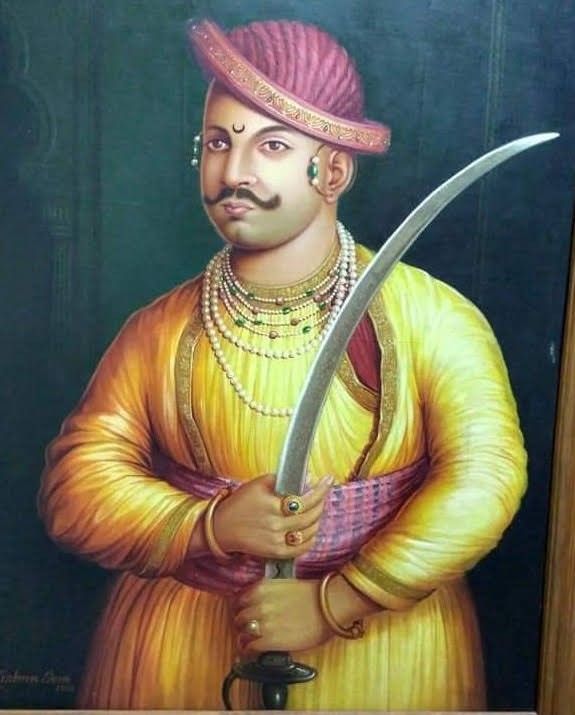
Personal Information
- Date of Birth: 19 May 1824
- Place of Birth: Bithur, Kanpur district, Uttar Pradesh, India
- Place of Death: 1859, Unknown (Possibly Nepal or central India)
- Nationality: Indian
- Occupation: Leader, Administrator, Military Commander, Freedom Fighter, Revolutionary
- Era: 19th Century, Indian Rebellion of 1857, Pre-Independence Freedom Movement
Summary
Biography
Nana Saheb, born Dhondu Pant on 19 May 1824 in Bithur, Uttar Pradesh, emerged as one of the most prominent leaders of the Indian Rebellion of 1857. Adopted by the last Peshwa of the Maratha Empire, Baji Rao II, Nana Saheb inherited a legacy of leadership, pride, and resistance against foreign domination. He is best remembered for leading the revolt in Kanpur, challenging British authority, and becoming a symbol of courage and patriotism in India’s freedom struggle.
Early Life and Background
Nana Saheb was born into a Maratha Brahmin family in Bithur. His early education included lessons in administration, military strategy, and Marathi and Persian literature. Following the death of his father, he was adopted by Baji Rao II, the last Peshwa of the Maratha Empire, as his heir. This adoption brought Nana Saheb wealth, prestige, and the expectation to continue the Maratha legacy.
Growing up, Nana Saheb was influenced by Maratha culture, history, and values of honor, bravery, and leadership. He witnessed the expansion of British power in India and the gradual erosion of Maratha sovereignty, which instilled in him a desire to resist colonial domination.
Role as Peshwa’s Adopted Heir
As the adopted heir of Baji Rao II, Nana Saheb inherited both the responsibilities and grievances of the Maratha rulers. After the British East India Company annexed Bithur and reduced his pension, he became increasingly disillusioned with British policies. This injustice fueled his resolve to oppose colonial rule and protect the dignity and autonomy of Indian rulers.
Nana Saheb’s role as the Peshwa heir made him a respected figure among Indian soldiers and local populations, giving him the authority to lead resistance efforts effectively during the rebellion.
Leadership in the Indian Rebellion of 1857
During the Indian Rebellion of 1857, Nana Saheb emerged as a central leader in the northern region of India. He led the uprising in Kanpur, organizing sepoys, local chieftains, and civilians to revolt against British rule. His leadership was marked by strategic planning, bold attacks, and efforts to rally people across communities to the cause of independence.
Nana Saheb established himself as the commander of rebel forces in Kanpur and coordinated defensive and offensive strategies against British troops. He aimed to restore Indian sovereignty and challenge the oppressive policies of the East India Company.
Kanpur Massacre and Controversy
One of the most controversial events associated with Nana Saheb is the Kanpur Massacre (Cawnpore Massacre) of June 1857, in which British soldiers and civilians were killed after surrendering. While the exact role of Nana Saheb remains debated by historians, this incident marked a critical moment in the rebellion and intensified British reprisals.
Despite the controversy, Nana Saheb’s leadership demonstrated his ability to mobilize large-scale resistance and challenge colonial authority. His actions made him a feared and respected figure among both rebels and the British.
Later Life and Disappearance
After the suppression of the rebellion by the British, Nana Saheb disappeared, evading capture. Historical records suggest he may have fled to Nepal or central India, where he lived in hiding until his death, estimated around 1859. His disappearance added to his legendary status, leaving him as an enigmatic figure in Indian history.
Legacy and Historical Significance
Nana Saheb’s historical significance lies in his role as a leader of the Indian Rebellion of 1857 and as a symbol of resistance against British oppression. His efforts inspired other regional leaders and rebels to fight for independence, and his courage became a model for patriotic action.
Nana Saheb also represents the struggles of Indian aristocracy against colonial annexation and the loss of traditional authority. His leadership during the rebellion highlights the interplay of local resistance and nationalistic sentiment in India’s fight against British rule.
Cultural Impact
Nana Saheb’s life and actions have been commemorated in Indian literature, films, and educational curricula. He is remembered as a fearless leader and an emblem of the Maratha legacy. Memorials and historical accounts celebrate his contributions to India’s freedom struggle, and his story remains an integral part of the narrative of the 1857 rebellion.
Conclusion
Nana Saheb (1824–c.1859) was a courageous leader, Peshwa heir, and key figure in the Indian Rebellion of 1857. His leadership in Kanpur, strategic acumen, and dedication to resisting British colonialism made him a symbol of patriotism and resistance. Despite controversies surrounding the Kanpur Massacre and his eventual disappearance, Nana Saheb’s legacy endures as an inspiration to generations of Indians, representing the courage, leadership, and resilience of early freedom fighters.
