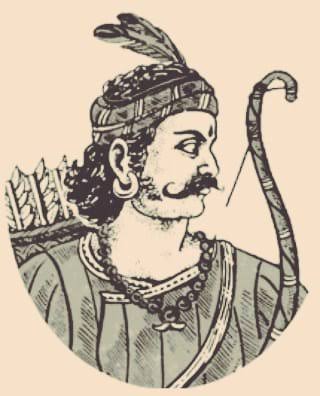
Summary
Biography
Introduction
Chakara Bisoi occupies a revered place in the history of Odisha as a tribal leader, freedom fighter, and folk hero who challenged British authority during the early nineteenth century. Though his name is not always found prominently in mainstream Indian history textbooks, Chakara Bisoi remains a powerful symbol of grassroots resistance, especially among the tribal and rural communities of southern Odisha.
He is remembered not merely as a rebel, but as a protector of indigenous rights, land, and dignity, who stood against colonial exploitation long before the organized national freedom movement took shape. His story represents the untold struggles of countless local heroes who resisted foreign domination at great personal cost.
Historical Background
Odisha Under British Rule
During the late 18th and early 19th centuries, large parts of Odisha came under the control of the British East India Company. After defeating regional powers and weakening traditional rulers, the British introduced new revenue systems, harsh taxation, and administrative changes that deeply affected tribal societies.
The Ghumusar region (present-day Ganjam district and surrounding areas) was home to many tribal communities who lived in close harmony with forests and land. British policies disrupted this balance by:
- Imposing heavy land taxes
- Restricting forest access
- Replacing traditional governance systems
- Supporting local landlords loyal to the British
These changes caused widespread suffering and unrest.
Early Life of Chakara Bisoi
Birth and Community
Chakara Bisoi was born in a tribal family in the Ghumusar region of southern Odisha, most likely in the late 18th century. Exact dates are not available due to the lack of written records, but oral histories preserved by local communities offer valuable insights into his life.
He belonged to a society where:
- Community welfare was more important than individual wealth
- Land and forests were shared resources
- Leadership was based on courage, wisdom, and service
From a young age, Chakara Bisoi was known for his bravery, leadership qualities, and strong sense of justice.
Rise as a Tribal Leader
Awakening of Resistance
As British influence expanded, tribal communities began facing:
- Loss of ancestral land
- Forced labor
- Brutal revenue collection
- Interference in local customs
Chakara Bisoi emerged as a natural leader, voicing the grievances of his people. His deep understanding of local terrain, combined with his ability to unite scattered tribal groups, made him a formidable figure.
Rebellion Against British Authority
Leadership in the Ghumusar Rebellion
Chakara Bisoi became one of the leading figures in the anti-British uprisings in the Ghumusar region. Though these revolts were not centrally organized like later movements, they were powerful expressions of resistance.
Key features of his rebellion included:
- Guerrilla warfare using forests and hills
- Attacks on British-supported revenue officials
- Protection of tribal villages from exploitation
- Mobilization of common people
Unlike many uprisings driven by royalty, this was a people’s movement, rooted in survival and self-respect.
Conflict with the British Administration
British Response
The British viewed Chakara Bisoi as a serious threat to their authority. Colonial records often labeled leaders like him as “rebels” or “outlaws,” ignoring the injustices that caused the uprisings.
To suppress the resistance, the British:
- Deployed armed forces
- Offered rewards for his capture
- Used spies and informants
- Punished entire villages suspected of helping him
Despite these measures, Chakara Bisoi continued to evade capture for a considerable period.
Capture and Martyrdom
Final Days
According to oral traditions, Chakara Bisoi was eventually betrayed or surrounded by British forces. He was captured after intense resistance.
Though exact details vary, it is widely believed that:
- He was subjected to harsh punishment
- He refused to submit or apologize
- He remained defiant until the end
His death marked the end of one phase of resistance, but not the end of the spirit he ignited.
Legacy and Cultural Importance
Folk Memory and Oral Traditions
Chakara Bisoi lives on in:
- Folk songs
- Village stories
- Tribal legends
- Local festivals
In many parts of southern Odisha, he is remembered as a martyr who sacrificed his life for his people.
Why Chakara Bisoi Matters Today
Symbol of Indigenous Resistance
Chakara Bisoi represents:
- Early resistance to colonialism
- Tribal leadership and courage
- Defense of land and forest rights
- Grassroots freedom struggles
His life reminds us that India’s freedom was not won only by famous leaders, but also by countless local heroes whose names history often overlooks.
Comparison with Other Tribal Freedom Fighters
Chakara Bisoi stands alongside other great tribal leaders such as:
- Birsa Munda (Jharkhand)
- Tantia Bhil (Central India)
- Rani Gaidinliu (Northeast India)
Like them, he fought not for power, but for justice and dignity.
Conclusion
Chakara Bisoi was more than a rebel—he was a guardian of his people’s way of life. His courage, leadership, and sacrifice embody the true spirit of resistance against injustice.
Though history may not have recorded every detail of his life, the memory of Chakara Bisoi survives in the hearts of the people, reminding us that freedom is often born in forests, villages, and silent acts of defiance.
His story deserves a prominent place in India’s collective memory, not only as a tribal hero of Odisha but as a national symbol of early resistance against colonial oppression.