Summary
Biography
Introduction
Sampati is a deeply symbolic and essential character in the Ramayana whose contribution, though non-martial, proves decisive in the rescue of Goddess Sita. As the elder brother of Jatayu, Sampati represents wisdom born of suffering, patience, and repentance. Unlike warriors who fought on the battlefield, Sampati aided Lord Rama through knowledge and guidance, proving that insight and truth can be as powerful as physical strength. His story complements that of Jatayu, showing another form of sacrifice in the service of dharma.
Birth and Divine Lineage
Sampati was born to Aruna, the celestial charioteer of Surya, the sun god. Aruna symbolizes light, awakening, and vision. As the son of Aruna, Sampati inherited sharp perception, strength, and the ability to traverse vast distances through the skies.
Sampati was the elder brother of Jatayu. In their youth, the two brothers were inseparable and known for their flying prowess. Their bond was marked by mutual respect and shared devotion to righteousness.
The Tragic Incident with Jatayu
A pivotal event in Sampati’s life occurred during a youthful contest of flying toward the sun. As they flew higher, the intense heat began to burn Jatayu’s wings. Seeing his younger brother in danger, Sampati shielded him with his own wings.
In doing so, Sampati’s wings were severely burned, leaving him unable to fly. Though Jatayu survived and returned safely, Sampati was left crippled and stranded on the earth. This act of brotherly sacrifice defined Sampati’s character and set the course of his later life.
Life of Isolation and Suffering
After losing his wings, Sampati lived in isolation, consumed by grief, pain, and a sense of loss. His inability to fly represented more than a physical limitation; it symbolized the loss of purpose and freedom.
Over time, Sampati’s suffering led him toward introspection and wisdom. He developed deep insight into the workings of fate, destiny, and divine order. His suffering refined his perception, turning physical immobility into spiritual clarity.
Encounter with the Vanara Army
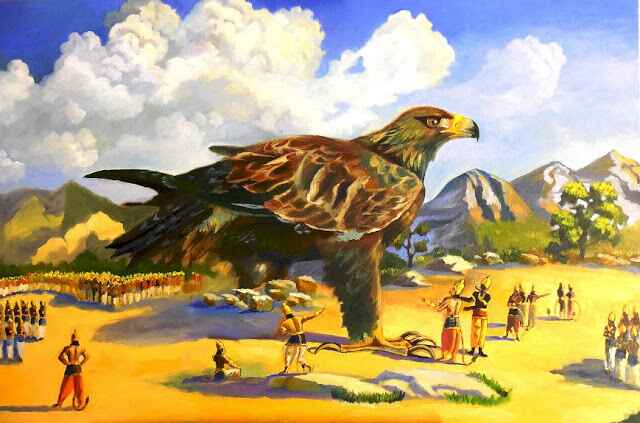
Sampati reentered the epic narrative when the Vanara search party, led by Angada, became hopeless after failing to locate Sita. When Sampati encountered them, he initially saw them as potential prey.
However, upon hearing Jatayu’s name and learning of his death while defending Sita, Sampati was overwhelmed with grief and pride. He recognized that his brother had fulfilled the highest duty of dharma.
Revelation of Sita’s Location
Moved by the Vanaras’ devotion to Rama and his brother’s sacrifice, Sampati revealed crucial information. Using his divine vision, he informed them that Sita was held captive in Lanka, across the ocean.
This revelation transformed despair into hope. Sampati’s knowledge provided the missing link in Rama’s mission and directly led to Hanuman’s leap to Lanka.
Restoration of Wings
According to some traditions, Sampati’s wings were restored as a blessing for his service to dharma. This restoration symbolizes redemption and renewal, affirming that sacrifice and righteousness are never forgotten by divine law.
Whether literal or symbolic, this event marks the completion of Sampati’s spiritual journey.
Relationship with Jatayu
Sampati’s story cannot be separated from Jatayu’s. Together, they represent two complementary forms of sacrifice. Jatayu gave his life in direct confrontation with evil, while Sampati offered guidance born of suffering and wisdom.
Their combined contributions ensured the success of Rama’s mission.
Symbolism and Philosophical Meaning
Sampati symbolizes insight gained through hardship. His inability to fly contrasts with his ability to see truth more clearly than others.
He teaches that physical limitations do not define one’s worth. Knowledge, compassion, and moral clarity can change the course of history.
Cultural and Ethical Significance
Sampati’s story is often cited in discussions on perseverance, brotherly love, and redemption. His role emphasizes the importance of elders, experience, and guidance in moments of crisis.
He also highlights the theme that even those who feel forgotten or broken still have a vital role to play in the cosmic order.
Lessons from Sampati’s Life
Sampati’s life teaches that sacrifice may not yield immediate reward, but it eventually leads to purpose. Suffering can refine wisdom, and humility can reveal truth.
He reminds humanity that help often comes from unexpected sources.
Conclusion
Sampati stands as a symbol of wisdom forged through sacrifice and endurance. Though grounded and forgotten, he became the guiding force that led Rama’s allies toward victory. His life affirms that dharma is upheld not only through strength and battle, but also through insight, compassion, and truth. Sampati’s contribution remains one of the most meaningful examples of silent heroism in the Ramayana.