Summary
Biography
Introduction
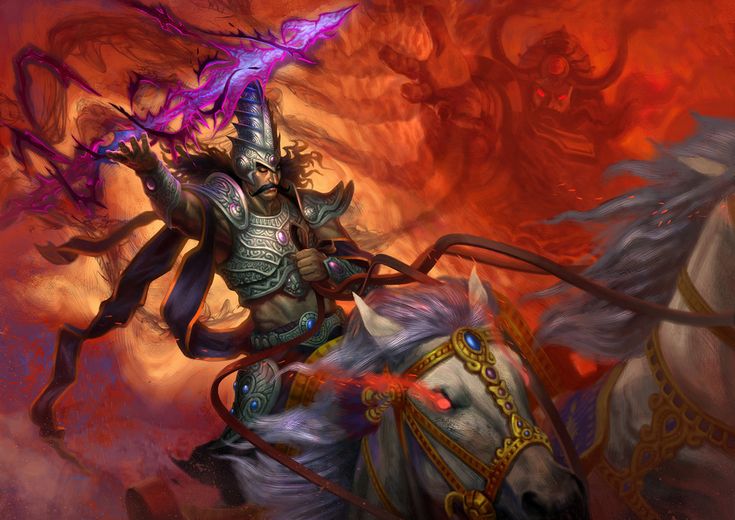
Indrajit, also known by his birth name Meghnad, is one of the most formidable and skilled warriors described in the Ramayana. Revered for his mastery of warfare, strategy, and celestial weapons, Indrajit was the crown prince of Lanka and the most powerful defender of Ravana’s kingdom. Unlike many antagonists in epic literature, Indrajit is portrayed as disciplined, intelligent, and devoted to his duties. His life embodies the tragic brilliance of a warrior whose immense abilities were devoted to an unrighteous cause.
Birth and Early Life
Indrajit was born as Meghnad, the son of Ravana, the king of Lanka, and Mandodari, a woman known for her wisdom and virtue. From an early age, Meghnad displayed extraordinary strength, sharp intellect, and a natural inclination toward martial training.
Under the guidance of powerful sages and divine instructors, Meghnad mastered advanced warfare techniques and the use of celestial weapons. His education emphasized discipline, strategy, and spiritual austerity, shaping him into a warrior unlike any other in Lanka.
Origin of the Name “Indrajit”
Meghnad earned the title “Indrajit,” meaning “conqueror of Indra,” after defeating Indra, the king of the gods, in battle. This achievement was unparalleled, as Indra was protected by divine forces and celestial weapons.
After his victory, Meghnad was honored with the name Indrajit and recognized as one of the greatest warriors in all three worlds. This event elevated his status not only in Lanka but across cosmic realms.
Mastery of Celestial Weapons
Indrajit was a master of numerous divine weapons, including those granted by Brahma, Shiva, and other celestial beings. His command over astras made him nearly invincible in combat.
One of his most feared abilities was his power to fight invisibly. Through advanced spiritual rituals, Indrajit could render himself unseen on the battlefield, striking his enemies without revealing his position. This unique ability caused widespread fear among the Vanara army.
Devotion and Religious Discipline
Indrajit was deeply religious and disciplined. Before major battles, he performed elaborate rituals and sacrifices to invoke divine blessings. His faith and austerity granted him immense strength and protection.
Unlike Ravana, whose ego often overpowered wisdom, Indrajit approached warfare with focus and restraint. He believed in following duty and honoring his lineage, even when the larger moral context was questionable.
Role in the War Against Rama
During the war between Rama and Ravana, Indrajit emerged as the greatest threat to Rama’s army. He inflicted devastating losses and displayed unmatched strategic brilliance.
One of the most critical moments of the war occurred when Indrajit used powerful celestial weapons to incapacitate Rama and Lakshmana. This event demonstrated his unparalleled martial prowess and temporarily shifted the balance of the war in Lanka’s favor.
Despite his success, Indrajit remained respectful toward his opponents and adhered strictly to the codes of warfare.
Conflict with Lakshmana
Indrajit’s final confrontation was with Lakshmana, the brother of Lord Rama. Aware that Indrajit’s power depended on specific rituals, Lakshmana targeted him at a crucial moment.
The battle between Lakshmana and Indrajit was intense and prolonged, involving the use of divine weapons on both sides. Ultimately, Lakshmana defeated Indrajit, marking a turning point in the war.
Indrajit’s death deeply affected Ravana and symbolized the collapse of Lanka’s defensive strength.
Relationship with Ravana and Mandodari
Indrajit shared a strong bond with his father Ravana, driven by loyalty and duty. However, he also respected his mother Mandodari, who was known for her wisdom and moral insight.
Though Mandodari and others warned Ravana about the consequences of his actions, Indrajit chose to stand by his father. His loyalty reflects the complex values of honor and familial duty emphasized in the Ramayana.
Character Traits and Ethical Complexity
Indrajit was disciplined, courageous, and strategic. Unlike many Rakshasa warriors, he did not fight out of cruelty or chaos. His actions were calculated and purposeful.
His tragic flaw was not arrogance but allegiance. He devoted his extraordinary abilities to a cause that ultimately opposed dharma. This makes his character a profound example of ethical conflict and tragic heroism.
Symbolic and Philosophical Meaning
Indrajit represents the danger of power divorced from righteousness. His life illustrates that even the greatest skills and devotion can lead to destruction when aligned with an unjust cause.
He also symbolizes the impermanence of worldly power. Despite conquering the king of the gods, Indrajit could not escape destiny shaped by moral law.
Cultural Legacy
Indrajit remains one of the most respected warriors in Indian epic tradition. His story is studied for its lessons on discipline, loyalty, and ethical responsibility.
In literature, drama, and scholarly discourse, Indrajit is remembered not as a villain, but as a tragic warrior whose brilliance was overshadowed by the moral failures of his lineage.
Conclusion
Indrajit, also known as Meghnad, stands as one of the most powerful and tragic figures in the Ramayana. A warrior of unmatched skill and discipline, he dedicated his life to defending Lanka and honoring his father. Yet, his allegiance to an unrighteous cause ultimately led to his fall. His biography serves as a timeless lesson that true greatness lies not merely in strength or devotion, but in aligning one’s actions with dharma.