Summary
Biography
Introduction
Nila is a prominent yet often overlooked character in the ancient Indian epic Ramayana. Known for his intelligence, leadership, and devotion to Lord Rama, Nila played a vital role in one of the most important events of the epic: the construction of Ram Setu, the bridge across the ocean to Lanka. Along with Nala, Nila served as a chief architect and supervisor of the Vanara army, ensuring the success of this monumental task. His life reflects discipline, humility, and the responsible use of power in the service of dharma.
Birth and Divine Origin
Nila was the son of Agni, the fire god, one of the most powerful and sacred deities in Hindu tradition. Agni represents energy, transformation, discipline, and purity. As the son of Agni, Nila inherited qualities such as leadership, courage, and sharp intellect.
This divine origin distinguished Nila from ordinary Vanaras. He was not only physically strong but also mentally disciplined and morally upright. His lineage gave him authority and respect within the Vanara community, preparing him for a leadership role during Lord Rama’s mission.
Childhood Curse and Its Significance
According to traditional accounts, Nila was once cursed during his childhood that anything he threw into water would float instead of sink. Unlike ordinary curses, this one did not bring suffering but remained dormant until the right moment.
When Lord Rama needed to cross the ocean to reach Lanka, this curse transformed into a divine blessing. The stones and materials thrown into the sea under Nila’s supervision floated effortlessly, making the construction of Ram Setu possible. This event highlights an important theme of the Ramayana: divine arrangements unfold at the appropriate time to support righteousness.
Position Among the Vanaras
Nila was regarded as a prince among the Vanaras and held a position of authority within Sugriva’s kingdom. He was respected not only for his lineage but also for his discipline, organizational skills, and calm temperament.
When Sugriva pledged his support to Lord Rama, Nila emerged as one of the key leaders responsible for strategic planning. His ability to manage large groups and maintain order made him an ideal choice for supervising massive operations such as the bridge construction.
Role in the Construction of Ram Setu
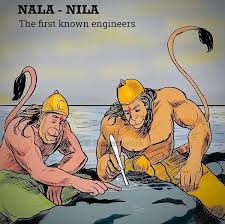
The construction of Ram Setu was an unprecedented challenge that required both technical expertise and strong leadership. Nila worked closely with Nala, the chief architect, to execute this divine project.
While Nala focused on architectural planning and structural design, Nila ensured discipline, coordination, and proper execution among the Vanara workforce. He organized teams, maintained workflow efficiency, and resolved conflicts that arose during construction.
Under Nila’s supervision, massive stones and trees were transported and placed systematically into the ocean. The materials floated due to divine grace, and the bridge gradually took shape. The combined leadership of Nala and Nila ensured that the bridge was completed swiftly and securely.
Devotion to Lord Rama
Nila was a devoted follower of Lord Rama and fully committed to the cause of dharma. Despite being a prince and a leader, he never displayed arrogance or desire for recognition.
He viewed his role as a form of service rather than authority. His devotion was expressed through action, discipline, and obedience. Nila believed that success was achieved not through personal ability alone but through alignment with divine will.
Character Traits and Moral Strength
Nila is portrayed as calm, disciplined, and thoughtful. Unlike impulsive warriors, he relied on planning and cooperation. His leadership style emphasized responsibility rather than domination.
He demonstrated the ability to balance authority with humility, making him an ideal example of ethical leadership. His character shows that strength is not merely physical but also mental and moral.
Symbolic and Philosophical Meaning
Nila represents structured effort, order, and controlled energy. As the son of Agni, he symbolizes the disciplined use of power. His role in the Ramayana illustrates that large achievements require both vision and organization.
The partnership between Nala and Nila symbolizes the union of intellect and execution. Where Nala represents technical knowledge, Nila represents management and discipline. Together, they embody the principles of effective teamwork and leadership.
Cultural and Historical Importance
Nila’s contribution highlights the importance of supporting roles in epic narratives. While warriors often receive attention, figures like Nila remind us that success depends on planners, organizers, and executors.
His story reflects early concepts of project management, leadership hierarchy, and collaborative effort. These themes remain relevant even in modern organizational structures.
Legacy
Nila’s legacy endures through the Ramayana’s teachings on leadership and service. He is remembered as a builder, organizer, and devoted servant of Lord Rama.
Though not as frequently worshipped as other figures, Nila’s life continues to inspire students, administrators, and leaders to act with discipline, humility, and purpose. His story teaches that greatness lies in responsibility rather than recognition.
Conclusion
Nila stands as a vital pillar in the success of Lord Rama’s mission. As a Vanara prince and co-builder of Ram Setu, he demonstrated how discipline, devotion, and leadership can overcome even the greatest natural obstacles. His biography enriches the Ramayana by reminding us that victory is achieved not only through valor but also through organization, cooperation, and selfless service to dharma.