Summary
Biography
Introduction
King Janaka is one of the most celebrated monarchs in Indian history and mythology. As the ruler of Mithila and the father of Goddess Sita, Janaka exemplifies the qualities of a philosopher-king—combining political acumen, spiritual insight, and unwavering adherence to dharma. His life in the Ramayana is a perfect illustration of righteous governance, ethical decision-making, and devotion to truth, making him a model ruler whose legacy transcends time.
Birth and Early Life
King Janaka was born in the royal dynasty of Videha, a region corresponding to modern-day Mithila in Bihar, India. While historical records are limited, Puranic and epic sources describe Janaka as a king who excelled not only in governance but also in spiritual wisdom and philosophical understanding.
From an early age, Janaka was taught the importance of dharma, justice, and compassion. Unlike many rulers who prioritized wealth or conquest, he cultivated knowledge, morality, and self-discipline. These formative lessons laid the foundation for his later reputation as both a powerful monarch and a sage-like figure.
Rule of Mithila
Janaka ascended the throne of Mithila and ruled with fairness, justice, and devotion to his subjects. His reign was marked by prosperity, ethical governance, and the promotion of learning. He encouraged scholars, sages, and spiritual teachers to reside in his kingdom, creating a center of intellectual and spiritual excellence.
The citizens of Mithila were known to be highly cultured, educated, and spiritually aware, reflecting Janaka’s emphasis on the harmony of governance and morality. His kingdom became a model of balanced administration, where dharma guided both politics and personal conduct.
Father of Sita
King Janaka is most famously known as the father of Goddess Sita, the incarnation of Goddess Lakshmi and the central female character of the Ramayana. According to the epic, Sita was discovered by Janaka while he was plowing the field as part of a ritual for the welfare of his kingdom. She emerged from the earth, symbolizing purity, devotion, and divine grace.
Janaka’s nurturing and guidance of Sita reflected his deep understanding of dharma and parental responsibility. He ensured that Sita grew into a virtuous, intelligent, and spiritually enlightened young woman, capable of embodying ideal qualities of womanhood and devotion.
The Swayamvara of Sita
One of the most significant episodes in Janaka’s life was Sita’s Swayamvara, where suitors from across kingdoms were invited to compete for her hand. Janaka organized a test of strength and skill, requiring suitors to lift and string the divine bow of Lord Shiva.
Lord Rama, guided by destiny and divine purpose, succeeded in lifting the bow and winning Sita’s hand. Janaka’s role in this event highlights his ability to combine fairness, wisdom, and devotion to dharma in even personal and familial decisions.
Relationship with Sage Vishwamitra
King Janaka maintained close relations with sages and spiritual teachers, most notably Maharishi Vishwamitra. Vishwamitra brought young Rama and Lakshmana to Mithila and trained them in advanced martial and spiritual knowledge. Janaka welcomed the sages and valued their guidance, reflecting his openness to wisdom and collaboration with spiritual authorities.
This association illustrates Janaka’s recognition that political power and spiritual insight must work together to uphold dharma and social order.
Philosophical and Spiritual Contributions
Janaka is revered not only as a ruler but also as a spiritual philosopher. He is mentioned in several Upanishads, particularly the Brihadaranyaka Upanishad, as an example of a king who attained spiritual realization while actively governing his kingdom.
He exemplifies the concept of “Practical Vedanta”, showing that worldly responsibilities and spiritual enlightenment are not mutually exclusive. Janaka’s philosophy teaches that one can live a life of detachment, inner wisdom, and moral clarity without renouncing duties or societal roles.
Legacy and Influence
King Janaka’s legacy extends beyond his role as Sita’s father. He is celebrated as an ideal ruler who balanced power, justice, and spirituality. His governance and personal conduct influenced subsequent generations of kings, scholars, and spiritual seekers.
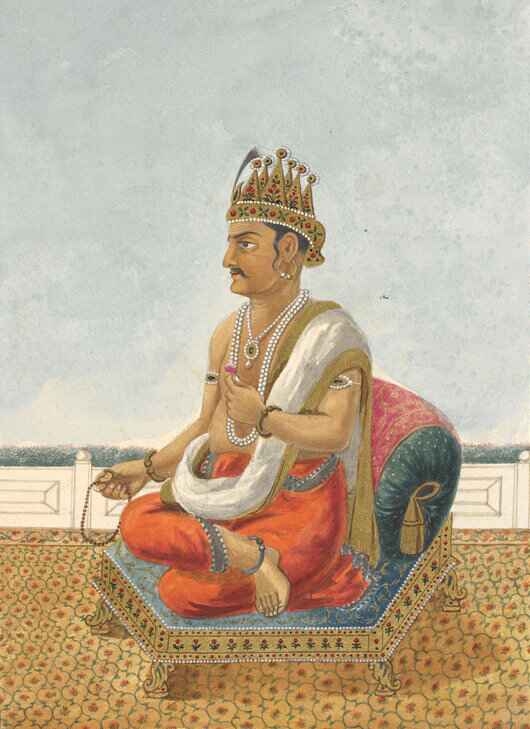
In art, literature, and folklore, Janaka is depicted as the embodiment of virtue, wisdom, and moral integrity. His life continues to be a source of inspiration for leaders, parents, and students of dharma.
Symbolism and Philosophical Significance
Janaka symbolizes:
- Righteous governance: Upholding dharma in political and social affairs.
- Spiritual wisdom: Integrating meditation, ethical conduct, and philosophical insight.
- Ideal parenting: Raising children with virtue, wisdom, and moral guidance.
- Detachment with responsibility: Performing worldly duties without attachment to personal gain.
His life conveys that true leadership is rooted in knowledge, morality, and devotion to higher principles.
Lessons from King Janaka’s Life
King Janaka teaches that:
- Power must be exercised with responsibility and ethical clarity.
- Spiritual enlightenment is compatible with worldly engagement.
- Fairness, compassion, and devotion to dharma are the hallmarks of a great ruler.
- Parenting and mentorship are as important as governance in shaping a just society.
Conclusion
King Janaka stands as a timeless example of virtue, wisdom, and ethical leadership. As the ruler of Mithila and father of Sita, he balanced worldly authority with spiritual insight, leaving a legacy that continues to guide generations. Through his life and actions, Janaka demonstrates that dharma, wisdom, and compassion are the true measures of greatness, both in governance and in personal conduct.