Summary
Biography
Biography of Yudhishthira – The Eldest Pandava
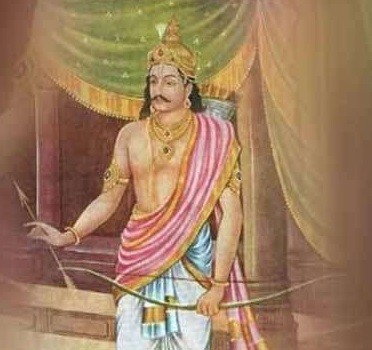
Yudhishthira, also known as Dharmaraja, is the eldest of the five Pandava brothers in the epic Mahabharata, one of the greatest epics of ancient India. He is celebrated as the embodiment of dharma (righteousness), truth, and justice. Born to Queen Kunti through a boon from Yama, the god of dharma and death, Yudhishthira’s life was guided by moral principles from the very beginning. His upbringing and actions throughout his life exemplify unwavering adherence to ethical conduct, making him a revered figure in Indian mythology.
Early Life and Birth
Yudhishthira’s birth was extraordinary. King Pandu, his father, was cursed and could not father children, so his queens Kunti and Madri invoked divine blessings to conceive their sons. Through Kunti’s invocation of Yama, the god of righteousness, Yudhishthira was born. Even as a child, he exhibited intelligence, patience, and a keen understanding of moral values, traits that would define him as Dharmaraja, or “the King of Dharma.”
He was trained in the arts of warfare, statecraft, and philosophy by the great guru Drona and learned the sacred scriptures under the guidance of his mentors. Unlike his brothers, Yudhishthira’s strength was not just in martial skills but also in wisdom, fairness, and the ability to make ethical decisions, even under the most difficult circumstances.
Role in Hastinapura and Indraprastha
During the Pandavas’ stay in Hastinapura, Yudhishthira was groomed to be a ruler. His natural qualities of leadership, honesty, and compassion made him the perfect candidate to govern the kingdom. Later, after the division of the Kuru kingdom, Yudhishthira became the king of Indraprastha, a magnificent city constructed by the Pandavas with divine assistance. His rule was marked by justice, prosperity, and peace, earning him widespread admiration.
Yudhishthira’s commitment to dharma was tested multiple times in his life, especially during the game of dice arranged by Duryodhana and Shakuni, which led to the Pandavas’ exile. Even in moments of personal loss and humiliation, Yudhishthira remained steadfast in his principles, demonstrating patience and resilience.
Exile and Challenges
The infamous dice game was a turning point in Yudhishthira’s life. Manipulated by Shakuni’s cunning, he lost his kingdom, wealth, and even his brothers and wife Draupadi to the Kauravas. Despite the humiliation, Yudhishthira accepted the outcome, adhering to his sense of dharma. The 13-year exile in the forests tested his patience, wisdom, and leadership.
During exile, Yudhishthira continued to guide his brothers in righteous conduct and moral decisions. He participated in many spiritual discussions with sages such as Vishwamitra, Vashistha, and Markandeya, further deepening his knowledge of dharma, karma, and dhyana (meditation). His time in exile was also marked by encounters with mystical beings and divine experiences, reinforcing his status as an exemplar of virtue.
Role in the Mahabharata War
Yudhishthira’s wisdom and sense of justice were crucial during the Kurukshetra war, the climactic battle between the Pandavas and Kauravas. Though not the most physically powerful of his brothers, Yudhishthira’s strategic mind and adherence to ethical warfare played a pivotal role. He constantly advised caution, diplomacy, and righteousness even during the intensity of battle.
One of the most remarkable aspects of Yudhishthira’s character during the war was his commitment to truth. Unlike others who might bend rules for advantage, he adhered strictly to dharma, earning respect from allies and enemies alike. His leadership inspired his brothers, soldiers, and followers to fight not merely for victory but for justice and righteousness.
After the War
Following the victory of the Pandavas, Yudhishthira ascended the throne of Hastinapura, bringing peace and prosperity to the kingdom. His reign was marked by justice, fair governance, and the flourishing of arts, culture, and spirituality. Even as a king, he prioritized dharma over personal gain and ensured that his people lived under fair and moral laws.
Yudhishthira’s wisdom is famously depicted in the “Yaksha Prashna”, a spiritual dialogue with a mystical being who questioned him on moral and philosophical dilemmas. His thoughtful and morally upright answers reflect the depth of his understanding and the high moral standards he upheld throughout life.
Legacy
Yudhishthira is remembered not just as a warrior or a king, but as an eternal symbol of truth, morality, and righteousness. He teaches the importance of patience, ethical decision-making, and steadfastness even in adversity. His life is a source of inspiration for millions, emphasizing that true leadership is rooted in dharma, compassion, and wisdom.
He is also significant in religious and philosophical texts, symbolizing the ideal ruler who balances personal duty with societal responsibilities. His legacy continues to influence Indian culture, literature, and spiritual teachings, making him one of the most revered figures of the Mahabharata.
