Summary
Biography
Biography of Bhima – The Mighty Pandava
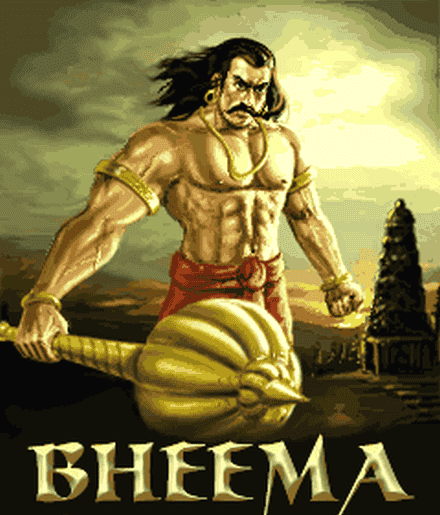
Bhima, the second of the five Pandava brothers in the Mahabharata, is renowned for his immense physical strength, bravery, and devotion to dharma. He was born to Queen Kunti through a boon from Vayu, the god of wind, making him a son of divine power. Bhima’s life was defined by valor, loyalty to his brothers, and an unwavering commitment to justice.
Early Life and Birth
Bhima was born under extraordinary circumstances. Queen Kunti invoked Vayu, the wind god, using a divine mantra, which resulted in Bhima’s birth. From childhood, it was evident that he possessed superhuman strength and a fierce determination. He could perform feats beyond ordinary humans, including lifting massive objects, defeating wild animals, and mastering combat at a young age.
Raised alongside his brothers under the guidance of Guru Drona and Kripacharya, Bhima excelled in martial arts, wrestling, mace fighting, and archery. While Yudhishthira represented wisdom, Arjuna represented skill, and Nakula-Sahadeva represented agility, Bhima stood out as the unmatched powerhouse of the Pandavas, ready to face any challenge with courage and determination.
Personality and Character
Bhima’s personality was a mix of ferocity and compassion. While he was fiery in battle, he deeply cared for his family and upheld dharma. Known for his loyalty, Bhima would go to any lengths to protect his brothers, especially Yudhishthira. Despite his brute strength, he was guided by a strong moral compass and often acted to uphold justice.
He was also known for his hearty appetite, both in food and life experiences, and his jovial, straightforward nature endeared him to allies. His love for his mother, Kunti, and his brothers shaped much of his actions throughout the Mahabharata.
Role in the Pandava Kingdom and Exile
During the Pandavas’ life in Hastinapura and later in Indraprastha, Bhima served as the protector of his family. He played a pivotal role in maintaining their security and enforcing dharma. However, Bhima’s life was tested during the dice game orchestrated by Shakuni, which led to the Pandavas’ 13-year exile, including one year in incognito.
During exile, Bhima undertook numerous heroic feats. He fought and defeated formidable demons like Bakāsura, Hidimba, and Kirmira, showcasing both strength and strategic thinking. His victory over these powerful beings not only protected the Pandavas but also reinforced his role as the family’s guardian.
Role in the Mahabharata War
Bhima was a central figure in the Kurukshetra war, where his might and valor were unmatched. Armed with his mace (gada), he defeated numerous Kaurava warriors, including Duryodhana, his arch-rival, in a climactic duel. Bhima’s combat prowess was crucial to the Pandavas’ victory.
He also played key roles in avenging injustices, such as killing Dushasana, who had humiliated Draupadi during the dice game. Throughout the war, Bhima’s strength was tempered by guidance from his brothers, ensuring that his power was used in the service of dharma rather than unchecked rage.
Feats and Legendary Exploits
Bhima’s legendary exploits are numerous:
- Defeating demons and rakshasas: Bhima’s victories over powerful beings like Hidimba, Bakāsura, and the giant Ghatotkacha demonstrated both skill and strength.
- Strength in lifting and carrying: Bhima could lift enormous boulders and wield his mace with unmatched power, making him a terror on the battlefield.
- Protector of Draupadi: Bhima repeatedly defended Draupadi, ensuring her honor against Kaurava humiliation.
- Role in war strategy: While known for brute force, Bhima also demonstrated intelligence and coordination with his brothers during the Kurukshetra war.
Legacy
Bhima is remembered as the mighty protector, loyal brother, and fearless warrior. His life teaches that true strength is not merely physical but must be combined with loyalty, courage, and moral responsibility. He represents the balance between ferocity in battle and compassion for loved ones.
In Indian mythology, Bhima symbolizes power, valor, and unwavering loyalty. Statues, stories, and folk traditions continue to celebrate his feats. As a central figure in the Mahabharata, he reminds generations that strength must be guided by righteousness, courage, and devotion to dharma.
