Summary
Biography
Biography of Dushasana – The Loyal Kaurava Warrior
Dushasana, the second eldest of the Kaurava brothers, was born to King Dhritarashtra and Queen Gandhari. As the younger brother of Duryodhana, he is remembered for his unwavering loyalty, immense strength, and pivotal role in the Mahabharata, particularly during the game of dice and the Kurukshetra war. His life reflects the consequences of blind loyalty, unchecked aggression, and adherence to adharma (unrighteous actions) when guided by ambition and pride.
Early Life and Birth
Dushasana was born into the royal family of Hastinapura, alongside 99 other Kaurava brothers. From childhood, he was trained in martial arts, archery, swordsmanship, and mace combat under the guidance of Guru Drona and other royal mentors. Like his elder brother Duryodhana, Dushasana exhibited strength, bravery, and a combative spirit, which made him a formidable warrior even in his early years.
Educated alongside the Pandavas, Dushasana grew up with a sense of rivalry and competition, particularly with Yudhishthira and Bhima. His loyalty to Duryodhana shaped his actions throughout life, often leading him to participate in schemes against the Pandavas.
Personality and Character
Dushasana’s character is defined by loyalty, courage, and aggression. Fiercely devoted to his elder brother Duryodhana, he was willing to take any action to protect and support the Kaurava interests. Unlike Duryodhana, who combined intelligence with ambition, Dushasana often acted impulsively and aggressively, following orders without question.
Despite his ferocity, Dushasana was also known for his valor and combat prowess, which made him a critical asset to the Kaurava army. His life demonstrates the duality of strength: while physical power can protect and uphold family, it can also contribute to unethical deeds when guided by ambition and blind loyalty.
Role in the Dice Game and Humiliation of Draupadi
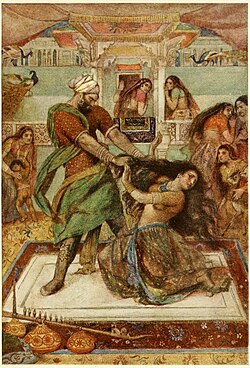
Dushasana is most infamous for his role in the game of dice, orchestrated by Shakuni and Duryodhana, which led to the Pandavas’ exile. During this incident, he assisted in humiliating Draupadi, the wife of the Pandavas, by attempting to disrobe her in the Hastinapura court. This act of cruelty cemented Dushasana’s place in the Mahabharata as a symbol of adharma and injustice.
While this act is widely condemned, it also highlights the extreme loyalty he had for Duryodhana. Dushasana never questioned the morality of the orders, reflecting the dangers of unquestioning allegiance and the destructive consequences of ambition unchecked by ethics.
Role in the Kurukshetra War
Dushasana played a crucial role in the Kurukshetra war, fighting valiantly on the Kaurava side. Armed with mace and sword, he battled against several Pandava warriors, including Bhima, Nakula, and Sahadeva. His strength and skill made him a feared opponent on the battlefield.
Dushasana’s life ended at the hands of Bhima, who avenged Draupadi’s humiliation by killing him and drinking his blood, a grim act reflecting the deep personal vendettas and dharma-driven justice in the epic. This episode demonstrates the cycle of action and consequence central to the Mahabharata’s moral teachings.
Legendary Skills and Achievements
Dushasana’s notable skills and achievements include:
- Martial Strength: Exceptional prowess in mace fighting, swordsmanship, and hand-to-hand combat.
- Loyalty and Dedication: Unquestioning allegiance to Duryodhana and the Kaurava cause.
- Battlefield Courage: Feared warrior during the Kurukshetra war, commanding respect for his bravery.
- Strategic Support: Assisted Duryodhana in various military and political schemes against the Pandavas.
Legacy
Dushasana is remembered as a loyal and formidable Kaurava warrior, whose actions had a lasting impact on the Mahabharata. While his cruelty, particularly towards Draupadi, is condemned, his strength, loyalty, and valor remain significant. He serves as a cautionary example of the consequences of unchecked ambition, blind obedience, and moral negligence.
In Indian mythology, Dushasana symbolizes the dangers of blind loyalty and adherence to adharma, contrasting with the Pandavas’ embodiment of dharma. His life is often cited in stories and moral discussions to emphasize that strength and loyalty must be guided by righteousness and ethical judgment.
