Summary
Biography
Biography of Shakuni – The Cunning Mastermind
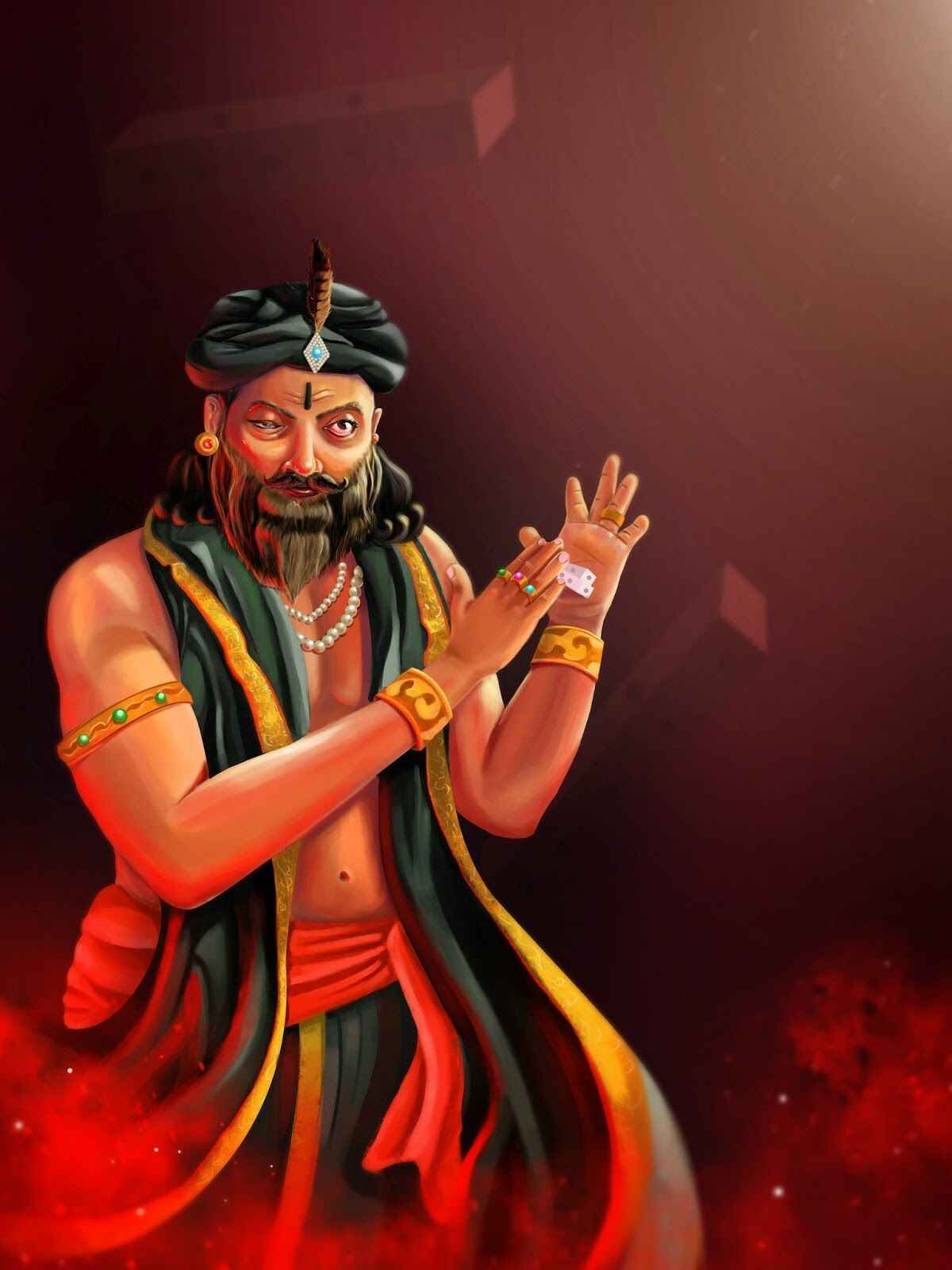
Shakuni, the maternal uncle of the Kauravas, was born as the prince of Gandhara. Known for his cunning, intelligence, and strategic mind, Shakuni played a decisive role in the Mahabharata, influencing key events that shaped the destiny of both the Pandavas and Kauravas. His life exemplifies the complex interplay of ambition, revenge, and intelligence in the epic, showing how intellect can be used for both strategy and manipulation.
Early Life and Birth
Shakuni was born in the kingdom of Gandhara, known for its warrior traditions. He was the brother of Queen Gandhari, the mother of the Kauravas. From a young age, Shakuni displayed astute intelligence, sharp wit, and tactical skills. Trained in statecraft, warfare, and diplomacy, he became a skilled politician and strategist.
Legends suggest that Shakuni’s early life was marked by adversity. Some accounts say he was imprisoned by Dhritarashtra as part of political conflict, which fueled his desire for revenge and his deep loyalty to Gandhari’s family. This personal vendetta became a driving force in his manipulations against the Pandavas.
Personality and Character
Shakuni’s character is defined by cunning, intelligence, and manipulative genius. Unlike warriors such as Bhima or Arjuna, his strength lay in strategy, psychological manipulation, and political intrigue. He was deeply loyal to his sister Gandhari and, by extension, to her sons, the Kauravas, especially Duryodhana.
Shakuni was ambitious and believed in using any means to achieve his objectives, often bending moral codes to secure power. Though often portrayed as a villain, he was highly intelligent, articulate, and capable of foreseeing the consequences of his actions. His ability to influence others, plan complex schemes, and manipulate situations made him a key player in the Mahabharata’s unfolding drama.
Role in Hastinapura and the Pandava Rivalry
Shakuni’s influence was most prominent during the Pandavas’ early years in Hastinapura. He was the mastermind behind the infamous game of dice, which humiliated the Pandavas, caused Draupadi’s public disgrace, and led to the Pandavas’ 13-year exile. Using loaded dice, Shakuni manipulated events to benefit Duryodhana and weaken the Pandavas’ claim to the throne.
Beyond the dice game, Shakuni advised Duryodhana in all matters of governance, diplomacy, and warfare. He constantly encouraged the Kaurava prince to act decisively against the Pandavas, often pushing the limits of morality to secure victory. His manipulations were a mix of political savvy and personal vengeance, making him a master strategist of his time.
Role in the Kurukshetra War
During the Kurukshetra war, Shakuni served as a key advisor and strategist to the Kaurava army. He coordinated battle plans, counseled Duryodhana, and attempted to exploit the weaknesses of the Pandavas. Despite being older and not primarily a combatant, his intelligence shaped the tactics of many encounters, demonstrating that mental strategy could be as critical as physical strength in warfare.
Shakuni’s foresight and scheming ensured that Duryodhana remained confident and the Kauravas maintained strategic positions for much of the war. However, his reliance on deceit and manipulation ultimately failed against the combined dharma-driven strength and unity of the Pandavas.
Legendary Schemes and Achievements
Shakuni is best remembered for:
- Mastering the Dice Game: Orchestrated the dice game that humiliated the Pandavas and initiated their exile.
- Political Strategy: Guided Duryodhana in diplomacy, alliances, and governance to consolidate Kaurava power.
- Psychological Manipulation: Expert in manipulating emotions, exploiting rivalries, and creating mistrust among enemies.
- Influence in the Kurukshetra War: Advised on battlefield strategy and war tactics, demonstrating intelligence over brute strength.
- Loyalty to Family: His actions, however ruthless, were driven by loyalty to his sister Gandhari and her sons.
Downfall and Legacy
Shakuni met his end in the Kurukshetra war, killed by Sahadeva, who avenged the harm caused to the Pandavas and Draupadi. His death marked the fall of the Kaurava strategy and symbolized the consequences of using cunning and manipulation to pursue selfish ambitions.
Shakuni’s legacy is complex. He symbolizes intelligence, strategy, and manipulation, showing that intellect without morality can lead to downfall. While often remembered as a villain, his brilliance in strategy, foresight, and influence over the Mahabharata’s events makes him a memorable and pivotal figure in Indian mythology.
Shakuni’s life teaches that cunning and intelligence must be tempered with ethics, and his story remains a lesson in political and personal strategy in Indian folklore and literature.
