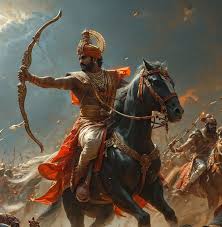
Personal Information
- Place of Birth: Not clearly recorded (likely Khallikote region, Odisha)
- Place of Death: 1568 CE, Cuttack, Odisha
- Era: 1559–1568 CE, Medieval
Summary
Biography
King Mukunda Deva, also known by his full name Mukunda Harichandana, occupies a defining place in the history of Odisha as the last independent and sovereign ruler before the region fell into the hands of external powers. His reign from 1559 to 1568 CE marks the closing chapter of native Odia kingship that had endured for more than a millennium since ancient times. Mukunda Deva’s story is one of ambition, reform, resilience, political struggle, and ultimately, tragedy. He ruled during a turbulent period marked by internal rivalries, weakening administrative structures, and the rising military power of the Bengal Sultans and the Afghans, who were gradually expanding their influence over eastern India.
Though exact details about his early life, family background, and birth are not fully recorded in historical texts, inscriptions and later chronicles describe Mukunda Deva as a capable warrior and administrator who belonged to the Harichandana family, a noble lineage associated with the Khallikote region of southern Odisha. Before ascending the throne, he served in the royal administration of the fading Gajapati Empire, which had been declining rapidly after the reign of the last strong ruler, Prataprudra Deva. The weakening of the Gajapati rule created a power vacuum, opening the door for ambitious feudal lords and military commanders like Mukunda Deva to make their claim to the throne.
Mukunda Deva came to power by replacing the Bhoi rulers who had briefly controlled the throne after the fall of the Gajapati dynasty. Once he became king, he attempted to provide a strong and centralized leadership to unite Odisha against rising threats. His rule is remembered for efforts to reorganize the administration, reinforce the military structure, and restore dignity to the kingdom that had suffered political instability for decades. He adopted the prestigious royal title Gajapati, seeking to revive the legacy of his illustrious predecessors who once ruled a vast empire stretching from the Ganga in the north to the Kaveri in the south.
Mukunda Deva’s reign coincided with a time when the Bengal Sultanate, under the Karrani dynasty, had become a formidable power. The Afghan general-turned-ruler Sulaiman Karrani, and later his son Bayazid Karrani, were expanding their dominion aggressively into neighboring regions. Their control over Bengal and parts of Bihar gave them significant military strength. For Odisha, which was still recovering from earlier conflicts, this rising threat posed a major challenge. Mukunda Deva attempted diplomatic strategies, forging temporary alliances with the Mughal Empire, which was then under Emperor Akbar. This was a bold, forward-looking move, as Akbar’s empire was still consolidating its territories in the north but was destined to become one of India’s greatest imperial forces.
Through his political diplomacy, Mukunda Deva hoped to counterbalance Afghan influence and secure Odisha’s independence. However, internal politics and rivalry within the Odia nobility weakened his position. Many powerful ministers, generals, and landholders were unwilling to accept Mukunda Deva’s reforms or central authority. The most notorious among his rivals was Ramachandra Bhanja, a powerful feudatory chief who ultimately betrayed him during the Afghan invasion.
By the mid-1560s, the situation had become critical. Despite Mukunda Deva’s efforts to strengthen Odisha, the Afghan forces under the Karrani dynasty launched an invasion of the kingdom. Mukunda Deva personally led his army to defend his territory, demonstrating great valor and leadership. But without complete support from his fractured nobility and with the Afghan army being superior in numbers and weaponry, Odisha’s defenses began to crumble.
The decisive turning point came in 1568 CE, when Mukunda Deva was betrayed during a critical phase of the conflict. Ramachandra Bhanja and other rebellious chiefs sided with the Afghan forces, weakening Odisha’s military resistance. Mukunda Deva was defeated and later killed near Cuttack, the political and military center of the kingdom. His death was not merely the end of a king but symbolized the fall of Odisha’s last independent rule. After him, the territory fell under the control of the Bengal Sultans and soon afterward became part of the expanding Mughal Empire.
Despite ruling for less than a decade, Mukunda Deva left a lasting imprint on the history and memory of Odisha. His reign represents courage in the face of overwhelming odds and an attempt to restore political unity during a time when the region was weakened by decades of decline. His vision of a strong, independent Odisha reflects the spirit of the Gajapati legacy, even though circumstances did not allow him to fulfill this ambition fully.
Mukunda Deva is also remembered for his patronage of temples and learning. Though the political turmoil of his era limited large-scale construction projects, inscriptions show that he supported temple renovations, religious institutions, and traditional Odia culture. His administration attempted to preserve classical Odia arts, literature, and the Jagannath tradition, which had always been central to the identity of the Odia people.
The tragic end of Mukunda Deva remains one of the most emotional moments in Odia history. His fall marked the end of more than 1,000 years of independent dynastic rule in Kalinga-Odisha, beginning from ancient dynasties like the Mahameghavahanas and Kharavelas, through the Somavamshis, Eastern Gangas, and Gajapatis. After him, Odisha endured long periods of foreign rule—first Afghan, then Mughal, and eventually the Marathas and the British.
Today, Mukunda Deva is honored as a symbol of the last spark of Odia sovereignty, remembered for his bravery, leadership, and unwavering attempt to protect the independence of his land during one of the most challenging eras in its history.
