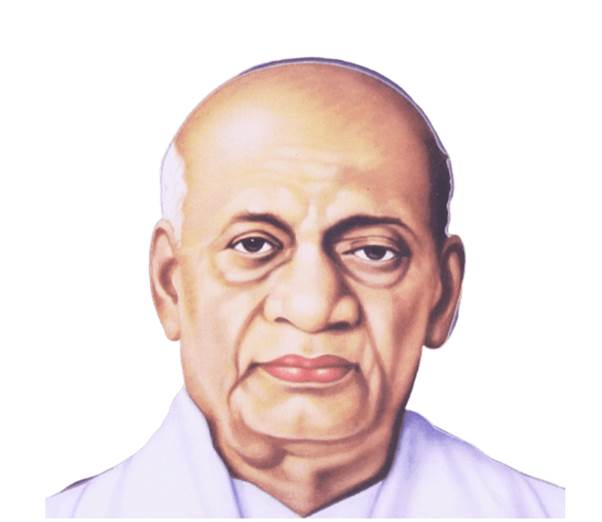
Vallabhbhai Jhaverbhai Patel
Freedom Fighters | 31 October 1875 - 15 December 1950
"Sardar Vallabhbhai Patel was one of India's foremost freedom fighters and statesmen, known as the "Iron Man of India." He played a pivotal role in integrating more than 560 princely states into the Indian Union, helping shape modern India after independence."
Born
31 October 1875Birthplace
Nadiad, Bombay Presidency, British India (Present-day Gujarat, India)Died
15 December 1950Place of Death
Bombay, Bombay State, India (Present-day Mumbai, Maharashtra, India)Nationality
IndianGender
MaleSardar Vallabhbhai Patel Biography
Sardar Vallabhbhai Patel was one of the most influential leaders of India's freedom struggle and a key architect of modern India. Popularly known as the "Iron Man of India", he played a decisive role in unifying the country after independence by integrating hundreds of princely states into the Indian Union. His strong leadership, administrative skills, and dedication to national unity earned him a respected place in Indian history.
Early Life and Family
Vallabhbhai Patel was born on 31 October 1875 in Nadiad, Gujarat, into a farming family. His father, Jhaverbhai Patel, had served in the army of Rani Lakshmibai of Jhansi, while his mother, Ladbai, was a deeply religious woman who influenced his values and character.
From a young age, Patel displayed determination, courage, and self-discipline. Despite limited resources, he pursued his education with great dedication and worked hard to achieve success.
Education and Legal Career
Patel completed his education in Gujarat and later pursued law. Through determination and self-study, he qualified as a lawyer and established a successful legal practice.
In 1910, he traveled to England to study at the Middle Temple in London. He excelled in his studies and returned to India as a distinguished barrister. His legal expertise and leadership abilities quickly earned him recognition.
Entry into the Freedom Movement
Patel's life changed significantly after meeting Mahatma Gandhi. Inspired by Gandhi's ideas of nonviolent resistance and national service, he joined the Indian freedom movement.
He became actively involved in campaigns against British rule and dedicated himself to improving the lives of ordinary Indians, particularly farmers and rural communities.
Kheda Satyagraha
In 1918, Patel played a leading role in the Kheda Satyagraha in Gujarat. Farmers facing crop failure were unable to pay taxes demanded by the British government.
Under Patel's leadership, the farmers organized a peaceful movement demanding tax relief. The campaign was successful and established Patel as an important national leader.
Bardoli Satyagraha and the Title "Sardar"
One of Patel's greatest achievements during the freedom struggle was the Bardoli Satyagraha of 1928. The British government had imposed increased land revenue taxes on farmers despite difficult economic conditions.
Patel led a disciplined and peaceful movement against the tax hike. The campaign forced the British authorities to withdraw their decision. In recognition of his leadership, the people of Bardoli honored him with the title "Sardar", meaning leader or chief.
Role in the Indian National Congress
Sardar Patel became one of the most prominent leaders of the Indian National Congress. He worked closely with Mahatma Gandhi, Jawaharlal Nehru, and other national leaders.
He participated in major movements such as the Non-Cooperation Movement, Civil Disobedience Movement, and Quit India Movement. Throughout his political career, he faced imprisonment multiple times due to his involvement in the freedom struggle.
Contribution to India's Independence
Patel played a vital role in organizing Congress activities and mobilizing public support for India's independence. His organizational abilities and practical approach made him one of the strongest leaders within the nationalist movement.
When India achieved independence on 15 August 1947, Patel emerged as one of the most influential figures in the newly formed government.
First Deputy Prime Minister and Home Minister
After independence, Sardar Vallabhbhai Patel became India's first Deputy Prime Minister and Home Minister. In these positions, he faced the enormous challenge of maintaining national unity and stability.
His strong administrative skills helped establish law and order during a difficult period marked by partition, migration, and political uncertainty.
Unification of Princely States
One of Patel's greatest achievements was the integration of more than 560 princely states into the Indian Union. At independence, many princely states had the option of joining India or remaining independent.
Through diplomacy, negotiation, and firm leadership, Patel persuaded almost all princely rulers to accede to India. Important states such as Hyderabad, Junagadh, and others were successfully integrated into the nation.
This remarkable accomplishment earned him the title "Iron Man of India" and established his reputation as the architect of India's political unity.
Leadership Qualities and Vision
Sardar Patel believed in national unity, discipline, and efficient governance. He emphasized strong institutions, public service, and national integration as essential foundations for India's development.
His practical approach to administration and nation-building continues to be studied and admired by leaders and scholars.
Death
Sardar Vallabhbhai Patel passed away on 15 December 1950 in Bombay (now Mumbai). His death was a great loss to the nation, as he had played a crucial role in shaping independent India.
Legacy
Sardar Vallabhbhai Patel is remembered as one of the principal architects of modern India. His contributions to the freedom struggle and the unification of the country continue to inspire generations.
His vision of a united and strong India remains an important part of the nation's identity and development.
Honours and Recognition
- Popularly known as the "Iron Man of India."
- Awarded the Bharat Ratna, India's highest civilian honor, in 1991.
- The Statue of Unity in Gujarat, the world's tallest statue, was built in his honor.
- Remembered as the architect of India's political integration.
- His birth anniversary, 31 October, is observed as National Unity Day (Rashtriya Ekta Diwas).
Conclusion
Sardar Vallabhbhai Patel dedicated his life to India's freedom, unity, and progress. Through his determination, leadership, and vision, he successfully united a diverse nation and laid the foundation for a strong and integrated India. His legacy as the Iron Man of India continues to inspire citizens across the country.
Comments & Tribute (1)