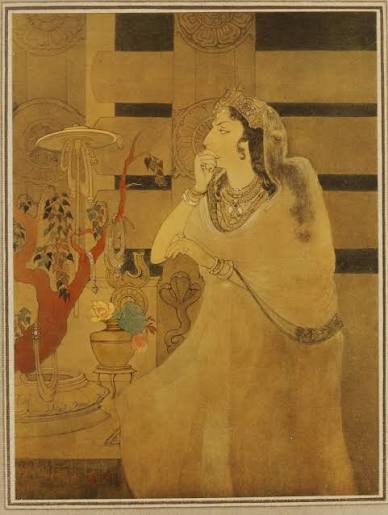
Tishyarakshita
Ancient India | c. 260 BCE (Approximate) - c. 232 BCE (Approximate)
"Tishyarakshita was the last queen of Emperor Ashoka and a notable figure in Buddhist traditions. She is primarily remembered through historical chronicles that describe her involvement in royal court intrigues surrounding Prince Kunala and the Bodhi Tree"
Born
c. 260 BCE (Approximate)Birthplace
Maurya Empire, Ancient India (Exact location unknown)Died
c. 232 BCE (Approximate)Place of Death
Pataliputra, Maurya Empire (Present-day Patna, Bihar, India, according to traditional accounts)Nationality
Ancient IndianGender
FemaleTishyarakshita Biography
Tishyarakshita was the last queen consort of Emperor Ashoka and one of the most discussed female figures associated with the Mauryan Empire. Her story survives primarily through Buddhist literary traditions such as the Ashokavadana, Divyavadana, and Mahavamsa. Although historians continue to debate the historical accuracy of certain episodes connected with her life, she remains an important figure in narratives concerning the final years of Ashoka's reign.
Unlike many royal women remembered for charitable works or political achievements, Tishyarakshita is known primarily through stories of court intrigue, political influence, and her alleged role in events involving Prince Kunala and the Bodhi Tree at Bodh Gaya. These accounts, preserved in Buddhist literature centuries after her lifetime, have made her one of the most controversial women in ancient Indian history.
Her biography offers a fascinating glimpse into the complexities of the Mauryan court during the later years of Ashoka's rule, a period marked by political tensions, succession concerns, and religious devotion.
Historical Sources and Background
Knowledge about Tishyarakshita comes mainly from Buddhist chronicles rather than from contemporary inscriptions. Important sources mentioning her include the Ashokavadana, Divyavadana, and Mahavamsa. These texts were composed long after the Mauryan period and often combined historical events with moral and religious themes.
Unlike Emperor Ashoka, whose reign is documented through numerous inscriptions, Tishyarakshita is absent from surviving royal edicts. As a result, historians approach many stories about her with caution and recognize that some accounts may contain legendary elements.
Despite these uncertainties, the persistence of her story in Buddhist literature demonstrates the impact she had on the historical imagination of later generations.
Early Life
Very little reliable information is available regarding the early life of Tishyarakshita. Ancient chronicles do not provide clear details about her birth, parentage, or childhood.
Some traditional accounts suggest that she may have begun her life in a non-royal environment before eventually rising within the Mauryan court. Other stories claim she possessed exceptional beauty, intelligence, and artistic talent, qualities that attracted attention in royal circles.
The absence of contemporary evidence means that many details about her early years remain uncertain. Nevertheless, it is generally accepted that she entered the imperial court during the later phase of Ashoka's reign.
Her journey from relative obscurity to becoming queen demonstrates the dynamic nature of life within the Mauryan Empire.
Marriage to Emperor Ashoka
Tishyarakshita became associated with Emperor Ashoka during the final years of his life. After the death of his chief queen Asandhimitra, she rose to prominence and eventually became queen consort.
By this period, Ashoka had already established himself as one of the most powerful rulers in Indian history. Following the Kalinga War, he had embraced Buddhist teachings and devoted considerable energy to promoting moral governance and religious tolerance.
As queen, Tishyarakshita gained access to the highest circles of power within the Mauryan Empire. Her position placed her at the center of important political and dynastic developments.
Historical traditions suggest that she exercised influence during the emperor's later years, although the exact nature of her role remains difficult to determine.
Life in the Mauryan Court
The Mauryan court at Pataliputra was one of the most sophisticated political centers of the ancient world. It served as the headquarters of a vast empire stretching across much of the Indian subcontinent.
As queen consort, Tishyarakshita lived within an environment characterized by political intrigue, administrative responsibilities, religious discussions, and succession concerns.
The imperial court included ministers, princes, military commanders, religious advisors, and representatives from various regions. Navigating such a complex environment required intelligence and adaptability.
Her presence in later historical traditions suggests that she became an influential participant in court affairs during Ashoka's final years.
The Story of Prince Kunala
The most famous story associated with Tishyarakshita concerns Prince Kunala, one of Ashoka's sons. According to Buddhist traditions, Kunala was known for his exceptional beauty and virtue.
Certain chronicles claim that Tishyarakshita developed an attachment to the prince. When her feelings were rejected, she allegedly became hostile toward him. These accounts describe a series of events that eventually led to Kunala losing his eyesight.
The story appears in multiple Buddhist texts, although details vary between versions. Some narratives place greater emphasis on palace intrigue, while others focus on moral lessons concerning attachment, jealousy, and forgiveness.
Modern historians note that these stories cannot be independently verified and may reflect literary traditions rather than precise historical events.
The Bodhi Tree Narrative
Another well-known tradition connected with Tishyarakshita involves the Bodhi Tree at Bodh Gaya, the sacred tree associated with the Buddha's enlightenment.
According to Buddhist chronicles, Tishyarakshita became jealous of Ashoka's devotion to the tree. Some versions state that she arranged for damage to be inflicted upon it, believing that it had somehow captured the emperor's affection.
These accounts are highly symbolic and are often interpreted as moral narratives illustrating the dangers of jealousy and misunderstanding.
Later traditions report that the Bodhi Tree recovered despite the alleged attempt to destroy it, reinforcing themes of resilience and spiritual permanence.
Political Influence
Historical records suggest that Tishyarakshita held influence during a period when succession questions were becoming increasingly significant. The later years of Ashoka's reign were marked by concerns regarding heirs, court alliances, and imperial stability.
As queen consort, she occupied an important position within this environment. Her involvement in stories about Kunala reflects broader anxieties about political succession and competition within royal families.
Whether or not all traditional narratives are historically accurate, they indicate that later generations viewed her as an important participant in court politics.
Her portrayal illustrates how influential royal women could become within major imperial courts.
Religious Context
Tishyarakshita lived during one of the most significant periods in Buddhist history. Under Ashoka's patronage, Buddhism spread across large parts of Asia and became one of the most influential spiritual traditions of the ancient world.
Religious institutions received substantial support from the state, and Buddhist teachings became closely connected with imperial policy.
The stories involving Tishyarakshita and the Bodhi Tree reflect the importance of Buddhist symbols during this era. They also demonstrate how religious themes were incorporated into historical narratives.
Her life therefore occupies a place not only in political history but also in the development of Buddhist tradition.
Character in Historical Tradition
The portrayal of Tishyarakshita varies across different sources. In many Buddhist narratives, she appears as a complex figure associated with ambition, jealousy, and court intrigue.
However, historians emphasize that these portraits were often shaped by literary and religious objectives. Ancient authors frequently used historical figures as vehicles for moral instruction.
For this reason, modern scholarship approaches such accounts critically and distinguishes between documented facts and traditional storytelling.
The enduring fascination with Tishyarakshita demonstrates the power of historical memory and the influence of literary traditions.
Death and Later Traditions
The exact circumstances surrounding Tishyarakshita's death remain uncertain. Different texts provide differing accounts, and contemporary evidence is lacking.
Some traditions claim that she faced punishment after her alleged involvement in intrigues against Kunala. Others provide little information regarding her final years.
Because historical documentation is limited, scholars are unable to reconstruct a definitive account of her death.
Nevertheless, her story continued to circulate widely in Buddhist literature and remained part of the broader narrative of Ashoka's reign.
Legacy and Historical Importance
Tishyarakshita occupies a distinctive place in Indian history. Although she is not remembered for military victories or administrative achievements, she remains one of the best-known women associated with the Mauryan court.
Her significance lies largely in her appearance within Buddhist historical traditions, which have preserved her memory for more than two thousand years.
The stories surrounding her reveal much about ancient attitudes toward power, morality, succession, religion, and royal authority.
Whether viewed as a historical figure, a literary character, or a symbolic representation, Tishyarakshita continues to attract the interest of historians, writers, and students of Indian history.
Interesting Facts About Tishyarakshita
- Tishyarakshita was the last queen consort of Emperor Ashoka.
- She rose to prominence after the death of Queen Asandhimitra.
- Most information about her comes from Buddhist chronicles rather than inscriptions.
- She is associated with stories about Prince Kunala.
- She appears in narratives involving the Bodhi Tree at Bodh Gaya.
- Historians debate the accuracy of many stories connected with her.
- She remains one of the most controversial women of the Mauryan period.
- Her story survives through Buddhist literary traditions.
Frequently Asked Questions (FAQs)
Who was Tishyarakshita?
Tishyarakshita was the last queen consort of Emperor Ashoka and a figure known from Buddhist chronicles.
What is Tishyarakshita famous for?
She is famous for stories involving Prince Kunala and the Bodhi Tree during Ashoka's reign.
Was Tishyarakshita Ashoka's wife?
Yes, she is traditionally described as the final queen consort of Emperor Ashoka.
Are the stories about Tishyarakshita historically confirmed?
Many stories come from later Buddhist texts, and historians debate their historical accuracy.
Why is Tishyarakshita important?
She provides insight into Mauryan court traditions and remains a significant figure in Buddhist historical literature.
Conclusion
Tishyarakshita remains one of the most intriguing women of the Mauryan Empire. Although much of what is known about her comes from later literary traditions, her story continues to fascinate historians and readers alike. As the last queen of Emperor Ashoka, she occupies an important place in narratives concerning the final years of one of India's greatest rulers. Her legacy survives through Buddhist texts that preserve her memory as a significant, complex, and controversial figure in ancient Indian history.
Comments & Tribute (0)