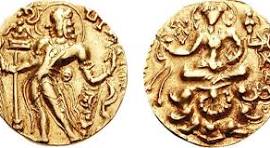
Skandagupta
Warriors & Kings | c. 420 CE (Approximate) - c. 467 CE (Approximate)
"Skandagupta was one of the last great rulers of the Gupta Empire, renowned for defending India against Huna invasions and preserving the empire during a period of significant political and military challenges."
Born
c. 420 CE (Approximate)Birthplace
Gupta Empire, Ancient IndiaDied
c. 467 CE (Approximate)Place of Death
Gupta Empire, Ancient IndiaNationality
IndianGender
MaleSkandagupta Biography
Skandagupta was one of the most remarkable rulers of the Gupta Dynasty and is widely recognized as the last great emperor of the Gupta Empire. His reign marked a critical period in Indian history when the empire faced serious threats from foreign invasions, internal challenges, and growing political instability. Through courage, military skill, and effective leadership, Skandagupta successfully defended the empire against powerful enemies and preserved Gupta authority during one of its most difficult eras.
The Gupta Empire had enjoyed a long period of prosperity and cultural achievement under rulers such as Samudragupta, Chandragupta II, and Kumaragupta I. By the time Skandagupta came to power, however, new dangers threatened the stability of the empire. His successful efforts to overcome these challenges earned him a distinguished place among the greatest rulers of ancient India.
Historians often regard Skandagupta as the final strong ruler of the Gupta Dynasty. His victories delayed the decline of the empire and helped protect large parts of India from foreign domination. Even centuries later, he continues to be remembered as a symbol of courage, resilience, and patriotic leadership.
Early Life and Background
The exact details of Skandagupta's birth remain uncertain because historical records from the Gupta period are limited. Most historians believe he was born during the early fifth century CE and belonged to the powerful Gupta royal family. He was likely a son of Emperor Kumaragupta I, one of the most successful rulers of the Gupta Dynasty.
As a prince of the Gupta Empire, Skandagupta grew up in an environment that emphasized military training, education, administration, and religious values. The Gupta court was famous for its support of culture, learning, and governance. Young members of the royal family were trained extensively in warfare and statecraft to prepare them for future leadership roles.
Skandagupta's upbringing provided him with valuable experience in military affairs, diplomacy, and administration. These skills would later prove essential when he was called upon to defend the empire during a period of unprecedented crisis.
Accession to the Throne
Following the death of Kumaragupta I, the Gupta Empire experienced political uncertainty regarding succession. Historical evidence indicates that Skandagupta emerged victorious in the struggle for the throne and established himself as ruler of the empire around the middle of the fifth century CE.
His accession occurred at a particularly challenging moment. Internal political tensions coincided with external threats from foreign invaders. Many rulers would have struggled under such circumstances, but Skandagupta demonstrated exceptional leadership from the beginning of his reign.
One of his earliest priorities was to restore stability and strengthen the empire's defensive capabilities. These actions would soon prove vital for the survival of the Gupta state.
The Gupta Empire During His Reign
When Skandagupta became emperor, the Gupta Empire remained one of the largest and most influential kingdoms in India. However, maintaining control over such vast territories required constant vigilance and effective administration.
The empire included numerous provinces, cities, agricultural regions, and trading centers. Despite economic prosperity, growing external threats created significant challenges for the imperial government.
Skandagupta inherited the responsibility of protecting a civilization that had experienced more than a century of remarkable political, cultural, and economic development. His reign became a decisive period in determining the future of Gupta power.
War Against the Pushyamitras
Before confronting foreign invaders, Skandagupta faced challenges from internal and regional enemies. Historical inscriptions suggest that he successfully defeated a powerful group known as the Pushyamitras.
This victory strengthened his position and demonstrated his military capabilities. By suppressing threats within and around the empire, he ensured that Gupta resources could be focused on more serious dangers emerging from the northwest.
The successful resolution of these conflicts established Skandagupta's reputation as a capable warrior and ruler early in his reign.
Defence Against the Huna Invasions
The greatest achievement of Skandagupta's reign was his successful resistance against the Hunas, often identified with the White Huns. These invaders were expanding across Central Asia and posed a serious threat to established kingdoms throughout the region.
The Hunas were known for their military strength, mobility, and aggressive expansion. Their invasions had already caused significant disruption in neighboring regions. Had they successfully conquered the Gupta Empire during Skandagupta's reign, the political and cultural history of India might have developed very differently.
Recognizing the magnitude of the threat, Skandagupta mobilized imperial resources and personally led military campaigns against the invaders. Through determination, strategic planning, and effective military leadership, he succeeded in defeating the Hunas and preventing their immediate expansion into Gupta territories.
These victories rank among the most significant military achievements in ancient Indian history and helped preserve stability across much of northern India.
Military Leadership and Strategy
Skandagupta's success against powerful enemies was not merely a result of courage. He possessed considerable military skill and strategic insight. His campaigns demonstrated careful planning, efficient organization, and strong leadership.
The Gupta military under his command included infantry, cavalry, war elephants, and various supporting forces. Effective coordination between these components enabled the empire to confront highly mobile opponents successfully.
His ability to inspire loyalty among soldiers and commanders contributed significantly to battlefield success. Contemporary inscriptions praise his bravery and determination in defending the empire.
These qualities helped establish his reputation as one of the most capable military rulers of the Gupta Dynasty.
Administration and Governance
Although military challenges dominated much of his reign, Skandagupta also paid careful attention to administration. Maintaining governmental stability during wartime required efficient management of resources and institutions.
Provincial officials continued to administer local affairs while remaining accountable to the central government. Tax collection, law enforcement, and public administration remained important priorities despite military expenditures.
The emperor worked to preserve the administrative systems developed by earlier Gupta rulers. These efforts enabled the empire to continue functioning effectively during difficult circumstances.
His balanced approach demonstrates that successful leadership requires both military strength and administrative competence.
Economic Challenges and Recovery
Continuous warfare placed considerable pressure on the Gupta economy. Military campaigns required substantial resources, including funding, equipment, transportation, and manpower.
Despite these challenges, Skandagupta implemented measures to maintain economic stability. Agricultural production remained a critical source of revenue, while trade continued to support urban centers and commercial communities.
Inscriptions from his reign indicate continued government activity and investment in public welfare. These efforts helped mitigate some of the economic difficulties caused by prolonged conflict.
The ability to preserve economic functioning during wartime reflects the resilience of Gupta administrative institutions.
Religious Beliefs and Patronage
Like many Gupta rulers, Skandagupta followed Hindu traditions and supported religious institutions. His inscriptions frequently invoke Hindu deities and emphasize the importance of dharma, or righteous conduct.
At the same time, the Gupta Empire remained home to diverse religious communities. Buddhists, Jains, and followers of various traditions continued to practice their faiths throughout the empire.
This atmosphere of religious tolerance contributed to social harmony and reflected broader Gupta policies that encouraged coexistence among different communities.
Religious institutions also played important social and cultural roles within imperial society.
The Junagadh Inscription
One of the most valuable sources for understanding Skandagupta's reign is the famous Junagadh Inscription. This important historical record provides information about his achievements, administration, and public works.
The inscription describes the repair of the Sudarshana Lake, an important reservoir originally constructed centuries earlier. By restoring this infrastructure, Skandagupta demonstrated his concern for public welfare and agricultural productivity.
The project highlights the emperor's commitment to governance beyond military affairs and reveals the continuing importance of irrigation and water management in ancient Indian society.
Character and Personal Qualities
Historical records portray Skandagupta as a courageous, determined, and responsible ruler. His ability to confront severe challenges without abandoning his responsibilities earned him widespread respect.
He combined military bravery with practical administrative skills. Rather than pursuing personal glory alone, he focused on preserving the security and stability of the empire.
These qualities explain why he remains one of the most admired rulers in Gupta history. His leadership during a time of crisis illustrates the importance of resilience and dedication in effective governance.
Legacy and Historical Importance
Skandagupta occupies a unique place in Indian history. While earlier Gupta rulers are celebrated for expansion and cultural achievement, Skandagupta is remembered primarily for defending the empire during one of its most difficult periods.
His victories against foreign invaders preserved Gupta independence and delayed the empire's decline for several decades. By protecting northern India from immediate conquest, he helped safeguard cultural and political traditions that had developed during the Gupta Golden Age.
Many historians consider him the final great ruler of the Gupta Dynasty. After his death, the empire gradually weakened due to continued invasions and internal challenges.
Nevertheless, his achievements ensured that the Gupta legacy would endure long after the empire itself declined.
Conclusion
Skandagupta was one of the greatest defenders of ancient India and one of the most significant rulers of the Gupta Empire. Through military brilliance, courageous leadership, and effective administration, he preserved the empire during a period of severe crisis and protected it from powerful foreign invaders.
His successful campaigns against the Hunas stand among the most important military achievements in Indian history. Although he ruled during a challenging era, his determination and strategic vision enabled the Gupta Empire to survive and continue influencing Indian civilization.
Today, Skandagupta is remembered as a heroic emperor, a protector of the Gupta legacy, and one of the last great monarchs of India's classical age. His life remains a powerful example of leadership, resilience, and dedication to the defense of one's nation and people.
Comments & Tribute (0)