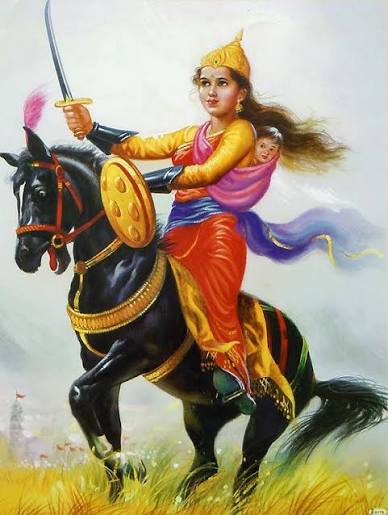
Rani Lakshmibai
Freedom Fighters | 19 November 1828 - 18 June 1858
"Rani Lakshmibai, the Queen of Jhansi, was one of the bravest leaders of the Revolt of 1857. Renowned for her courage, military leadership, and unwavering resistance against British rule, she remains a symbol of patriotism, sacrifice, and women's empowerment in India."
Born
19 November 1828Birthplace
Varanasi, North-Western Provinces, British India (Present-day Uttar Pradesh, India)Died
18 June 1858Place of Death
Kotah-ki-Serai, Gwalior, Central India (Present-day Madhya Pradesh, India)Nationality
IndianGender
FemaleRani Lakshmibai Biography
Rani Lakshmibai, popularly known as the Queen of Jhansi, was one of the bravest and most inspiring figures in Indian history. Her courage, leadership, and determination during the Revolt of 1857 made her a symbol of resistance against British colonial rule. Revered as one of India's greatest freedom fighters, she continues to inspire generations with her fearless spirit and patriotism.
Early Life and Family
Rani Lakshmibai was born as Manikarnika Tambe on 19 November 1828 in Varanasi. She was affectionately called "Manu" by her family members. Her father, Moropant Tambe, was a court official, and her mother, Bhagirathi Bai, was known for her religious and cultural values.
After her mother's death at a young age, Manu was raised by her father. Unlike many girls of her time, she received education and training in horse riding, sword fighting, archery, and martial arts.
Marriage and Becoming the Queen of Jhansi
In 1842, Manikarnika married Maharaja Gangadhar Rao Newalkar, the ruler of Jhansi. Following her marriage, she came to be known as Rani Lakshmibai.
The royal couple had a son who died in infancy. Later, they adopted a child named Damodar Rao as their heir shortly before the Maharaja's death in 1853.
Doctrine of Lapse and Conflict with the British
After the death of Maharaja Gangadhar Rao, the British East India Company refused to recognize Damodar Rao as the rightful heir. Under Lord Dalhousie's Doctrine of Lapse, Jhansi was annexed by the British.
Rani Lakshmibai strongly opposed this decision and famously declared:
"Main apni Jhansi nahi doongi" (I shall not surrender my Jhansi).
Her determination to defend her kingdom became a defining moment in Indian history.
Role in the Revolt of 1857
When the Revolt of 1857 broke out, Rani Lakshmibai emerged as one of its most prominent leaders. She organized the defense of Jhansi and inspired soldiers and citizens to resist British forces.
Under her leadership, Jhansi became a strong center of resistance. She displayed exceptional military skills and strategic leadership while defending the fort against repeated attacks.
Defense of Jhansi
In 1858, British forces under Sir Hugh Rose advanced toward Jhansi. Rani Lakshmibai personally led her troops and participated in military operations.
Despite facing a larger and better-equipped army, she fought courageously and refused to surrender. Her leadership earned admiration from both supporters and opponents.
After the fall of Jhansi, she escaped with her adopted son and continued the struggle against British forces.
Alliance with Other Leaders
Rani Lakshmibai joined forces with prominent rebel leaders such as Tatya Tope and Rao Sahib. Together, they continued military campaigns against British rule in central India.
Her ability to unite people and inspire resistance made her one of the most respected leaders of the uprising.
Battle of Gwalior
In June 1858, rebel forces successfully captured Gwalior. However, British troops soon launched a counterattack.
Rani Lakshmibai fought bravely in the Battle of Gwalior, leading her soldiers into combat while dressed as a warrior. Her courage on the battlefield became legendary.
Comments & Tribute (1)