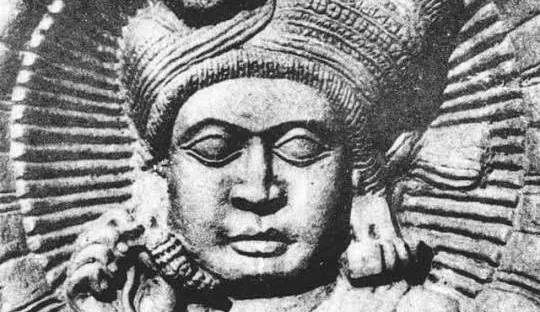
Pushyamitra Shunga
Ancient India | c. 185 BCE - c. 149 BCE
"Pushyamitra Shunga was the founder of the Shunga Dynasty and one of the most influential rulers of Ancient India. After overthrowing the last Mauryan ruler, he established the Shunga Empire and successfully defended northern India against foreign invasions. His reign marked a significant transition in Indian political and cultural history."
Born
c. 185 BCEBirthplace
Magadha Region, Ancient India (Present-day Bihar, India)Died
c. 149 BCEPlace of Death
Pataliputra, Shunga Empire (Present-day Patna, Bihar, India)Nationality
Ancient IndianGender
MalePushyamitra Shunga Biography
Pushyamitra Shunga was the founder of the Shunga Dynasty and one of the most important rulers of Ancient India. He came to power after the decline of the Maurya Empire and established a new dynasty that ruled a large part of northern India. His reign marked a significant transition in Indian history and helped preserve political stability during a period of change.
Early Life
Very little information is available about the early life of Pushyamitra Shunga. Historical sources indicate that he belonged to a Brahmin family and served as a prominent military commander under the Maurya rulers.
His military experience and leadership abilities enabled him to rise to a position of considerable influence within the Mauryan administration.
Rise to Power
During the later years of the Maurya Empire, central authority weakened significantly. Around 185 BCE, Pushyamitra Shunga overthrew the last Mauryan emperor, Brihadratha Maurya, during a military review.
After assuming power, he founded the Shunga Dynasty and established himself as the ruler of Magadha and surrounding territories.
This event marked the end of the Maurya Empire and the beginning of Shunga rule in northern India.
Foundation of the Shunga Empire
Following his accession, Pushyamitra worked to consolidate his authority and strengthen the newly established empire. The Shunga Kingdom included significant portions of northern and central India.
The capital remained at Pataliputra, one of the most important political and economic centers of Ancient India.
His leadership helped ensure continuity in administration after the collapse of Mauryan rule.
Military Achievements
Pushyamitra Shunga is remembered as a capable military leader who successfully defended his kingdom from foreign threats.
Historical sources indicate that he faced invasions by Indo-Greek forces advancing into northwestern and northern India. Through military campaigns and defensive measures, he prevented further expansion into his core territories.
These victories enhanced the security and stability of the Shunga Empire.
Ashvamedha Yajna
One of the most significant events of Pushyamitra's reign was the performance of the Ashvamedha Yajna (Horse Sacrifice), an ancient Vedic ritual associated with imperial authority.
By conducting this ceremony, Pushyamitra demonstrated his political power and reaffirmed royal sovereignty.
The ritual symbolized the revival of Vedic traditions during his reign.
Administration and Governance
Pushyamitra maintained many administrative practices that had existed under the Mauryas while adapting them to the needs of his own empire.
His administration focused on maintaining law and order, collecting revenue, and strengthening regional governance.
The stability of his rule allowed economic activities and trade networks to continue functioning effectively.
Religion and Culture
Pushyamitra Shunga is often associated with the revival of Brahmanical and Vedic traditions. He supported Vedic rituals and religious institutions and promoted Hindu cultural practices.
At the same time, evidence suggests that Buddhist institutions continued to exist during the Shunga period, and several important Buddhist monuments underwent renovation and expansion.
The religious policies of his reign remain a subject of historical discussion among scholars.
Patronage of Art and Architecture
The Shunga period witnessed significant developments in art, architecture, and sculpture.
Several important monuments associated with Buddhism, including portions of the Bharhut Stupa and improvements to the Sanchi complex, are linked to the broader Shunga era.
The artistic styles that developed during this period influenced later Indian art traditions.
Foreign Relations
Pushyamitra's reign was shaped by the need to defend his empire against external threats while maintaining internal unity.
His success in resisting invasions helped preserve indigenous political authority in northern India during a period of regional instability.
These achievements strengthened the prestige of the Shunga Dynasty.
Succession
After a successful reign, Pushyamitra was succeeded by his son Agnimitra, who continued the rule of the Shunga Dynasty.
The dynasty remained an important political force in northern India for several generations after Pushyamitra's death.
Death
Pushyamitra Shunga is believed to have died around 149 BCE after ruling for several decades.
By the time of his death, he had successfully established the Shunga Dynasty as a significant power in Ancient India.
Legacy
Pushyamitra Shunga is remembered as the founder of the Shunga Empire and a ruler who guided northern India through a major political transition.
His military achievements, administrative abilities, and cultural contributions ensured the survival and prosperity of his kingdom following the decline of the Mauryan Empire.
Historical Significance
Historians regard Pushyamitra Shunga as a key figure in the history of Ancient India. His rise marked the end of Mauryan rule and the beginning of a new political era.
The Shunga Dynasty played an important role in preserving stability, supporting cultural development, and defending the Indian subcontinent from external invasions.
Honours and Recognition
- Founder of the Shunga Dynasty.
- Successor to the Maurya Empire in northern India.
- Performed the Ashvamedha Yajna.
- Defender of northern India against foreign invasions.
- Promoter of Vedic traditions and cultural development.
- Remembered as one of the important rulers of Ancient India.
Conclusion
Pushyamitra Shunga was a powerful ruler who established a new dynasty during a critical period in Indian history. Through military strength, political leadership, and support for cultural traditions, he helped shape the future of northern India after the fall of the Maurya Empire. His reign remains an important chapter in the story of Ancient India's political and cultural evolution.
Comments & Tribute (0)