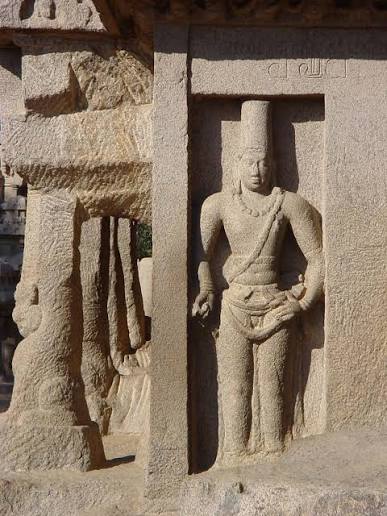
Narasimhavarman I
Warriors & Kings | c. 600 CE (Approximate) - c. 668 CE (Approximate)
"Narasimhavarman I, popularly known as Mamalla, was the greatest ruler of the Pallava Dynasty who defeated the mighty Chalukya emperor Pulakeshin II, expanded Pallava power, and promoted remarkable achievements in South Indian art and architecture."
Born
c. 600 CE (Approximate)Birthplace
Kanchipuram, Tamil Nadu, India (Approximate)Died
c. 668 CE (Approximate)Place of Death
Kanchipuram, Pallava EmpireNationality
IndianGender
MaleNarasimhavarman I Biography
Narasimhavarman I was one of the greatest rulers of the Pallava Dynasty and among the most celebrated monarchs in South Indian history. Popularly known by the title "Mamalla," meaning "Great Wrestler," he ruled during the seventh century CE and led the Pallava Empire to the height of its political and military power. His reign is remembered for remarkable military victories, territorial expansion, architectural achievements, and cultural development.
Among his many accomplishments, Narasimhavarman I is most famous for defeating the powerful Chalukya emperor Pulakeshin II and capturing the Chalukya capital of Vatapi. This extraordinary achievement transformed the balance of power in southern India and established Pallava supremacy across much of the region.
Beyond warfare, Narasimhavarman I was a visionary ruler who promoted art, architecture, religion, and learning. Under his patronage, Mamallapuram emerged as an important center of commerce and culture. The monuments created during his reign remain among the finest examples of early South Indian architecture and are admired around the world today.
Early Life and Family Background
Narasimhavarman I was born into the illustrious Pallava royal family during the early seventh century CE. He was the son of Mahendravarman I, one of the most accomplished rulers of the Pallava Dynasty. Mahendravarman I was known for his contributions to architecture, literature, and administration, and these influences played a significant role in shaping the future emperor.
Growing up in the royal court of Kanchipuram, Narasimhavarman received extensive training in military strategy, governance, diplomacy, religious traditions, and cultural affairs. The Pallava capital was an important center of learning and artistic activity, providing the young prince with opportunities to interact with scholars, architects, military leaders, and administrators.
From an early age, he displayed qualities of courage, determination, and leadership. These abilities would later help him confront some of the greatest political and military challenges of his time.
Succession to the Throne
After the death of Mahendravarman I, Narasimhavarman ascended the Pallava throne around 630 CE. He inherited a kingdom that faced serious military threats, particularly from the powerful Chalukya Empire led by Pulakeshin II.
The Pallavas and Chalukyas had become bitter rivals as both dynasties sought dominance over southern India. Pulakeshin II had already achieved major victories against the Pallavas during the reign of Mahendravarman I and threatened Pallava territory.
Upon becoming ruler, Narasimhavarman made it his priority to strengthen the kingdom, rebuild military confidence, and prepare for future confrontations with the Chalukyas.
The Pallava-Chalukya Conflict
The struggle between the Pallavas and Chalukyas ranks among the most significant rivalries in South Indian history. Both empires controlled strategically important territories and sought influence over trade routes, agricultural regions, and political centers.
Pulakeshin II was one of the strongest rulers of the age, and many observers considered the Chalukyas nearly unbeatable. However, Narasimhavarman was determined to avenge earlier Pallava defeats and restore his dynasty's prestige.
Over several years, he reorganized his military forces and carefully planned campaigns against the Chalukyas. This preparation would eventually produce one of the most remarkable military victories in Indian history.
Defeat of Pulakeshin II
Narasimhavarman I achieved lasting fame through his victory over Pulakeshin II. After a series of military confrontations, Pallava forces gained the upper hand and advanced deep into Chalukya territory.
The conflict culminated in a successful invasion of the Chalukya capital, Vatapi, located in present-day Karnataka. Historical traditions indicate that the city was captured after intense fighting, marking a decisive Pallava victory.
The conquest of Vatapi represented a major turning point in South Indian politics. Pulakeshin II either died during the conflict or disappeared from historical records soon afterward. The victory dramatically increased Narasimhavarman's prestige and earned him the title "Vatapikonda," meaning "Conqueror of Vatapi."
This achievement remains one of the most celebrated military accomplishments in the history of ancient India.
Expansion of the Pallava Empire
Following his success against the Chalukyas, Narasimhavarman consolidated Pallava authority across southern India. His influence extended over large territories, and numerous regional rulers acknowledged Pallava supremacy.
The empire's growing power improved political stability and strengthened trade connections throughout the region. Strategic alliances and military strength enabled the Pallavas to maintain their position as one of the leading dynasties of southern India.
These achievements transformed the kingdom into a dominant political force and ensured its influence for generations.
Administration and Governance
Narasimhavarman I demonstrated considerable skill as an administrator. Effective governance was necessary for maintaining order across an expanding empire that included diverse populations and regions.
The Pallava administration relied on provincial officials, local authorities, and military commanders to oversee day-to-day affairs. Revenue collection, justice, infrastructure maintenance, and public welfare were important priorities of the government.
The emperor encouraged efficient administration while respecting local customs and traditions. This balanced approach contributed significantly to political stability and economic prosperity.
His governance reflected a combination of strong central authority and practical regional management.
Economic Prosperity and Maritime Trade
The Pallava Empire benefited greatly from maritime trade during Narasimhavarman's reign. Coastal ports connected South India with Southeast Asia, Sri Lanka, and other regions involved in international commerce.
Merchants traded spices, textiles, precious stones, metals, and luxury goods across extensive commercial networks. These exchanges generated substantial wealth for the kingdom and encouraged urban growth.
Mamallapuram emerged as an important port city under royal patronage, attracting traders from various parts of Asia. The city's prosperity contributed significantly to the broader economic success of the Pallava Empire.
Economic growth enabled continued investment in architecture, religious institutions, and cultural activities.
Development of Mamallapuram
One of Narasimhavarman I's most enduring contributions was the development of Mamallapuram, also known as Mahabalipuram. The city became an important center of trade, architecture, religion, and cultural exchange.
Named after his title "Mamalla," the city reflects his lasting influence on South Indian culture. Under his patronage, architects and artisans created some of the finest examples of rock-cut and monolithic architecture in India.
The monuments of Mamallapuram continue to attract scholars, tourists, and historians from around the world and remain a testament to Pallava artistic achievement.
Patronage of Art and Architecture
Narasimhavarman I is celebrated as one of the greatest patrons of architecture in Indian history. During his reign, monumental construction projects transformed the artistic landscape of southern India.
The famous Pancha Rathas, cave temples, and other rock-cut monuments at Mamallapuram represent remarkable achievements in engineering, sculpture, and design. These structures display outstanding craftsmanship and innovative architectural concepts.
The artistic traditions developed during the Pallava period influenced later South Indian dynasties, including the Cholas, who further advanced temple architecture.
The legacy of Pallava architecture remains visible in many later developments of Indian religious and cultural art.
Religion and Religious Tolerance
Narasimhavarman I followed Hindu traditions and supported the worship of Shiva and Vishnu. Temples and religious institutions received royal patronage, promoting spiritual and cultural life throughout the empire.
Like many successful rulers, however, he demonstrated religious tolerance and respected diverse religious traditions. Buddhist and Jain communities continued to exist within Pallava territories without significant interference.
This atmosphere of tolerance helped maintain social harmony and encouraged intellectual and cultural growth.
Religious institutions also played important roles in education, charity, and community life.
Relations with Foreign Regions
The strategic location of the Pallava Empire facilitated contact with foreign lands. Trade networks connected southern India with Sri Lanka, Southeast Asia, and other maritime regions.
Cultural and religious exchanges accompanied commercial interactions, contributing to the spread of Indian ideas across Asia. The influence of South Indian art, architecture, and religious traditions reached distant regions through these connections.
The reign of Narasimhavarman I therefore played a role not only in Indian history but also in broader patterns of Asian cultural exchange.
Legacy and Historical Importance
Narasimhavarman I occupies a distinguished place in Indian history as one of the greatest rulers of the Pallava Dynasty. His military victory over Pulakeshin II changed the political landscape of southern India and established Pallava dominance.
His support for architecture and urban development produced cultural achievements that continue to inspire admiration today. The monuments of Mamallapuram remain among the finest examples of ancient Indian art and engineering.
Historians regard him as a ruler who successfully combined military strength, administrative competence, economic growth, and cultural patronage.
His reign represents one of the most important chapters in the history of South India.
Conclusion
Narasimhavarman I, the renowned Pallava emperor known as Mamalla, was among the most accomplished rulers of ancient India. Through military brilliance, decisive victories, effective governance, and cultural patronage, he transformed the Pallava Empire into a leading power of the seventh century.
His conquest of Vatapi, defeat of Pulakeshin II, development of Mamallapuram, and contributions to architecture secured his place among the greatest monarchs in Indian history. Today, Narasimhavarman I continues to be remembered as a symbol of strength, vision, and cultural achievement whose legacy remains visible in the monuments and traditions of South India.
Comments & Tribute (0)