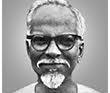
Nabakrushna Choudhury
Freedom Fighters | 23 November 1901 - 24 June 1984
"Nabakrushna Choudhury was a renowned freedom fighter, Gandhian leader, social reformer, and the 2nd Chief Minister of Odisha. He devoted his life to India's independence struggle, land reforms, village development, social justice, and the welfare of farmers and marginalized communities."
Born
23 November 1901Birthplace
Kherasa Village, Cuttack District (present-day Jagatsinghpur District), Odisha, IndiaDied
24 June 1984Place of Death
Odisha, IndiaNationality
IndianGender
MaleNabakrushna Choudhury Biography
Nabakrushna Choudhury was one of the most respected freedom fighters, political leaders, and social reformers in Odisha's history. A devoted follower of Mahatma Gandhi, he dedicated his life to public service, national freedom, social justice, rural development, and the upliftment of marginalized communities.
He played an active role in India's freedom struggle and later became the second Chief Minister of Odisha. During his public career, he worked to strengthen democracy, promote education, implement land reforms, improve village life, and establish Odia as an important administrative language.
His simple lifestyle, integrity, and commitment to serving the poor earned him immense respect throughout Odisha and India.
Early Life and Family Background
Nabakrushna Choudhury was born on 23 November 1901 in Kherasa village, then in Cuttack district and now part of Jagatsinghpur district, Odisha.
He was born into a respected Zamindar Karan family. His father, Gokulananda Choudhury, was a well-known lawyer and advocate.
His elder brother, Gopabandhu Choudhury, later became one of Odisha's leading freedom fighters and social reformers.
Growing up in an educated and socially conscious family deeply influenced Nabakrushna's outlook on life.
Education
Nabakrushna Choudhury received his early education at Pyari Mohan Academy in Cuttack. He performed exceptionally well in his studies and later joined Ravenshaw College.
During his college years, nationalist ideas were spreading rapidly across India. The atmosphere of political awakening significantly influenced young students, including Nabakrushna.
However, his formal education was interrupted when he chose to participate in the freedom movement.
This decision marked the beginning of a life dedicated to public service and national development.
Influence of Freedom Movement
The Non-Cooperation Movement launched by Mahatma Gandhi had a profound effect on Nabakrushna Choudhury.
Inspired by Gandhi's call, he left college in 1921 along with several classmates and joined the nationalist movement.
He believed that freedom from colonial rule was essential for social and economic progress.
His choice demonstrated remarkable courage and commitment at a young age.
Learning at Sabarmati Ashram
In 1922, Nabakrushna Choudhury traveled to Mahatma Gandhi's Sabarmati Ashram in Ahmedabad.
There he studied Gandhian principles, khadi production, spinning, weaving, self-reliance, and constructive social work.
The experience strengthened his belief in simple living and community service.
These values guided his actions throughout his political and social career.
Association with Santiniketan
After returning from Sabarmati Ashram, Nabakrushna continued exploring educational and social ideas.
He later spent time at Santiniketan where he came into contact with progressive thinkers and educators.
During this period, he met Malati Sen, who would later become his wife and a prominent freedom fighter.
Their partnership became one of the most influential collaborations in Odisha's social and political history.
Marriage to Malati Choudhury
Nabakrushna Choudhury married Malati Choudhury, one of India's most respected freedom fighters and social reformers.
Together they devoted their lives to nationalism, education, rural development, and social justice.
The couple became widely known for their dedication to public service and Gandhian values.
Their combined efforts significantly strengthened social reform movements across Odisha.
Participation in the Freedom Movement
Nabakrushna Choudhury actively participated in major phases of India's freedom struggle.
He joined the Non-Cooperation Movement, Civil Disobedience Movement, Salt Satyagraha, Peasant Movements, and other nationalist campaigns.
Through meetings, public mobilization, and constructive work, he encouraged people to participate in the struggle against British rule.
His leadership contributed greatly to the growth of nationalism in Odisha.
Role in Salt Satyagraha
During the Salt Satyagraha of 1930, Odisha became an important center of anti-colonial activity.
Nabakrushna Choudhury played a frontline role in organizing protests and resistance activities.
His involvement led to imprisonment by British authorities.
The movement strengthened his reputation as a committed nationalist leader.
Imprisonment and Sacrifice
Like many freedom fighters, Nabakrushna Choudhury spent periods in prison due to his nationalist activities.
He viewed imprisonment as part of the larger struggle for justice and national independence.
Rather than discouraging him, these experiences deepened his commitment to public service.
His sacrifices inspired many young people to participate in the freedom movement.
Work Among Farmers and Villagers
Apart from political activism, Nabakrushna worked extensively among rural communities.
He believed that freedom should improve the lives of ordinary citizens, particularly farmers and agricultural laborers.
He promoted self-reliance, rural education, community cooperation, and village development.
These efforts reflected his deep concern for social and economic justice.
Revenue Minister of Odisha
After provincial elections and political transitions in Odisha, Nabakrushna Choudhury served as Revenue Minister.
In this role, he focused on administrative improvements and policies affecting rural communities.
His work demonstrated his ability to translate Gandhian ideals into practical governance.
This experience prepared him for higher responsibilities in public administration.
Second Chief Minister of Odisha
In 1950, Nabakrushna Choudhury became the second Chief Minister of Odisha.
His tenure was marked by efforts to strengthen democratic governance, improve education, promote agriculture, and expand opportunities for disadvantaged communities.
He emphasized public welfare rather than personal political gain.
His administration sought to create lasting improvements in the lives of ordinary citizens.
Land Reforms and Social Justice
One of Nabakrushna Choudhury's most important contributions was his support for land reform initiatives.
He believed that economic justice was essential for a democratic society.
His efforts aimed to improve the conditions of small farmers and reduce inequalities within rural areas.
These reforms established him as a champion of the poor and marginalized.
Promotion of Odia Language
Nabakrushna Choudhury strongly supported the promotion of the Odia language in administration and public life.
Under his leadership, important steps were taken toward increasing the use of Odia in governance.
He believed that linguistic identity was closely linked to cultural preservation and democratic participation.
His support strengthened Odisha's cultural confidence.
Work After Leaving Political Office
Unlike many politicians, Nabakrushna Choudhury remained deeply involved in social causes even after leaving high office.
He continued working in Gandhian movements, village development programs, and Sarvodaya activities.
He supported Bhoodan and Gramdan initiatives inspired by Vinoba Bhave.
His life after politics reflected the same values that guided his earlier public service.
Legacy and Historical Importance
Nabakrushna Choudhury is remembered as one of Odisha's most principled political leaders and freedom fighters.
His contributions to the freedom movement, democratic governance, rural development, and social reform helped shape modern Odisha.
His commitment to integrity, simplicity, and public welfare continues to inspire future generations.
Today, he is regarded as one of the most respected figures in Odisha's political and social history.
Interesting Facts About Nabakrushna Choudhury
- He left Ravenshaw College to join the Non-Cooperation Movement.
- He studied Gandhian principles at Sabarmati Ashram.
- He was married to freedom fighter Malati Choudhury.
- He participated in Salt Satyagraha and Peasant Movements.
- He served as the second Chief Minister of Odisha.
- He supported land reforms and village development.
- He promoted the use of the Odia language in administration.
- He remained active in social service even after leaving politics.
Frequently Asked Questions (FAQs)
Who was Nabakrushna Choudhury?
Nabakrushna Choudhury was a freedom fighter, Gandhian leader, social reformer, and the second Chief Minister of Odisha.
When was Nabakrushna Choudhury born?
He was born on 23 November 1901 in Kherasa village of present-day Jagatsinghpur district.
What was Nabakrushna Choudhury famous for?
He was famous for participating in India's freedom struggle, supporting land reforms, and serving as Chief Minister of Odisha.
Who was Nabakrushna Choudhury's wife?
His wife was Malati Choudhury, a prominent freedom fighter and social reformer.
What were Nabakrushna Choudhury's major contributions?
His major contributions include participation in the freedom movement, land reform initiatives, village development, and promotion of the Odia language.
Conclusion
Nabakrushna Choudhury dedicated his life to freedom, justice, and the welfare of society. Through his participation in the independence movement, leadership as Chief Minister, and lifelong commitment to Gandhian ideals, he became one of Odisha's most respected public figures. His legacy continues to inspire people who believe in integrity, service, equality, and democratic values.
Comments & Tribute (0)