Mihira Bhoja
Warriors & Kings | c. 800 CE (Approximate) - c. 885 CE
"Mihir Bhoja was the most powerful ruler of the Gurjara-Pratihara Dynasty who transformed a weakened kingdom into a prosperous empire and became one of the greatest monarchs of early medieval India."
Born
c. 800 CE (Approximate)Birthplace
Gurjara-Pratihara Empire, Ancient IndiaDied
c. 885 CEPlace of Death
Near the Narmada region (traditionally associated)Nationality
IndianGender
MaleMihir Bhoja Biography
Mihir Bhoja, also known as Mihira Bhoja or Bhoja I, was one of the greatest rulers of the Gurjara-Pratihara Dynasty and among the most influential monarchs of early medieval India. He ruled from approximately 836 CE to 885 CE and transformed the Gurjara-Pratihara kingdom into one of the most powerful empires in northern India. His reign marked the height of Pratihara power and prosperity, earning him a distinguished place in Indian history.
As a skilled military commander, capable administrator, and visionary empire builder, Mihir Bhoja successfully expanded his territories, strengthened central authority, and maintained political stability during a period characterized by intense competition among powerful dynasties. Historians regard him as one of the most significant rulers of ninth-century India and often place him alongside the greatest monarchs of the medieval period.
The primary information about Mihir Bhoja comes from inscriptions, coins, literary sources, and foreign travelers' accounts. Together, these sources portray a ruler of remarkable ability who played a major role in shaping the political history of northern India.
Early Life and Royal Background
Mihir Bhoja was born into the influential Gurjara-Pratihara royal family during the early ninth century CE. He was the son of King Ramabhadra, who ruled the Pratihara kingdom before him. The Gurjara-Pratiharas had already established themselves as a major political force, but challenges from rival dynasties and regional conflicts created difficulties for the kingdom.
As a young prince, Bhoja received education in warfare, administration, diplomacy, religion, and governance. Members of the royal family were expected to master military leadership while also understanding the responsibilities of governing a vast realm.
The experiences of his youth prepared him for the challenges he would later face as ruler. His training and determination enabled him to emerge as one of the strongest kings of his generation.
Accession to the Throne
Mihir Bhoja succeeded his father Ramabhadra around 836 CE. At the time, the Gurjara-Pratihara kingdom faced internal challenges and external threats from powerful rivals, including the Palas of eastern India and the Rashtrakutas of the Deccan.
Rather than being discouraged by these difficulties, Bhoja viewed them as opportunities to restore and expand Pratihara power. One of his first priorities was strengthening royal authority and suppressing rebellious feudatories who threatened political stability.
His early measures successfully consolidated the kingdom and established the foundation for future expansion.
Revival of Pratihara Power
One of Mihir Bhoja's greatest achievements was the revival of the Gurjara-Pratihara Empire. Historical records indicate that he inherited a kingdom facing political challenges, yet through determination and effective leadership he transformed it into a powerful state.
He reorganized the administration, strengthened military institutions, and reestablished control over important territories that had slipped from Pratihara authority.
His efforts restored confidence in imperial government and created the conditions necessary for political expansion and economic growth.
Under his leadership, the Pratiharas emerged once again as a dominant power in northern India.
Expansion of the Empire
Mihir Bhoja pursued an ambitious policy of territorial expansion. Through military campaigns and strategic diplomacy, he extended his influence over large parts of northern and central India.
At the height of its power, the Pratihara Empire stretched from the foothills of the Himalayas in the north to the Narmada River in the south. Its influence extended from western regions near Sindh toward eastern territories approaching Bengal.
The expansion of the empire brought important strategic and economic advantages. New territories provided access to resources, trade routes, and centers of political influence.
These successes established Mihir Bhoja as one of the foremost rulers of his age.
Kannauj as the Imperial Capital
During Mihir Bhoja's reign, Kannauj served as the capital of the Gurjara-Pratihara Empire. Control of Kannauj carried immense prestige because the city had long been regarded as one of the most important political centers in northern India.
The city occupied a strategic position along major trade and communication routes. Its prosperity reflected the broader success of the empire.
Kannauj developed into a center of administration, commerce, and culture during Bhoja's reign. The city's significance enhanced the authority and reputation of the Pratihara rulers throughout the subcontinent.
Possession of Kannauj also played a key role in the famous tripartite struggle among the Pratiharas, Palas, and Rashtrakutas.
The Tripartite Struggle
One of the defining features of Mihir Bhoja's reign was his participation in the tripartite struggle, a prolonged contest among the Gurjara-Pratiharas, Pala Empire, and Rashtrakuta Empire for supremacy in northern India.
Each of these dynasties sought control over strategic territories and political influence. The competition required military strength, diplomatic skill, and economic resources.
Although the conflict extended beyond his lifetime, Mihir Bhoja successfully strengthened Pratihara influence and ensured that his empire remained a leading participant in this struggle for power.
His achievements elevated the prestige of the dynasty and contributed significantly to its long-term success.
Military Leadership
Mihir Bhoja earned widespread recognition for his military capabilities. He commanded a powerful army that included cavalry, infantry, elephant corps, and supporting forces.
Contemporary and later accounts praise the strength of his military organization. Foreign observers described the Pratihara army as one of the finest military forces in India.
His campaigns helped secure the empire's borders, suppress internal rebellions, and expand territorial control. Military discipline and effective leadership enabled him to confront powerful adversaries successfully.
These accomplishments established his reputation as one of the great warrior kings of medieval India.
Resistance Against Foreign Threats
During Mihir Bhoja's reign, the Gurjara-Pratihara Empire played an important role in safeguarding northern India from external pressures. The dynasty had a long tradition of resisting foreign invasions from the northwest.
Historical accounts suggest that the empire maintained strong defenses and an effective military presence along important frontier regions.
The ability to defend strategic territories enhanced political stability and protected commercial routes that contributed to economic prosperity.
Mihir Bhoja's success in maintaining security strengthened his reputation among contemporaries and later historians.
Administration and Governance
Mihir Bhoja's achievements extended beyond the battlefield. He was also an effective administrator who strengthened institutions of governance throughout the empire.
Provincial governors and local officials managed taxation, law enforcement, infrastructure, and public administration under the supervision of the central government.
The emperor emphasized political stability and efficient administration. These measures encouraged agricultural productivity, trade, and urban development.
The prosperity experienced during his reign reflects the success of his administrative policies.
Economic Prosperity
Economic development was a major feature of Mihir Bhoja's reign. Agriculture remained the foundation of the economy, while trade and commercial activities expanded significantly.
Merchants traded textiles, agricultural products, horses, metals, precious stones, and luxury goods across various regions. Commercial networks connected the empire with neighboring kingdoms and distant markets.
The government's ability to provide security encouraged merchants to conduct business confidently, increasing revenue and supporting urban growth.
Prosperity generated resources that strengthened both the military and administrative structures of the empire.
Religion and Cultural Patronage
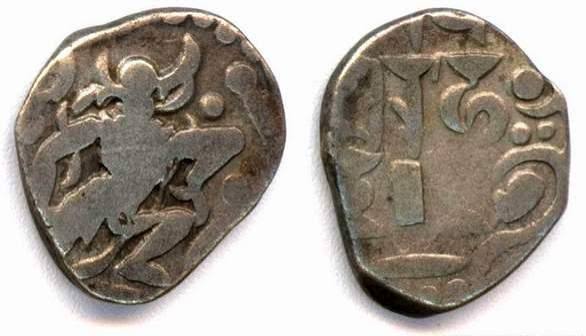
Mihir Bhoja was a devoted follower of Hinduism and particularly revered Vishnu. He adopted the title "Adi Varaha," referring to the Varaha incarnation of Vishnu, and this title appeared on some of his coins.
Religious institutions benefited from royal support, and temples received patronage during his reign.
At the same time, the cultural environment of the empire encouraged artistic and intellectual activity. Architecture, literature, and religious scholarship flourished under stable political conditions.
His patronage contributed to the cultural achievements of early medieval northern India.
Coinage and Legacy of the Adi Varaha
The coinage of Mihir Bhoja remains one of the most important historical sources regarding his reign. His famous Adi Varaha coins depict symbols associated with Vishnu and reflect his religious devotion.
These coins circulated widely across the empire and served as symbols of imperial authority and economic prosperity.
Today, they provide valuable evidence regarding political ideology, religion, and economic conditions during the Pratihara period.
The distinctive style of these coins helped reinforce the emperor's image and legitimacy throughout his territories.
Legacy and Historical Importance
Mihir Bhoja is widely regarded as the greatest ruler of the Gurjara-Pratihara Dynasty. Under his leadership, the empire reached the height of its power, prosperity, and influence.
His military victories, political consolidation, administrative reforms, and cultural patronage transformed the Pratihara state into one of the strongest kingdoms of medieval India.
The stability achieved during his reign contributed significantly to the development of northern Indian civilization. Historians frequently identify him as one of the most important political figures of the ninth century.
His achievements laid the foundation for the continued success of the dynasty under his successors.
Conclusion
Mihir Bhoja was a remarkable emperor whose leadership elevated the Gurjara-Pratihara Empire to unprecedented heights. Through military strength, administrative ability, diplomatic skill, and religious patronage, he created one of the largest and most influential kingdoms of medieval India.
His reign represented the golden age of Pratihara power and demonstrated the importance of visionary leadership in shaping history. Today, Mihir Bhoja remains one of India's most celebrated rulers and a lasting symbol of imperial achievement, political stability, and cultural development.
Comments & Tribute (0)