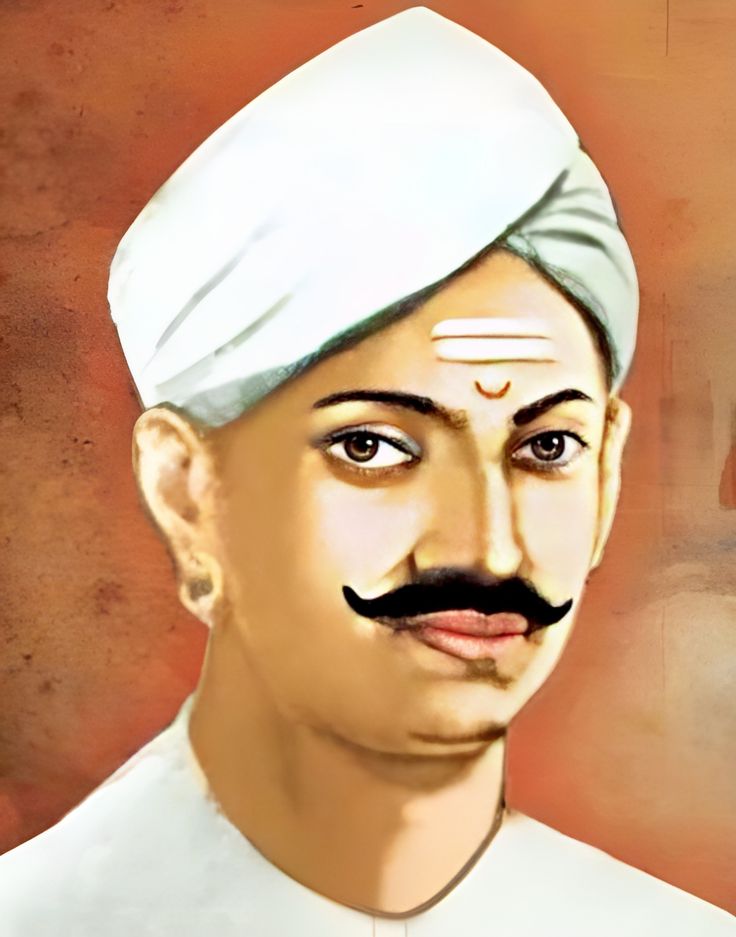
Mangal Pandey
Freedom Fighters | 19 July 1827 - 08 April 1857
"Mangal Pandey was an Indian soldier whose actions at Barrackpore in 1857 became a catalyst for the First War of Indian Independence. Revered as one of India's earliest freedom fighters, he inspired resistance against British colonial rule and became a symbol of courage and patriotism."
Born
19 July 1827Birthplace
Nagwa Village, Ballia District, North-Western Provinces, British India (Present-day Uttar Pradesh, India)Died
08 April 1857Place of Death
Barrackpore, Bengal Presidency, British India (Present-day West Bengal, India)Nationality
IndianGender
MaleMangal Pandey Biography
Mangal Pandey was one of the earliest heroes of India's struggle against British colonial rule. A brave soldier in the British East India Company's army, he is remembered for his role in the events that led to the Revolt of 1857, often referred to as the First War of Indian Independence. His courage and sacrifice made him an enduring symbol of Indian resistance and patriotism.
Early Life and Family
Mangal Pandey was born on 19 July 1827 in Nagwa village in present-day Uttar Pradesh. He was born into a Brahmin family and grew up with traditional Indian values and deep respect for religion and culture.
Although little is known about his early life, historical records indicate that he was physically strong, disciplined, and dedicated, qualities that later helped him become a soldier.
Military Service
Mangal Pandey joined the army of the British East India Company and served in the 34th Bengal Native Infantry. He was stationed at Barrackpore near Calcutta (now Kolkata).
During this period, many Indian soldiers were dissatisfied with British policies, poor treatment, and cultural insensitivity. Tensions between Indian sepoys and British authorities gradually increased.
The Enfield Rifle Controversy
One of the major causes of discontent among Indian soldiers was the introduction of the new Enfield rifle. Soldiers were required to bite open greased cartridges before loading them into the weapon.
Rumors spread that the cartridges were coated with cow and pig fat. This deeply offended both Hindu and Muslim soldiers, as cows were sacred to Hindus and pigs were considered unclean by Muslims.
The controversy created widespread anger and became a symbol of British disregard for Indian religious beliefs.
The Barrackpore Incident
On 29 March 1857, Mangal Pandey openly rebelled against British authority at Barrackpore. He attacked British officers and called upon fellow soldiers to rise against colonial rule.
Although many soldiers hesitated to join him immediately, his actions demonstrated extraordinary courage and resistance against oppression.
The incident quickly attracted attention throughout the army and the wider Indian population.
Arrest and Trial
Following the Barrackpore uprising, British authorities arrested Mangal Pandey. He was court-martialed and charged with mutiny and rebellion against the East India Company.
Despite facing severe punishment, he remained steadfast and became a symbol of defiance against colonial rule.
Execution
Mangal Pandey was executed by hanging on 8 April 1857 at Barrackpore. His execution was intended to suppress growing unrest among Indian soldiers.
Instead, his sacrifice increased resentment against British rule and fueled revolutionary sentiment throughout India.
Role in the Revolt of 1857
Shortly after Mangal Pandey's execution, large-scale revolts broke out across northern and central India. The uprising involved soldiers, rulers, farmers, and ordinary citizens who opposed British rule.
The Revolt of 1857 became one of the most significant events in Indian history and marked the beginning of organized resistance to colonial domination.
Although the revolt was eventually suppressed, it fundamentally changed the relationship between Britain and India.
Legacy as a Freedom Fighter
Mangal Pandey is widely regarded as one of the first martyrs of India's freedom movement. His actions inspired future generations of freedom fighters who continued the struggle for independence.
His bravery demonstrated that resistance against colonial oppression was possible and encouraged Indians to fight for their rights and dignity.
Historical Significance
Historians recognize Mangal Pandey as an important figure in the events leading to the Revolt of 1857. His rebellion became a powerful symbol of national pride and opposition to foreign rule.
Today, he is remembered as a pioneer of Indian nationalism and an icon of patriotism.
Honours and Recognition
- Recognized as one of the earliest freedom fighters of India.
- Remembered as a key figure in the Revolt of 1857.
- Numerous schools, roads, parks, and institutions are named after him.
- His life has been portrayed in books, documentaries, and films.
- Honored as a symbol of courage, sacrifice, and patriotism.
Legacy in Modern India
Mangal Pandey's story continues to inspire Indians with the values of bravery, self-sacrifice, and love for the nation. His contribution is commemorated in educational institutions, historical memorials, and national celebrations.
He remains an enduring reminder of the sacrifices made by those who challenged colonial rule long before India achieved independence.
Conclusion
Mangal Pandey played a crucial role in igniting the spark that led to the Revolt of 1857. Through his fearless actions and ultimate sacrifice, he earned a permanent place in Indian history. His legacy as one of India's earliest freedom fighters continues to inspire generations to uphold the values of courage, freedom, and national pride.
Comments & Tribute (0)