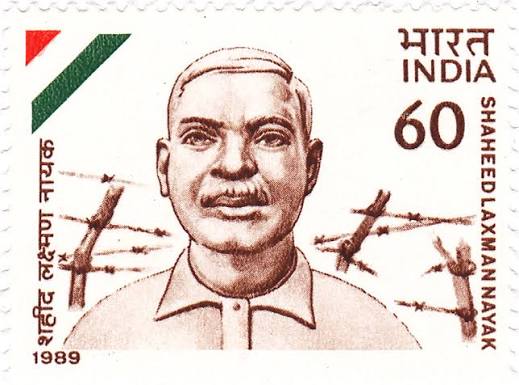
Laxman Nayak
Freedom Fighters | 22 November 1899 - 29 March 1943
"Laxman Nayak was a courageous tribal freedom fighter from Odisha who mobilized the Bhumia tribal community against British rule. Inspired by Mahatma Gandhi, he became a leading figure in the Quit India Movement and sacrificed his life for India's independence."
Born
22 November 1899Birthplace
Tentuliguma (Tentuligumma) Village, Koraput District, Odisha, IndiaDied
29 March 1943Place of Death
Berhampur (Brahmapur) Jail, Odisha, IndiaNationality
IndianGender
MaleLaxman Nayak Biography
Laxman Nayak was one of the most respected tribal freedom fighters in the history of India's independence movement. He emerged as a courageous leader of the Bhumia tribal community in the Koraput region of Odisha and dedicated his life to fighting oppression, injustice, and British colonial rule. Inspired by Mahatma Gandhi's philosophy of truth, non-violence, and self-reliance, he became a powerful voice for tribal rights and national freedom.
Although he came from a remote tribal region with limited educational opportunities, Laxman Nayak rose to become one of the most influential leaders of southern Odisha. His dedication to public service, social reform, and the freedom movement made him a symbol of courage and patriotism. His execution by the British in 1943 transformed him into a martyr and secured his place among India's greatest freedom fighters.
Today, Laxman Nayak is remembered not only as a freedom fighter but also as a champion of tribal welfare, social justice, and national unity.
Early Life and Family Background
Laxman Nayak was born on 22 November 1899 in Tentuliguma village in the Koraput region of present-day Odisha. He belonged to the Bhumia tribal community, one of the major tribal groups inhabiting the forests and hills of southern Odisha.
His father, Padlam Nayak, served as a Mustadaar or village headman under the administration of the Jeypore Estate. Because of this position, the family enjoyed a relatively stable livelihood compared to many other tribal families.
Despite limited formal education, Laxman displayed intelligence, leadership qualities, and a natural ability to connect with people. From an early age, he observed the hardships faced by tribal communities under exploitative systems of taxation, forced labor, and social inequality.
These experiences shaped his understanding of injustice and inspired his future commitment to social and political reform.
Childhood and Character
Laxman Nayak spent much of his childhood helping his family, working in agricultural fields, and participating in community activities. Like many tribal children, he grew up close to nature and developed a deep understanding of rural life.
He was known for his honesty, bravery, and compassion. Friends and relatives admired his willingness to help others regardless of social status or personal benefit.
Even during his youth, he opposed discrimination and unfair treatment. His desire to protect vulnerable people earned him respect within his community.
The values of simplicity, courage, and service remained central to his personality throughout his life.
Awakening to Social Injustice
As he grew older, Laxman became increasingly aware of the challenges facing tribal communities. British policies, local administrative exploitation, and the authority of regional rulers often created hardship for ordinary people.
Heavy taxes, forced labor, and restrictions on traditional livelihoods affected the welfare of tribal families. Poor villagers frequently suffered at the hands of moneylenders, officials, and landlords.
Laxman observed these conditions firsthand and gradually developed a strong desire to bring change.
His concern for social justice became one of the driving forces behind his future leadership.
Influence of Mahatma Gandhi
A turning point in Laxman Nayak's life came when he encountered the ideas of Mahatma Gandhi and the Indian National Congress. Gandhian principles of truth, non-violence, self-reliance, and service deeply influenced him.
He embraced the philosophy of peaceful resistance and believed that India's freedom could be achieved through mass participation and moral courage.
Inspired by Gandhi, he began promoting khadi, social reforms, and national consciousness among the tribal populations of Koraput.
Because of his commitment to Gandhian ideals, many people later referred to him as the "Gandhi of Malkangiri."
Entry into the Freedom Movement
Laxman Nayak formally joined the Indian National Congress and became involved in the freedom movement. He understood that political freedom and social reform were closely connected.
His leadership helped extend the influence of the national movement into remote tribal regions where political awareness was still developing.
He organized meetings, explained Congress objectives, and encouraged people to participate in campaigns for independence.
Through his efforts, nationalist ideas reached many tribal communities that had previously remained isolated from mainstream political activity.
Work Among Tribal Communities
One of Laxman Nayak's most important contributions was his work among tribal populations. He believed that political freedom would be meaningful only if it improved the lives of ordinary people.
He encouraged education, social reform, and community cooperation. He also campaigned against alcoholism, exploitation, and harmful social practices.
By combining social service with political activism, he gained widespread respect and trust among the tribal people.
His leadership allowed local communities to participate more actively in the national struggle for independence.
Promotion of Self-Reliance
Following Gandhian principles, Laxman emphasized self-reliance and economic independence. He encouraged villagers to use khadi and adopt practices that reduced dependence on foreign goods.
He believed that self-sufficiency would strengthen both individuals and communities.
Through door-to-door campaigns, discussions, and demonstrations, he spread awareness about the importance of local production and national economic development.
His efforts contributed to the growth of nationalist sentiment throughout southern Odisha.
Individual Satyagraha and Arrest
In 1940, Laxman Nayak participated in individual satyagraha activities associated with the Indian National Congress. His involvement attracted the attention of British authorities.
Because of his growing influence and political activism, he was arrested and imprisoned. However, imprisonment only strengthened his determination to continue serving the nation.
Upon release, he resumed public activities and intensified efforts to mobilize tribal communities for the freedom movement.
His willingness to face arrest demonstrated his commitment to the cause of independence.
Role in the Quit India Movement
The Quit India Movement of 1942 marked the most important phase of Laxman Nayak's political career. When Mahatma Gandhi issued the famous call of "Do or Die," Laxman enthusiastically supported the movement.
He encouraged tribal communities throughout the Koraput region to join the struggle against British rule. Large numbers of people responded positively to his leadership and prepared to participate in demonstrations.
The movement created widespread excitement and determination among ordinary villagers.
Laxman became one of the principal organizers of Quit India activities in southern Odisha.
The Mathili Procession
On 21 August 1942, a major procession was organized under Laxman Nayak's leadership. Participants planned to hoist the national flag at the Mathili Police Station in present-day Malkangiri district.
The march attracted a large gathering of tribal men and women who sought to demonstrate their commitment to freedom.
As the crowd approached the police station, tensions increased between demonstrators and authorities.
What began as a peaceful protest eventually turned into a tragic confrontation.
Arrest and Trial
Following the disturbances associated with the Mathili protest, British authorities arrested Laxman Nayak. He was accused of involvement in violence and was charged in connection with the death of a forest guard.
Many supporters believed that the charges were politically motivated and intended to suppress local participation in the freedom movement.
Despite widespread public sympathy, colonial authorities proceeded with the trial.
Ultimately, he was convicted and sentenced to death.
Martyrdom
On 29 March 1943, Laxman Nayak was executed by hanging at Berhampur Jail. His death shocked people across Odisha and transformed him into one of the most revered martyrs of the freedom struggle.
The execution did not weaken the nationalist movement. Instead, it inspired many others to continue fighting for independence.
His courage in the face of death earned admiration from fellow freedom fighters and ordinary citizens alike.
His sacrifice remains one of the most important chapters in the history of Odisha's contribution to India's freedom movement.
Legacy and Historical Importance
Laxman Nayak is remembered as one of the most important tribal leaders of the Indian independence movement. He successfully connected tribal aspirations with the broader national struggle against British rule.
His efforts promoted political awareness, social reform, and self-respect among marginalized communities. Through his leadership, thousands of tribal people became active participants in the independence movement.
Today, educational institutions, public memorials, roads, and government programs honor his memory.
His legacy continues to inspire people who believe in justice, equality, and national service.
Interesting Facts About Laxman Nayak
- Laxman Nayak belonged to the Bhumia tribal community of Odisha.
- He was strongly influenced by Mahatma Gandhi.
- He promoted khadi and self-reliance among tribal communities.
- He participated in Individual Satyagraha in 1940.
- He became a leading figure of the Quit India Movement in Koraput.
- He organized the famous Mathili procession in 1942.
- He was executed by the British on 29 March 1943.
- He is remembered as one of Odisha's greatest tribal martyrs.
Frequently Asked Questions (FAQs)
Who was Laxman Nayak?
Laxman Nayak was a tribal freedom fighter and social reformer from Odisha who played an important role in the Quit India Movement.
Why is Laxman Nayak famous?
He is famous for mobilizing tribal communities against British rule and sacrificing his life for India's independence.
Which tribe did Laxman Nayak belong to?
He belonged to the Bhumia tribal community.
When was Laxman Nayak executed?
He was executed on 29 March 1943 at Berhampur Jail.
Why is Laxman Nayak important in Indian history?
He connected tribal communities with the national freedom movement and became a martyr for India's independence.
Conclusion
Laxman Nayak was one of the most inspiring freedom fighters of Odisha and a true champion of tribal rights and national freedom. Through courage, selfless service, and unwavering devotion to Gandhian ideals, he inspired thousands to join the struggle against British rule. His sacrifice at Berhampur Jail made him immortal in India's freedom movement. Today, he is remembered as a symbol of patriotism, social justice, and the enduring strength of India's tribal communities.
Comments & Tribute (0)