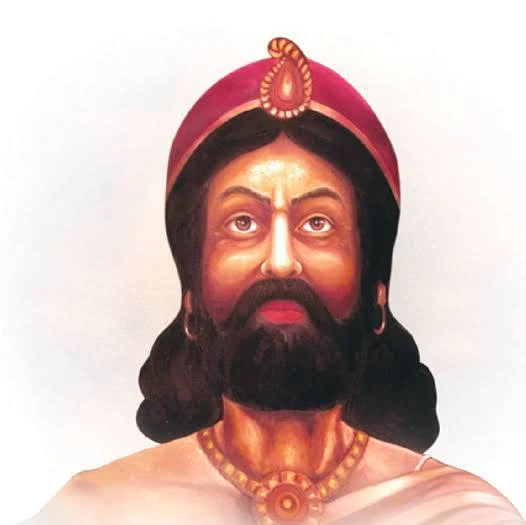
Jayee Rajguru
Freedom Fighters | 29 October 1739 - 6 December 1806
"Jayee Rajguru was one of the earliest Indian freedom fighters who led armed resistance against the British East India Company in Odisha. A scholar, military commander, and administrator, he sacrificed his life while defending the independence of the Khurda Kingdom."
Born
29 October 1739Birthplace
Biraharekrushnapur (Bira Harekrushnapur), Puri, Odisha, IndiaDied
6 December 1806Place of Death
Medinipur (Midnapore), Bengal Presidency, British IndiaNationality
IndianGender
MaleJayee Rajguru Biography
Jayee Rajguru was one of the earliest freedom fighters of India and a legendary hero of Odisha. Long before the Revolt of 1857, he raised his voice against British expansion and fought to protect the independence of the Khurda Kingdom. His courage, patriotism, leadership, and sacrifice earned him a permanent place in the history of India's freedom struggle.
Born as Jayakrushna Rajaguru Mohapatra, he later became famous as Jayee Rajguru after being appointed as the Rajguru of the Khurda Kingdom. He was not only a royal priest but also a military commander, administrator, strategist, and revolutionary who dedicated his life to protecting his homeland from foreign domination.
Today, Jayee Rajguru is remembered as one of the earliest martyrs of Odisha and a symbol of resistance against colonial rule.
Early Life and Family Background
Jayee Rajguru was born on 29 October 1739 in Biraharekrushnapur, near Puri in present-day Odisha. He belonged to a respected Brahmin family whose members had long served the kings of Khurda as political advisers, military strategists, and spiritual teachers.
His father was Chandra Rajguru and his mother was Haramani Devi. From an early age, Jayee Rajguru displayed exceptional intelligence and dedication toward learning.
He mastered Sanskrit, Vedas, Puranas, and various religious scriptures. His knowledge earned him respect among scholars and religious leaders throughout the region.
His intellectual abilities would later prove valuable not only in religious matters but also in state administration and military leadership.
Education and Scholarship
Jayee Rajguru became an accomplished Sanskrit scholar during his youth. He gained expertise in religious philosophy, traditional scriptures, political thought, and military strategy.
His reputation as a learned scholar spread widely, and many recognized him as one of the leading intellectuals of eighteenth-century Odisha.
Unlike many scholars who devoted themselves exclusively to religious studies, Jayee Rajguru combined scholarship with practical leadership. He believed that knowledge should be used to strengthen society and protect the nation.
This combination of intellectual and administrative ability distinguished him from many of his contemporaries.
Appointment as Rajguru
Following the traditions of his family, Jayee Rajguru entered royal service in the Khurda Kingdom. His learning, wisdom, and leadership qualities impressed the royal court.
Eventually, he was appointed Rajguru, a respected position that combined spiritual guidance with political counsel. The office carried significant influence because Rajgurus traditionally advised the king on matters of governance, diplomacy, religion, and warfare.
As his responsibilities increased, he became one of the most trusted figures within the kingdom.
His growing importance would later place him at the center of Odisha's resistance against British expansion.
Role in the Khurda Kingdom
Jayee Rajguru served during a period of considerable political uncertainty. After the death of King Dibyasingha Deva II, the young Mukunda Deva II inherited the throne.
Because the new king was still a minor, Jayee Rajguru assumed many administrative responsibilities and effectively acted as a guardian and regent.
He supervised civil administration, military affairs, religious activities, and financial management. His leadership ensured stability during a turbulent period.
The people of Khurda trusted him because he combined personal integrity with administrative competence.
British Expansion in Odisha
During Jayee Rajguru's lifetime, the British East India Company was steadily expanding its influence across India. Following victories in Bengal and neighboring regions, British authorities sought to strengthen their presence in Odisha.
The expansion threatened the independence of local rulers and challenged traditional political institutions. Jayee Rajguru viewed British interference as a serious danger to the sovereignty of Khurda.
He strongly opposed attempts by the East India Company to impose control over the kingdom and reduce its independence.
His opposition transformed him into one of the earliest political leaders to organize resistance against British rule in eastern India.
Defender of Odisha's Independence
Jayee Rajguru firmly believed that Odisha should remain free from foreign domination. He encouraged rulers, military leaders, and ordinary citizens to unite in defense of their homeland.
Rather than submitting to British demands, he advocated resistance and self-respect. His speeches and actions inspired widespread support among the people.
He understood that preserving independence required both military preparedness and public support. Consequently, he worked tirelessly to strengthen the kingdom's defenses.
His patriotic leadership made him one of the most influential figures in the region.
Military Leadership
Jayee Rajguru was not merely a scholar and administrator; he was also an accomplished military leader. After assuming responsibility for military affairs, he strengthened the kingdom's defenses and prepared forces to resist external threats.
He trained soldiers, organized local militias, and encouraged physical fitness and discipline. Village youth were instructed in military techniques, weapon handling, and combat skills.
His efforts helped create a spirit of resistance among the population and strengthened Khurda's ability to defend itself.
The combination of military organization and popular support became a major challenge for British authorities.
Resistance Against British Rule
Jayee Rajguru openly challenged British attempts to dominate Odisha. He rejected policies that undermined the authority of the Khurda rulers and refused to accept foreign control.
He sought alliances and support from neighboring powers while encouraging local resistance. His objective was to preserve the political independence of the kingdom.
The British regarded his activities as a threat because he successfully mobilized both the royal administration and the general population.
His resistance marked one of the earliest organized struggles against British authority in Odisha.
Mobilizing the Paikas
One of Jayee Rajguru's most significant contributions was his role in motivating and organizing the Paikas, the traditional warrior class of Odisha.
He traveled throughout villages, encouraging people to resist oppression and defend their homeland. His ability to inspire ordinary citizens transformed local resistance into a broader movement.
The Paikas responded enthusiastically to his leadership and became a powerful force opposing British expansion.
His efforts helped create the foundation for later resistance movements in Odisha.
Conflict with the East India Company
As resistance intensified, tensions between Khurda and the British East India Company continued to grow. British officials sought to weaken the authority of Jayee Rajguru and isolate him politically.
However, his popularity and influence prevented easy success. The British eventually resorted to military action against the kingdom.
Armed confrontations occurred as Khurda forces attempted to defend their territory and sovereignty.
Despite limited resources compared to the British, Jayee Rajguru remained committed to the struggle.
Capture and Arrest
The British eventually uncovered plans and alliances connected to Jayee Rajguru's resistance efforts. Their military forces launched operations against the Khurda Kingdom and succeeded in capturing him.
His arrest dealt a significant blow to the resistance movement, but his courage remained unbroken. Contemporary accounts portray him as steadfast and fearless even while facing imprisonment.
British authorities viewed him as a dangerous opponent because of his leadership abilities and influence among the people.
His capture marked the beginning of the final chapter of his extraordinary life.
Martyrdom
Following his capture, Jayee Rajguru was sentenced to death by the British authorities. On 6 December 1806, he was executed in Midnapore.
According to historical accounts, his execution was exceptionally brutal and intended to discourage future resistance.
Instead, his sacrifice inspired generations of patriots who continued the struggle against colonial rule.
His martyrdom transformed him from a regional leader into a symbol of courage and resistance throughout Odisha.
Legacy and Historical Importance
Jayee Rajguru occupies a unique place in Indian history as one of the earliest martyrs of the freedom struggle. He opposed British expansion decades before the large-scale national movements that later emerged.
His combination of scholarship, patriotism, military leadership, and personal sacrifice made him one of the most respected figures in Odisha's history.
Today, educational institutions, public memorials, roads, and cultural programs commemorate his achievements. His life is studied as an example of courage, leadership, and commitment to national dignity.
Historians recognize him as an important precursor to later freedom fighters who carried forward the struggle for independence.
Interesting Facts About Jayee Rajguru
- His original name was Jayakrushna Rajaguru Mohapatra.
- He was born on 29 October 1739 near Puri.
- He was a renowned Sanskrit scholar.
- He served as Rajguru, commander, and administrator of Khurda.
- He acted as regent during the minority of Mukunda Deva II.
- He organized resistance against the British East India Company.
- He inspired the Paikas to defend Odisha.
- He was executed on 6 December 1806 and is remembered as a martyr.
Frequently Asked Questions (FAQs)
Who was Jayee Rajguru?
Jayee Rajguru was a freedom fighter, military commander, scholar, and royal adviser of the Khurda Kingdom who resisted British rule in Odisha.
Why is Jayee Rajguru famous?
He is famous for leading resistance against the British East India Company and becoming one of Odisha's earliest martyrs.
What was Jayee Rajguru's real name?
His real name was Jayakrushna Rajaguru Mohapatra.
When was Jayee Rajguru born?
He was born on 29 October 1739 in Biraharekrushnapur near Puri.
How did Jayee Rajguru die?
He was captured by British authorities and executed on 6 December 1806.
Conclusion
Jayee Rajguru was one of the earliest heroes of India's freedom movement and a fearless defender of Odisha's independence. Through his leadership, scholarship, military courage, and ultimate sacrifice, he demonstrated an unwavering commitment to justice and patriotism. His life remains an enduring symbol of resistance against oppression and continues to inspire generations of Indians who value freedom, courage, and national pride.
Comments & Tribute (0)