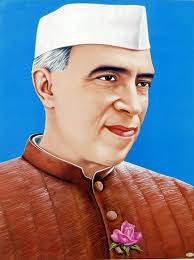
Jawaharlal Nehru
Freedom Fighters | 14 November 1889 - 27 May 1964
"Jawaharlal Nehru was a prominent leader of India's independence movement and the first Prime Minister of independent India. Known for his vision of democracy, secularism, and modernization, he played a crucial role in shaping the political, economic, and scientific foundations of modern India."
Born
14 November 1889Birthplace
Allahabad, North-Western Provinces, British India (Present-day Prayagraj, Uttar Pradesh, India)Died
27 May 1964Place of Death
New Delhi, IndiaNationality
IndianGender
MaleJawaharlal Nehru Biography
Jawaharlal Nehru was one of the most influential leaders in Indian history and a central figure in the country's struggle for independence. As the first Prime Minister of India, he laid the foundation for a democratic, secular, and modern nation. His vision for scientific development, education, industrialization, and international cooperation helped shape India's future after independence.
Early Life and Family
Jawaharlal Nehru was born on 14 November 1889 in Allahabad, Uttar Pradesh, into a wealthy and influential family. His father, Motilal Nehru, was a renowned lawyer and prominent leader of the Indian National Congress, while his mother, Swarup Rani Nehru, played an important role in his upbringing.
Growing up in an educated and politically active household, Nehru developed an early interest in history, politics, and national affairs.
Education
Nehru received his early education at home under private tutors. He later traveled to England, where he studied at Harrow School and Trinity College, Cambridge.
After completing his studies, he trained in law at the Inner Temple in London and qualified as a barrister. He returned to India in 1912 and began practicing law, although his interest increasingly turned toward politics and public service.
Entry into the Freedom Movement
Inspired by Mahatma Gandhi and the growing nationalist movement, Nehru joined the Indian National Congress and became actively involved in the struggle for independence.
He participated in numerous campaigns against British rule and traveled extensively across India to understand the challenges faced by ordinary people.
Role in the Indian National Congress
Jawaharlal Nehru emerged as one of the leading figures of the Indian National Congress during the 1920s and 1930s. His leadership, intellect, and commitment to freedom earned him widespread popularity.
In 1929, he became President of the Indian National Congress at the historic Lahore Session, where the demand for Purna Swaraj (Complete Independence) was officially adopted.
Participation in the Freedom Struggle
Nehru played an active role in major movements led by Mahatma Gandhi, including:
- Non-Cooperation Movement (1920-1922)
- Civil Disobedience Movement (1930-1934)
- Salt Satyagraha
- Quit India Movement (1942)
Due to his participation in these movements, he was imprisoned multiple times and spent more than nine years in British prisons throughout his political career.
India's First Prime Minister
When India achieved independence on 15 August 1947, Jawaharlal Nehru became the nation's first Prime Minister.
In his famous "Tryst with Destiny" speech delivered on the eve of independence, he expressed his vision for a democratic and prosperous India. His leadership during the early years of independence helped guide the country through significant political and economic challenges.
Building Modern India
Nehru firmly believed that science, education, and industrial development were essential for India's progress. He promoted the establishment of major institutions and projects that became pillars of modern India.
His initiatives included:
- Establishment of the Indian Institutes of Technology (IITs).
- Development of large dams and irrigation projects.
- Expansion of scientific research institutions.
- Growth of public sector industries.
- Strengthening democratic institutions and parliamentary governance.
Because of these efforts, he is often referred to as one of the architects of modern India.
Foreign Policy and Non-Alignment
Nehru played a crucial role in shaping India's foreign policy. He advocated peaceful coexistence, international cooperation, and independence from major power blocs during the Cold War.
He was one of the principal architects of the Non-Aligned Movement (NAM), which allowed newly independent nations to maintain strategic independence.
Author and Thinker
Jawaharlal Nehru was also a respected author. While imprisoned, he wrote several influential books that reflected his thoughts on history, politics, and civilization.
Some of his famous works include:
- The Discovery of India
- Glimpses of World History
- An Autobiography
These writings remain important contributions to Indian literature and historical thought.
Love for Children
Nehru was deeply loved by children and was affectionately called "Chacha Nehru". His belief in education and child welfare led to the celebration of his birthday, 14 November, as Children's Day in India.
Death
Jawaharlal Nehru passed away on 27 May 1964 in New Delhi. His death marked the end of an era in Indian politics, and millions of people mourned the loss of a leader who had guided the country since independence.
Legacy
Jawaharlal Nehru remains one of the most significant figures in Indian history. His contributions to democracy, nation-building, education, science, and international diplomacy continue to influence India's development.
His vision of a united, secular, and progressive India remains an important part of the country's national identity.
Honours and Recognition
- First Prime Minister of independent India.
- Awarded the Bharat Ratna in 1955.
- Popularly known as "Chacha Nehru."
- Remembered as an architect of modern India.
- His birthday, 14 November, is celebrated as Children's Day in India.
Conclusion
Jawaharlal Nehru dedicated his life to India's independence and development. Through his leadership, vision, and commitment to democratic values, he helped build the foundations of modern India. His legacy continues to inspire generations in the fields of politics, education, science, and public service.
Comments & Tribute (0)