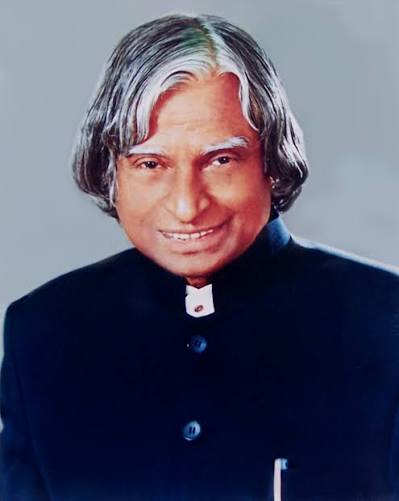
Dr APJ Abdul Kalam
Scientists & Innovators | 15 October 1931 - 27 July 2015
"Dr. A.P.J. Abdul Kalam was one of India's most respected scientists and leaders, known as the "Missile Man of India." He served as the 11th President of India and inspired generations through his contributions to science, education, and nation-building."
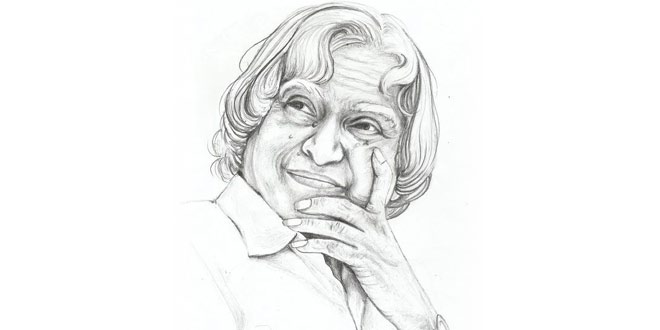
Born
15 October 1931Birthplace
Rameswaram, Tamil Nadu, IndiaDied
27 July 2015Place of Death
Shillong, Meghalaya, IndiaNationality
IndianGender
MaleDr. APJ Abdul Kalam Biography
Dr. A.P.J. Abdul Kalam was one of the most admired personalities in modern Indian history. A renowned scientist, visionary leader, teacher, and author, he earned the title "Missile Man of India" for his remarkable contributions to India's missile development programs. Later, he became the 11th President of India and was affectionately known as the "People's President" because of his close connection with ordinary citizens, especially students and young people.
Throughout his life, Dr. Kalam combined scientific excellence with simplicity, humility, and patriotism. His inspiring journey from a small town in Tamil Nadu to the highest constitutional office in India serves as a powerful example of dedication, hard work, and determination. Today, he remains one of the most respected figures in India's scientific and political history.
Early Life and Family Background
Dr. Avul Pakir Jainulabdeen Abdul Kalam was born on 15 October 1931 in Rameswaram, a small island town in Tamil Nadu. He belonged to a modest Tamil Muslim family. His father, Jainulabdeen, was a boat owner and imam, while his mother, Ashiamma, was known for her kindness and generosity.
Although the family was not wealthy, his parents instilled strong values of honesty, discipline, hard work, and compassion. These principles guided Kalam throughout his life.
As a young boy, he helped support his family by distributing newspapers before and after school. Despite financial challenges, he remained committed to his education and displayed a keen interest in mathematics and science.
Education
Kalam completed his early education in Rameswaram and later attended Schwartz Higher Secondary School in Ramanathapuram. His teachers recognized his intelligence and encouraged him to pursue higher studies.
After completing school, he joined St. Joseph's College in Tiruchirappalli, where he earned a degree in Physics. However, his true passion was engineering and aviation.
To pursue his dream, he enrolled at the Madras Institute of Technology (MIT) and studied Aerospace Engineering. His time at MIT played a crucial role in shaping his future career and ignited his enthusiasm for aircraft and space technology.
Beginning of Scientific Career
After graduating, Abdul Kalam joined the Defence Research and Development Organisation (DRDO) as a scientist. Although he gained valuable experience there, he desired greater opportunities to contribute to India's scientific advancement.
His career took a major turn when he joined the Indian Space Research Organisation (ISRO). At ISRO, he became involved in India's satellite launch vehicle program and contributed significantly to the country's space ambitions.
These early experiences laid the foundation for his future achievements in science and technology.
Role in India's Space Program
At ISRO, Dr. Kalam played an important role in the development of India's first indigenous Satellite Launch Vehicle (SLV-III). The project represented a significant milestone in India's space journey.
The successful launch of the Rohini satellite using SLV-III demonstrated India's growing technological capabilities. Kalam's leadership and technical expertise earned him recognition within the scientific community.
The achievement strengthened India's confidence in developing its own space technologies and inspired future advancements in the space sector.
The Missile Man of India
Perhaps the most famous chapter of Dr. Kalam's career was his leadership in India's missile development programs. He became one of the key figures behind the Integrated Guided Missile Development Programme (IGMDP).
The program led to the development of important missile systems including Agni, Prithvi, Akash, Trishul, and Nag. These achievements significantly strengthened India's defense capabilities.
His contributions to missile technology earned him the title "Missile Man of India." The nickname reflected his leadership and dedication to advancing indigenous defense technology.
The success of these programs established him as one of India's most respected scientists.
Contribution to Nuclear Capability
Dr. Kalam played a significant role in India's strategic defense initiatives, including the Pokhran-II nuclear tests conducted in 1998. Working alongside leading scientists and policymakers, he contributed to the success of these important operations.
The successful tests demonstrated India's scientific capabilities and enhanced the country's strategic position on the global stage.
His contributions during this period further strengthened his reputation as a national leader in science and technology.
Scientific Adviser and National Leader
Due to his achievements and expertise, Abdul Kalam served as the Chief Scientific Adviser to the Government of India. In this position, he helped shape national policies related to science, technology, and defense.
He consistently emphasized self-reliance, innovation, and technological development as essential components of national progress.
His vision extended beyond defense and space research. He advocated using science and technology to improve education, healthcare, agriculture, and economic development.
11th President of India
In 2002, Dr. A.P.J. Abdul Kalam was elected as the 11th President of India. His election was widely welcomed because of his reputation as a scientist, patriot, and non-political public figure.
During his presidency, he emphasized national development, youth empowerment, education, and innovation. He frequently interacted with students and encouraged them to dream big and work hard.
Unlike many political leaders, Kalam maintained a close connection with ordinary citizens. His approachable nature earned him the nickname "People's President."
His tenure as President further enhanced his popularity across India.
Vision for India
One of Kalam's greatest contributions was his vision for transforming India into a developed nation. He believed that education, science, technology, and innovation would drive national progress.
Through initiatives such as Vision 2020, he encouraged citizens to work collectively toward economic growth, social development, and technological advancement.
He often stated that young people were the most valuable resource of the nation and emphasized the importance of nurturing their talents.
His vision continues to influence educational institutions, policymakers, and entrepreneurs across India.
Author and Educator
Dr. Kalam was also a prolific writer. Several of his books became highly popular and inspired readers worldwide.
Among his most famous works are "Wings of Fire," "Ignited Minds," "India 2020," and "Turning Points." These books provide insights into his life, philosophy, and aspirations for the nation.
After completing his presidency, he devoted much of his time to teaching and interacting with students. He regularly delivered lectures at universities and educational institutions across India.
His passion for education earned him admiration from millions of young people.
Awards and Honors
Dr. Kalam received numerous awards and honors in recognition of his contributions to science and public service.
Among the most prestigious honors awarded to him was the Bharat Ratna, India's highest civilian award. He also received the Padma Bhushan and Padma Vibhushan.
Universities and organizations from around the world conferred honorary degrees and distinctions upon him.
These honors reflected the impact of his work and his importance as a national icon.
Final Years and Passing Away
Even after leaving office, Dr. Kalam remained active as a teacher, mentor, and motivational speaker. He traveled extensively, sharing knowledge and inspiring young minds.
On 27 July 2015, while delivering a lecture at the Indian Institute of Management (IIM) Shillong, he collapsed and passed away.
His death shocked the nation, but it also reflected his lifelong dedication to education and service. He remained engaged with students and learning until his final moments.
Legacy and Impact
Dr. A.P.J. Abdul Kalam's legacy extends far beyond science and politics. He demonstrated that humility and leadership can coexist, and that education has the power to transform lives.
His achievements in defense technology, space research, education, and public service continue to inspire future generations.
Schools, universities, research institutions, and development programs frequently cite his ideas and vision. His message of hard work, innovation, and national development remains highly relevant today.
Millions of people continue to regard him as a role model and source of inspiration.
Interesting Facts About APJ Abdul Kalam
- He was known as the "Missile Man of India."
- He served as the 11th President of India.
- He won the Bharat Ratna, India's highest civilian award.
- He sold newspapers as a child to support his family.
- He played a major role in India's missile programs.
- He contributed significantly to India's space program.
- He authored several bestselling books.
- He remained a teacher and mentor throughout his life.
Frequently Asked Questions (FAQs)
Who was Dr. APJ Abdul Kalam?
Dr. APJ Abdul Kalam was an Indian scientist, aerospace engineer, teacher, author, and the 11th President of India.
Why was APJ Abdul Kalam called the Missile Man of India?
He earned the title because of his leadership in India's missile development programs.
Which books were written by APJ Abdul Kalam?
His famous books include Wings of Fire, Ignited Minds, India 2020, and Turning Points.
When did APJ Abdul Kalam become President of India?
He became the 11th President of India in 2002.
What is APJ Abdul Kalam's legacy?
He is remembered for his contributions to science, education, defense technology, and youth empowerment.
Conclusion
Dr. A.P.J. Abdul Kalam remains one of the most beloved figures in Indian history. From humble beginnings to becoming a renowned scientist and President of India, his life is a powerful example of determination, knowledge, and service. His vision for a developed India and his unwavering faith in the power of education continue to inspire millions. Today, he is remembered not only as the Missile Man of India but also as a teacher, leader, and true national icon.
Comments & Tribute (0)