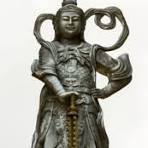
Dharmapala
Warriors & Kings | c. 750 CE (Approximate) - c. 810 CE (Approximate)
"Dharmapala was one of the greatest rulers of the Pala Dynasty who transformed Bengal into a powerful empire, promoted Buddhist learning, founded renowned universities, and emerged as a dominant force in northern India."
Born
c. 750 CE (Approximate)Birthplace
c. 750 CE (Approximate)Died
c. 810 CE (Approximate)Place of Death
Pala Empire (Exact location unknown)Nationality
IndianGender
MaleDharmapala Biography
Dharmapala was one of the most powerful and influential rulers of the Pala Dynasty and is widely regarded as one of the greatest emperors of early medieval India. He ruled during the late eighth and early ninth centuries CE and transformed the Pala kingdom into one of the most dominant powers in northern India. Under his leadership, the Pala Empire expanded significantly, became a center of Buddhist learning, and emerged as a major political force that rivaled the Gurjara-Pratiharas and Rashtrakutas.
Dharmapala's reign marked a period of political expansion, military accomplishment, cultural prosperity, and educational advancement. He is especially remembered for his patronage of Buddhism, the establishment of Vikramashila University, support for Nalanda University, and his influential role in the famous Tripartite Struggle for Kannauj. Through military strength and visionary leadership, he laid the foundations for the golden age of the Pala Empire.
The historical significance of Dharmapala extends beyond Bengal and Bihar. His influence reached much of northern India, and his support for Buddhist scholarship helped spread Indian intellectual traditions across Asia. Even centuries after his death, his achievements continue to be celebrated by historians and scholars.
Early Life and Family Background
Dharmapala was born into the royal family of the Pala Dynasty during the eighth century CE. He was the son of Gopala, the founder of the Pala Empire, who had successfully established political stability in Bengal after years of regional conflict and instability.
As a prince, Dharmapala received extensive training in military strategy, governance, diplomacy, administration, and religious traditions. The royal court provided him with opportunities to learn from experienced generals, ministers, scholars, and religious leaders. His education prepared him well for the responsibilities of kingship and empire building.
Growing up in a newly established kingdom, Dharmapala developed a strong understanding of the political realities of northern India. He recognized that military strength alone was not sufficient for lasting success and that effective administration, education, and diplomacy were equally important.
Accession to the Throne
Around 770 CE, Dharmapala succeeded his father Gopala as ruler of the Pala kingdom. At the time of his accession, Bengal and Bihar had been largely unified under Pala authority, but powerful rival kingdoms continued to challenge the empire's influence.
From the beginning of his reign, Dharmapala displayed ambition and determination. He sought to expand his kingdom beyond eastern India and establish himself as one of the foremost rulers of the subcontinent. Through military campaigns and diplomatic initiatives, he quickly transformed the Pala kingdom into a major imperial power.
His rise to power marked the beginning of one of the most significant periods in the history of the Pala Dynasty.
Expansion of the Pala Empire
One of Dharmapala's greatest achievements was the expansion of the Pala Empire. Through conquest, alliances, and political influence, he extended Pala authority across large parts of northern India.
The empire expanded far beyond Bengal and Bihar and emerged as a dominant power in the Gangetic plains. Numerous local rulers accepted his authority or aligned themselves with the Pala Empire. Through these relationships, Dharmapala established an extensive sphere of influence that increased both his prestige and strategic power.
The expansion of the empire brought new resources, trade opportunities, and political advantages. It also strengthened the position of the Pala Dynasty among the major powers of India.
His accomplishments established him as one of the greatest empire builders of early medieval India.
The Tripartite Struggle
A defining feature of Dharmapala's reign was his involvement in the famous Tripartite Struggle. This prolonged conflict involved three powerful dynasties: the Palas of Bengal, the Gurjara-Pratiharas of western India, and the Rashtrakutas of the Deccan.
The struggle centered on the city of Kannauj, which had become one of the most prestigious political centers in northern India. Control of Kannauj was considered a symbol of imperial authority and dominance.
Dharmapala actively pursued influence over the city and worked to establish Pala supremacy in northern India. Although the competition was intense and continued for many years, his participation greatly enhanced the prestige of the Pala Empire.
The Tripartite Struggle remains one of the most important political contests in medieval Indian history, and Dharmapala was one of its central figures.
Control of Kannauj
Dharmapala achieved one of his most significant political victories when he intervened in the affairs of Kannauj. After defeating rival claimants, he installed Chakrayudha as ruler of the city under Pala protection.
This event demonstrated the extent of his influence across northern India. Historical accounts suggest that several regional rulers acknowledged his authority during this period, reflecting his growing power and prestige.
Although control of Kannauj remained contested among major dynasties, Dharmapala's role in its politics enhanced his status considerably and strengthened the position of the Pala Empire.
His influence over Kannauj symbolized the empire's emergence as a leading political force in northern India.
Military Leadership
Dharmapala was an accomplished military commander who successfully led campaigns against powerful rivals. His army consisted of infantry, cavalry, war elephants, and support forces capable of operating across large territories.
Military success enabled him to expand his empire and defend its borders against external threats. Despite facing opposition from strong rivals such as the Gurjara-Pratiharas and Rashtrakutas, he consistently demonstrated resilience, determination, and strategic ability.
His victories increased both territorial control and political prestige, allowing the Pala Dynasty to reach unprecedented heights.
The effectiveness of his military leadership played a crucial role in the success of his reign.
Administration and Governance
Dharmapala was not only a conqueror but also a capable administrator. Managing a large empire required efficient institutions, effective officials, and a stable system of governance.
The Pala administration relied upon provincial governors, local authorities, and trusted ministers to supervise revenue collection, maintain law and order, and oversee public welfare. These arrangements helped ensure political stability and effective governance across extensive territories.
His government promoted agricultural productivity, encouraged trade, and supported economic growth. The administrative structures developed during his reign contributed significantly to the prosperity of the empire.
The stability and efficiency of his administration helped sustain the growth achieved through military expansion.
Patron of Buddhism
Dharmapala is particularly remembered as one of the greatest patrons of Buddhism in Indian history. He strongly supported Buddhist monasteries, scholars, and religious institutions throughout his empire.
Under his leadership, Buddhism experienced a revival in eastern India. Monastic centers received royal patronage, allowing them to flourish as centers of education, scholarship, and religious practice.
His support helped preserve Buddhist traditions and strengthened connections between Indian scholars and religious communities throughout Asia.
The emperor's patronage made the Pala Empire one of the most important centers of Buddhist culture in the medieval world.
Foundation of Vikramashila University
Among Dharmapala's most celebrated achievements was the establishment of Vikramashila University. This institution became one of the leading centers of higher learning in Asia and attracted students from many different regions.
Vikramashila specialized in Buddhist studies but also offered instruction in philosophy, grammar, logic, medicine, and other disciplines. The university became famous for its academic excellence and produced many distinguished scholars.
The institution played a major role in preserving and transmitting Buddhist knowledge to Tibet and other parts of Asia. Through Vikramashila, Dharmapala's influence extended far beyond politics and into the intellectual history of the continent.
The university remains one of his most enduring contributions to civilization.
Support for Nalanda University
Dharmapala also provided substantial support to Nalanda University, one of the greatest educational institutions of the ancient world. Nalanda had long been a renowned center of scholarship, attracting students from across Asia.
Under Pala patronage, the university continued to prosper. Scholars received support, libraries expanded, and intellectual activity flourished.
The emperor recognized the value of education and understood that knowledge was essential for the advancement of society. His support for Nalanda contributed to its continued success and international reputation.
The university remained a beacon of learning for many centuries due in part to the patronage provided by rulers such as Dharmapala.
Somapura Mahavihara and Buddhist Architecture
Dharmapala is also associated with the development of major Buddhist institutions such as Somapura Mahavihara. These monasteries served as centers of education, culture, religious practice, and artistic activity.
The architectural achievements of the Pala period reflect the prosperity and cultural sophistication of the empire. Monasteries and temples were constructed on a grand scale and became important centers of intellectual exchange.
Many of these institutions influenced architectural traditions throughout South and Southeast Asia.
The artistic heritage created during Dharmapala's reign remains an important part of India's historical legacy.
Economic Development
The Pala Empire enjoyed considerable economic prosperity during Dharmapala's reign. Agriculture remained the basis of the economy, supported by fertile lands and effective administration.
Trade also flourished as commercial routes connected Bengal and Bihar with other regions of India and Asia. Merchants traded textiles, agricultural products, luxury goods, and various commodities.
The prosperity generated by trade increased state revenues and supported cultural, educational, and religious institutions. Urban centers expanded as economic activity increased.
The strong economy provided the resources necessary to sustain imperial ambitions and long-term development.
Influence Beyond India
Dharmapala's support for Buddhist learning strengthened cultural ties between India and neighboring regions, particularly Tibet. Monks and scholars traveled between educational institutions, facilitating the exchange of ideas and knowledge.
The influence of Pala education spread across Asia and contributed significantly to the development of Buddhist scholarship beyond India's borders.
Through intellectual and religious networks, the empire gained international prestige and recognition.
These connections enhanced the cultural influence of the Pala Dynasty and strengthened its place in world history.
Legacy and Historical Importance
Dharmapala is widely regarded as one of the greatest rulers of the Pala Dynasty and one of the most important kings in medieval Indian history. His reign transformed the Pala Empire into a dominant political, cultural, and religious power.
His military achievements expanded the empire, while his patronage of education and Buddhism ensured long-lasting cultural influence. The institutions he founded and supported continued to shape intellectual traditions for centuries.
Historians often consider him the architect of the Pala golden age and one of the most significant patrons of Buddhist civilization in South Asia.
His achievements continue to be studied and admired by scholars throughout the world.
Conclusion
Dharmapala was an extraordinary emperor whose achievements extended far beyond military conquest. Through effective governance, territorial expansion, educational patronage, and support for Buddhism, he built one of the most influential empires of early medieval India.
His establishment of Vikramashila University, patronage of Nalanda, role in the Tripartite Struggle, and expansion of the Pala Empire secured his place among India's greatest rulers. Today, Dharmapala remains a symbol of enlightened leadership, cultural achievement, and imperial excellence whose legacy continues to inspire students of history around the world.
Comments & Tribute (0)