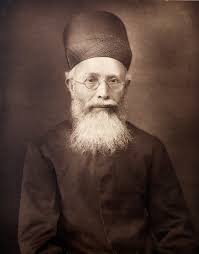
Dadabhai Naoroji
Freedom Fighters | 04 September 1825 - 30 June 1917
"Dadabhai Naoroji was one of the pioneers of India's freedom movement and is popularly known as the "Grand Old Man of India." He exposed the economic exploitation of India under British rule through his famous Drain Theory and became the first Indian elected to the British Parliament."
Born
04 September 1825Birthplace
Bombay, Bombay Presidency, British India (Present-day Mumbai, Maharashtra, India)Died
30 June 1917Place of Death
Bombay, Bombay Presidency, British India (Present-day Mumbai, Maharashtra, India)Nationality
IndianGender
MaleDadabhai Naoroji Biography
Dadabhai Naoroji was one of the earliest leaders of India's freedom movement and is widely regarded as the "Grand Old Man of India." A distinguished nationalist, economist, educator, and political thinker, he played a crucial role in awakening political consciousness among Indians. His analysis of British economic policies and his advocacy for Indian rights laid the foundation for the country's independence movement.
Early Life and Family
Dadabhai Naoroji was born on 4 September 1825 in Bombay (now Mumbai), Maharashtra, into a Parsi family. His father, Naoroji Palanji Dordi, passed away when Dadabhai was very young. Despite financial difficulties, his mother ensured that he received a good education.
From childhood, he demonstrated exceptional intelligence, discipline, and a strong interest in learning.
Education
Naoroji studied at Elphinstone Institution in Bombay and excelled academically. He later became one of the first Indian professors at Elphinstone College.
His educational achievements earned him widespread respect and helped establish his reputation as a scholar and intellectual leader.
Career and Public Service
Dadabhai Naoroji initially worked as an educator before entering business and public affairs. He later moved to England, where he worked to create awareness about India's economic and political conditions.
He became an important voice for Indians living under British colonial rule and consistently advocated equal rights and opportunities for Indian citizens.
Drain Theory
One of Dadabhai Naoroji's most significant contributions was the development of the Drain Theory. He argued that British rule was causing a continuous transfer of India's wealth to Britain without adequate economic return.
According to Naoroji, excessive taxation, unfair trade policies, administrative expenses, and the transfer of resources were impoverishing India. His economic analysis exposed the financial exploitation of the country and became a powerful argument against colonial rule.
His ideas greatly influenced future nationalist leaders and strengthened demands for self-government.
Role in the Indian National Congress
Dadabhai Naoroji was one of the founding leaders of the Indian National Congress (INC), established in 1885. He played a major role in shaping its early direction and objectives.
He served as President of the Indian National Congress three times:
- 1886 (Calcutta Session)
- 1893 (Lahore Session)
- 1906 (Calcutta Session)
During his leadership, he advocated constitutional reforms, greater Indian representation in government, and the demand for self-rule.
First Indian Member of British Parliament
In 1892, Dadabhai Naoroji achieved a historic milestone by becoming the first Indian and first Asian elected to the British House of Commons.
Representing the Liberal Party from Central Finsbury, London, he used his position to highlight India's problems and advocate reforms within the British political system.
His election was a landmark achievement that brought international attention to India's concerns.
Advocacy for Swaraj
Naoroji strongly believed that Indians should have greater control over their own affairs. Over time, he became an advocate of Swaraj (self-government) and inspired future generations of nationalists.
His demand for self-rule helped shape the political goals of the Indian independence movement.
Author and Thinker
Dadabhai Naoroji was a respected writer and economist. His most influential work was:
- Poverty and Un-British Rule in India
In this book, he presented detailed evidence of the economic hardships caused by colonial policies. His research remains an important contribution to economic and political history.
Influence on Future Leaders
Naoroji's ideas influenced several prominent Indian leaders, including Mahatma Gandhi, Gopal Krishna Gokhale, Bal Gangadhar Tilak, and Jawaharlal Nehru.
His approach of combining economic analysis with political advocacy helped strengthen the intellectual foundations of Indian nationalism.
Social Reform Efforts
In addition to political work, Naoroji supported educational advancement, social reform, and public welfare. He believed that education and awareness were essential for national progress.
He actively encouraged reforms that promoted equality, opportunity, and development within Indian society.
Death
Dadabhai Naoroji passed away on 30 June 1917 in Bombay at the age of 91. His death marked the end of a remarkable public career dedicated to the welfare of India and its people.
Legacy
Dadabhai Naoroji is remembered as one of the founding fathers of Indian nationalism. His economic critiques of colonial rule, leadership in the Indian National Congress, and advocacy for self-government inspired generations of freedom fighters.
His contributions helped create the intellectual and political foundations upon which India's independence movement was built.
Honours and Recognition
- Popularly known as the "Grand Old Man of India."
- First Indian and first Asian elected to the British Parliament.
- Developer of the famous Drain Theory.
- Three-time President of the Indian National Congress.
- Recognized as one of the pioneers of Indian nationalism.
Conclusion
Dadabhai Naoroji dedicated his life to advancing India's political, economic, and social interests. Through his scholarship, leadership, and tireless advocacy, he exposed the realities of colonial exploitation and inspired the struggle for self-rule. His enduring legacy continues to make him one of the most respected architects of India's national movement.
Comments & Tribute (0)