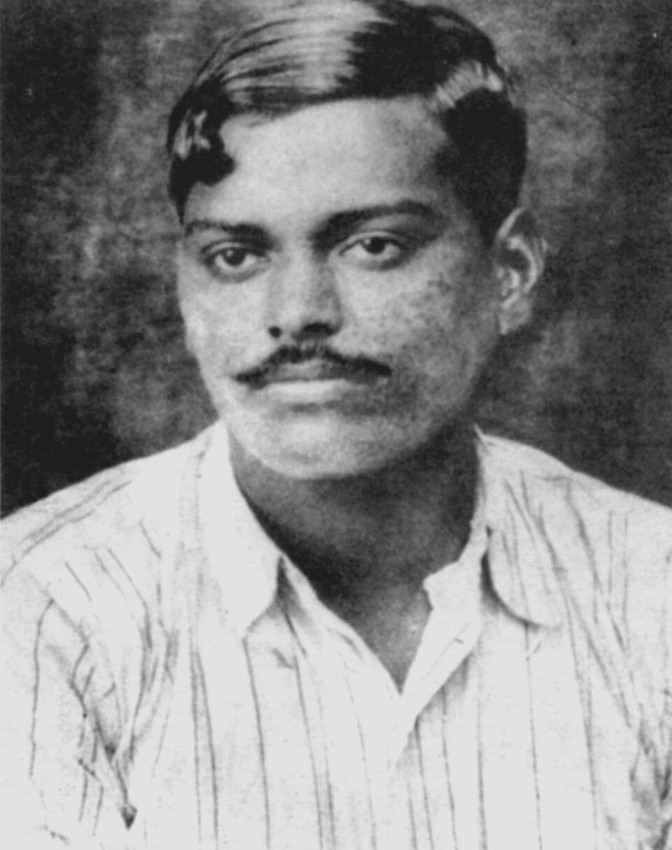
Chandrashekhar Azad
Freedom Fighters | 23 July 1906 - 27 February 1931
"Chandrashekhar Azad was one of India's most fearless revolutionary freedom fighters who dedicated his life to ending British colonial rule. Famous for his vow never to be captured alive, he inspired countless Indians through his bravery, patriotism, and sacrifice for the nation's freedom."
Born
23 July 1906Birthplace
Bhabra Village, Alirajpur District, Central India Agency, British India (Present-day Madhya Pradesh, India)Died
27 February 1931Place of Death
Alfred Park, Allahabad, United Provinces, British India (Present-day Prayagraj, Uttar Pradesh, India)Nationality
IndianGender
MaleChandrashekhar Azad Biography
Chandrashekhar Azad was one of the bravest revolutionaries of India's freedom struggle. Known for his fearless spirit and unwavering determination, he devoted his entire life to liberating India from British colonial rule. His courage, leadership, and sacrifice made him a legendary figure in the history of India's independence movement.
Early Life and Family
Chandrashekhar Azad was born on 23 July 1906 in Bhabra village, present-day Madhya Pradesh. His father, Sitaram Tiwari, and mother, Jagrani Devi, belonged to a modest Hindu family. From an early age, Azad displayed a strong sense of patriotism and courage.
He spent his childhood in a tribal region and developed physical strength, discipline, and self-confidence. These qualities later helped him become one of the most daring revolutionaries of his time.
Education and Nationalist Influence
Azad received his early education in his native village and later moved to Varanasi for further studies. During his youth, he became inspired by the growing nationalist movement against British rule.
The teachings of Indian leaders and the widespread desire for independence greatly influenced him. He soon became actively involved in political activities aimed at ending colonial oppression.
Participation in the Non-Cooperation Movement
In 1921, Chandrashekhar joined Mahatma Gandhi's Non-Cooperation Movement. At the age of just fifteen, he was arrested by British authorities for participating in protests.
When produced before a magistrate, he famously identified himself as "Azad" (Free), his father's name as "Swatantrata" (Freedom), and his residence as "Jail." Since then, he became popularly known as Chandrashekhar Azad.
Revolutionary Activities
After the withdrawal of the Non-Cooperation Movement, Azad became convinced that revolutionary action was necessary to achieve independence. He joined the Hindustan Republican Association (HRA), which later became the Hindustan Socialist Republican Association (HSRA).
He worked alongside prominent revolutionaries such as Ram Prasad Bismil, Bhagat Singh, Rajguru, Sukhdev, and Ashfaqulla Khan.
Kakori Conspiracy
Azad played an important role in revolutionary activities connected with the famous Kakori Train Action of 1925. Following the arrest of many revolutionary leaders after the incident, Azad successfully evaded capture.
He became one of the most wanted revolutionaries in British India and continued organizing revolutionary operations while remaining underground.
Leadership of HSRA
After the execution and imprisonment of several senior revolutionaries, Chandrashekhar Azad emerged as a key leader of the HSRA. He reorganized the revolutionary network and mentored younger revolutionaries.
His leadership strengthened revolutionary efforts across northern India and helped inspire resistance against British rule.
Association with Bhagat Singh
Azad shared a close association with Bhagat Singh and other members of the HSRA. Together, they worked toward creating a free and independent India.
He provided strategic guidance and support to revolutionary activities, including those aimed at protesting the repressive policies of the British government.
Ideals and Personality
Chandrashekhar Azad was known for his discipline, bravery, and commitment to the nation. He believed that freedom required sacrifice and courage. He lived a simple life and remained completely dedicated to the cause of independence.
Azad took a solemn pledge that he would never allow British authorities to capture him alive. This promise became a defining aspect of his legacy.
Final Battle at Alfred Park
On 27 February 1931, British police surrounded Chandrashekhar Azad at Alfred Park in Allahabad after receiving information about his location.
Azad fought bravely against the police, allowing his companion to escape safely. After a prolonged exchange of fire and finding himself surrounded, he used his last bullet on himself rather than surrender to the British.
By doing so, he fulfilled his vow of remaining "Azad" (Free) until his last breath.
Legacy
Chandrashekhar Azad is remembered as a symbol of courage, sacrifice, and patriotism. His fearless actions inspired countless young Indians to join the freedom struggle.
His life demonstrated unwavering dedication to national freedom and resistance against injustice. Even today, he remains one of India's most respected revolutionary heroes.
Honours and Recognition
- Alfred Park in Prayagraj was renamed Chandrashekhar Azad Park in his honor.
- Numerous educational institutions, roads, and memorials across India bear his name.
- Recognized as one of the leading revolutionaries of India's independence movement.
- His life continues to inspire generations of Indians with the values of bravery and sacrifice.
Conclusion
Chandrashekhar Azad dedicated every moment of his life to the service of his nation. Through his courage, determination, and ultimate sacrifice, he earned an enduring place among India's greatest freedom fighters. His legacy remains a powerful reminder of the price paid by revolutionaries for India's independence.
Comments & Tribute (1)