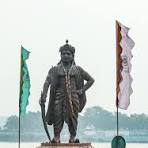
Bhoja Deva
Warriors & Kings | c. 980 CE (Approximate) - c. 1055 CE
"Bhoja Paramara was the legendary scholar-king of Malwa who combined military leadership with extraordinary achievements in literature, science, architecture, and education, making him one of India's most celebrated rulers."
Born
c. 980 CE (Approximate)Birthplace
Malwa Region, Present-day Madhya Pradesh, IndiaDied
c. 1055 CEPlace of Death
Dhar (Dhara), Malwa, India (traditionally associated with his reign)Nationality
IndianGender
MaleBhoja Paramara Biography
Bhoja Paramara, popularly known as Raja Bhoja, was one of the most remarkable rulers in Indian history. He ruled the Malwa region of central India during the 11th century and became famous not only as a powerful king but also as a scholar, philosopher, architect, scientist, and patron of learning. Among all rulers of the Paramara Dynasty, Bhoja stands out as the most celebrated and influential monarch. His name became synonymous with wisdom, generosity, and intellectual achievement.
Unlike many rulers remembered solely for military conquests, Bhoja was admired for combining political power with extraordinary scholarship. He patronized education, literature, architecture, medicine, astronomy, engineering, and philosophy. His reign is often regarded as a cultural golden age in the history of Malwa.
Historical records, inscriptions, literary works, and later traditions describe him as an ideal ruler who inspired generations of scholars and kings. Even today, the phrase "Kahan Raja Bhoj, Kahan Gangu Teli" remains part of Indian cultural memory, reflecting his lasting reputation and prestige.
Early Life and Family Background
Bhoja was born into the Paramara royal family, which ruled the Malwa region of central India. He was the son of King Sindhuraja and inherited a proud political and military tradition. The Paramaras had established themselves as one of the leading dynasties of central India, with their capital at Dhara, now known as Dhar in Madhya Pradesh.
From a young age, Bhoja displayed exceptional intelligence and curiosity. Historical traditions suggest that he received a comprehensive education in Sanskrit literature, political science, military strategy, philosophy, astronomy, medicine, and religious studies.
Growing up in a court that valued learning and culture, Bhoja developed interests that extended far beyond warfare and administration. His education would later influence his remarkable contributions to Indian intellectual life.
Accession to the Throne
Around 1010 CE, Bhoja ascended the throne of the Paramara Kingdom following the death of his father. He inherited a strategically important kingdom located in the heart of India. However, the political environment was highly competitive, with powerful neighboring dynasties including the Chalukyas, Kalachuris, Chandelas, and Solankis.
The early years of his reign were devoted to consolidating authority and strengthening the kingdom's defenses. Through careful leadership and military preparedness, he established himself as a powerful ruler capable of competing with the strongest kings of his time.
His accession marked the beginning of one of the most celebrated reigns in medieval Indian history.
Military Campaigns and Political Expansion
Although Bhoja is remembered as a scholar, he was also a skilled military leader. Throughout his reign, he conducted numerous campaigns against neighboring kingdoms in an effort to protect and expand Paramara influence.
His armies participated in conflicts with the Chalukyas of Kalyani, the Kalachuris of Tripuri, the Chandelas, and the Solankis of Gujarat. Like many rulers of medieval India, Bhoja faced continuous political competition and shifting alliances.
Despite encountering both victories and setbacks, he succeeded in establishing the Paramaras as one of the most influential powers in central India. At the height of his reign, his influence extended across a substantial territory that included large parts of present-day Madhya Pradesh and neighboring regions.
His ability to maintain authority while simultaneously encouraging intellectual pursuits demonstrates the breadth of his leadership.
Administration and Governance
Bhoja was an effective administrator who understood the importance of good governance. His kingdom was organized through provincial and local administrative systems that ensured efficient management of revenue, law enforcement, and public welfare.
Agriculture formed the economic foundation of the state, and efforts were made to support irrigation and water management projects. Trade routes connecting different regions of India also contributed to economic prosperity.
The king encouraged stability and justice throughout the kingdom. His reputation as a fair and capable ruler contributed to loyalty among his subjects and strengthened the legitimacy of Paramara authority.
Historical traditions often portray him as an ideal ruler whose administration balanced power with wisdom and compassion.
Scholarship and Intellectual Achievements
What distinguishes Bhoja from many other rulers is his extraordinary reputation as a scholar. He is credited with either writing or patronizing dozens of works covering a wide range of subjects.
His intellectual interests included literature, grammar, architecture, medicine, astronomy, philosophy, yoga, political science, and poetics. Several important Sanskrit texts are traditionally attributed to him, although historians continue to debate the authorship of some works.
Among the texts associated with Bhoja are the Samarangana Sutradhara, dealing with architecture and engineering, and the Shringara Prakasha, focusing on aesthetics and literature.
His contributions demonstrate the remarkable breadth of knowledge cultivated at the Paramara court and highlight his unique status as a philosopher-king.
Promotion of Education
Education occupied a central place in Bhoja's vision of governance. He believed that intellectual achievement strengthened both society and the state.
The city of Dhara became a renowned center of learning during his reign. Scholars, poets, philosophers, and students gathered at the royal court, transforming the city into one of the leading intellectual centers of medieval India.
Tradition credits him with supporting Bhoj Shala, an institution associated with Sanskrit learning and scholarship. Whether as founder or patron, his encouragement of education had a lasting influence on Indian intellectual traditions.
His support for learning contributed greatly to his enduring reputation and cultural significance.
Patron of Literature and Arts
Bhoja's court attracted some of the finest scholars and literary figures of the age. Poets and intellectuals received royal patronage, allowing creative and scholarly activities to flourish.
Sanskrit literature reached impressive heights during his reign. The king's own interest in literary criticism and aesthetics encouraged the production of important works that influenced later generations.
Artistic achievements were similarly encouraged. Sculpture, architecture, and decorative arts benefited from favorable conditions created by economic stability and royal support.
This cultural flourishing contributed significantly to the prestige of the Paramara kingdom.
Architectural Contributions
Bhoja's passion for architecture and engineering remains evident in the monuments associated with his reign. One of his most famous achievements is the Bhojeshwar Temple at Bhojpur, near modern Bhopal.
The temple is renowned for its massive Shiva linga and ambitious architectural design. Although construction was never fully completed, the structure remains one of the most important examples of medieval Indian temple architecture.
Bhoja also founded or developed several settlements and public works projects. His interest in architecture extended beyond religious structures to include urban planning, water management, and civil engineering.
These accomplishments demonstrate the practical application of the knowledge described in texts associated with his name.
Water Management and Engineering
Among Bhoja's lesser-known achievements was his interest in water conservation and engineering. Historical records indicate that major reservoirs and irrigation projects were developed during his reign.
Large water bodies helped support agriculture, reduce the effects of drought, and promote economic development. These projects reflected an understanding of environmental management that was advanced for the period.
Comments & Tribute (0)