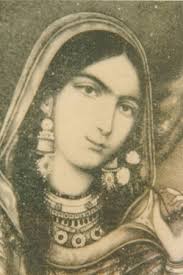
Begum Hazrat Mahal
Freedom Fighters | 1820 - 07 April 1879
"Begum Hazrat Mahal was one of the most courageous female leaders of the Revolt of 1857. As the queen of Awadh, she led a determined resistance against British rule after the annexation of her kingdom and became a symbol of bravery, leadership, and patriotism."
Born
1820Birthplace
Faizabad, Awadh (Oudh), British India (Present-day Uttar Pradesh, India)Died
07 April 1879Place of Death
Kathmandu, NepalNationality
IndianGender
FemaleBegum Hazrat Mahal Biography
Begum Hazrat Mahal was one of the most remarkable women leaders of India's early resistance against British colonial rule. As the queen of the Kingdom of Awadh, she played a vital role in the Revolt of 1857 and emerged as a symbol of courage, leadership, and patriotism. Her determination to defend her kingdom and her people made her one of the most celebrated heroines of Indian history.
Early Life
Begum Hazrat Mahal was born around 1820 in Faizabad, Awadh. Her birth name is believed to have been Muhammadi Khanum. Coming from a humble background, she later entered the royal court of Awadh and eventually became one of the wives of Nawab Wajid Ali Shah.
Due to her intelligence, leadership qualities, and strong character, she earned the title "Hazrat Mahal" and became one of the most influential women in the Awadh court.
Marriage and Royal Life
Begum Hazrat Mahal was married to Nawab Wajid Ali Shah, the last ruler of Awadh. The kingdom was known for its cultural richness, art, music, and literature.
She gave birth to a son, Birjis Qadr, who later played an important role during the Revolt of 1857.
Annexation of Awadh
In 1856, the British East India Company annexed the Kingdom of Awadh under the leadership of Governor-General Lord Dalhousie. The British accused the Nawab of misgovernance and removed him from power.
Nawab Wajid Ali Shah was exiled to Calcutta (now Kolkata), but Begum Hazrat Mahal refused to accept British control over her homeland.
The annexation created widespread resentment among nobles, soldiers, farmers, and ordinary citizens throughout Awadh.
Role in the Revolt of 1857
When the Revolt of 1857 broke out, Begum Hazrat Mahal emerged as a key leader of the uprising in northern India. She took charge of resistance efforts in Lucknow and rallied supporters against British rule.
Displaying exceptional courage and political skill, she organized local leaders, soldiers, and citizens to defend Awadh.
Her leadership transformed Lucknow into one of the most important centers of resistance during the revolt.
Proclamation of Birjis Qadr
To restore the authority of the Awadh royal family, Begum Hazrat Mahal declared her young son, Birjis Qadr, as the ruler of Awadh.
She effectively governed the kingdom as regent and supervised military and administrative affairs during the rebellion.
This move strengthened the legitimacy of the resistance and inspired support from various sections of society.
Leadership in Lucknow
Begum Hazrat Mahal played a central role in organizing the defense of Lucknow against British forces. She coordinated military operations and worked closely with rebel leaders and local commanders.
Her efforts helped sustain resistance for a significant period despite the superior resources and military strength of the British army.
She became widely respected for her determination and ability to unite people from different backgrounds under a common cause.
Opposition to British Policies
Begum Hazrat Mahal strongly criticized British policies in India. She opposed colonial interference in Indian political, religious, and cultural affairs.
She also defended the rights of her people and promoted unity among different religious communities during the struggle.
Her leadership demonstrated a commitment to protecting both political independence and social harmony.
Retreat and Exile
As British forces gradually regained control over Awadh, Begum Hazrat Mahal continued resistance for as long as possible. Eventually, overwhelming military pressure forced her to leave Lucknow.
She sought refuge in Nepal, where she spent the remainder of her life in exile. Despite her difficult circumstances, she refused to surrender to British authorities.
Her steadfastness earned admiration among supporters of the independence movement.
Death
Begum Hazrat Mahal passed away on 7 April 1879 in Kathmandu, Nepal. Although she died far from her homeland, her contributions to India's freedom struggle ensured that her legacy would continue.
Legacy
Begum Hazrat Mahal is remembered as one of the most courageous women of the Revolt of 1857. Her leadership challenged British authority and demonstrated the important role women played in India's struggle against colonial rule.
She remains an enduring symbol of bravery, sacrifice, and resistance.
Honours and Recognition
- Recognized as one of the foremost female leaders of the Revolt of 1857.
- Begum Hazrat Mahal Park in Lucknow was named in her honor.
- The Government of India issued a commemorative postage stamp in her memory.
- Remembered as a symbol of women's leadership and patriotism.
- Celebrated as a heroine of India's early freedom movement.
Historical Significance
Begum Hazrat Mahal's role in the Revolt of 1857 highlights the contribution of women to India's freedom struggle. Her ability to govern, organize resistance, and inspire people during a period of crisis distinguished her among the leaders of the uprising.
Her actions helped keep alive the spirit of independence and opposition to colonial domination.
Conclusion
Begum Hazrat Mahal dedicated herself to defending Awadh and resisting British rule during one of the most challenging periods in Indian history. Through her courage, leadership, and unwavering commitment to freedom, she became one of the most respected heroines of the Indian independence movement. Her legacy continues to inspire generations with the values of patriotism, resilience, and determination.
Comments & Tribute (0)