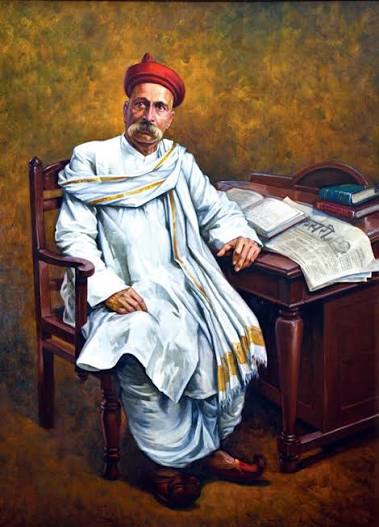
Bal Gangadhar Tilak
Freedom Fighters | 23 July 1856 - 01 August 1920
"Bal Gangadhar Tilak was one of the earliest and most influential leaders of India's freedom struggle. Popularly known as "Lokmanya Tilak," he awakened national consciousness among Indians and championed the cause of Swaraj (self-rule), earning recognition as the "Father of Indian Unrest.""
Born
23 July 1856Birthplace
Ratnagiri, Bombay Presidency, British India (Present-day Maharashtra, India)Died
01 August 1920Place of Death
Bombay, Bombay Presidency, British India (Present-day Mumbai, Maharashtra, India)Nationality
IndianGender
MaleBal Gangadhar Tilak Biography
Bal Gangadhar Tilak, popularly known as Lokmanya Tilak, was one of the most prominent leaders of India's freedom struggle. A fearless nationalist, journalist, teacher, and political reformer, Tilak played a vital role in awakening the spirit of nationalism among Indians. His famous declaration, "Swaraj is my birthright and I shall have it," became a powerful slogan of the Indian independence movement.
Early Life and Family
Bal Gangadhar Tilak was born on 23 July 1856 in Ratnagiri, Maharashtra. His father, Gangadhar Ramchandra Tilak, was a respected teacher and Sanskrit scholar. From a young age, Tilak displayed exceptional intelligence, honesty, and a strong sense of justice.
He grew up in an environment that valued education and Indian cultural traditions. These influences played an important role in shaping his future as a nationalist leader.
Education
Tilak completed his education in Pune and earned a Bachelor's degree in Mathematics from Deccan College. He later obtained a law degree and became known for his intellectual abilities and dedication to education.
He believed that education was essential for national awakening and social progress. His ideas encouraged Indians to develop self-confidence and pride in their cultural heritage.
Contribution to Education
In 1880, Tilak co-founded the New English School in Pune. He later helped establish the Deccan Education Society, which aimed to provide quality education to Indian students.
Through these institutions, Tilak sought to create a generation of educated Indians committed to serving the nation and promoting self-rule.
Journalism and Public Awareness
Tilak was a powerful journalist who used newspapers to spread nationalist ideas. He founded and edited two influential newspapers:
- Kesari (Marathi)
- The Mahratta (English)
Through his writings, he criticized British policies and encouraged Indians to stand up for their rights. His newspapers became important platforms for political awareness and national unity.
Promotion of Nationalism
Tilak believed that political freedom was necessary for India's progress. He organized public celebrations of Ganesh Utsav and Shivaji Jayanti to unite people and strengthen national pride.
These events transformed religious and cultural gatherings into platforms for social awareness and patriotic activities.
Role in the Indian National Congress
Bal Gangadhar Tilak became one of the leading figures in the Indian National Congress. He advocated a more assertive approach toward British rule compared to the moderate leaders of the time.
He was part of the famous trio known as Lal-Bal-Pal, consisting of Lala Lajpat Rai, Bal Gangadhar Tilak, and Bipin Chandra Pal. Together, they inspired Indians to demand greater political rights and self-government.
Swaraj Movement
Tilak was among the first national leaders to openly demand Swaraj, or self-rule, for India. He believed that Indians should govern themselves and not remain dependent on colonial authorities.
His powerful slogan, "Swaraj is my birthright and I shall have it," motivated countless Indians to join the independence movement.
Imprisonment in Mandalay
Due to his nationalist activities and criticism of British rule, Tilak was arrested several times. In 1908, he was sentenced to six years of imprisonment and deported to Mandalay in Burma (present-day Myanmar).
While in prison, he wrote his famous work Gita Rahasya, in which he interpreted the Bhagavad Gita as a call to duty, action, and selfless service.
Home Rule Movement
After his release from prison, Tilak continued to advocate for Indian self-government. In 1916, he launched the Home Rule Movement, demanding greater autonomy for Indians within the British Empire.
The movement gained widespread support and significantly strengthened the demand for independence across the country.
Social and Political Philosophy
Tilak emphasized national unity, self-reliance, education, and political participation. He encouraged Indians to take pride in their history and culture while actively working toward national progress.
His ideas inspired future leaders, including Mahatma Gandhi and many other freedom fighters who carried forward the struggle for independence.
Death
Bal Gangadhar Tilak passed away on 1 August 1920 in Bombay (now Mumbai). His death was mourned by millions of Indians who regarded him as one of the greatest leaders of the nationalist movement.
Legacy
Lokmanya Tilak is remembered as one of the pioneers of India's freedom struggle. His fearless leadership, patriotic writings, and unwavering commitment to Swaraj helped lay the foundation for future independence movements.
His contributions continue to inspire generations of Indians dedicated to democracy, national unity, and public service.
Honours and Recognition
- Popularly known as "Lokmanya," meaning "Accepted by the People."
- Remembered as one of the earliest champions of Indian self-rule.
- Recognized as a leading nationalist and freedom fighter.
- His slogan on Swaraj remains one of the most famous statements in Indian history.
- Numerous institutions, roads, and public places across India are named in his honor.
Conclusion
Bal Gangadhar Tilak dedicated his life to education, social reform, and India's struggle for freedom. Through his leadership, journalism, and nationalist vision, he inspired millions to work toward self-rule and national unity. His enduring legacy continues to make him one of the most respected figures in Indian history.
Comments & Tribute (1)