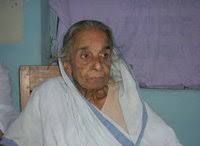
Annapurna Maharana
Freedom Fighters | 3 November 1917 - 31 December 2012
"Annapurna Maharana was one of Odisha's most prominent women freedom fighters and social activists. The daughter of freedom fighters Rama Devi Choudhury and Gopabandhu Choudhury, she dedicated her life to India's freedom struggle, women's empowerment, tribal welfare, and Gandhian social reform movements."
Born
3 November 1917Birthplace
Odisha, IndiaDied
31 December 2012Place of Death
Cuttack, Odisha, IndiaNationality
IndianGender
FemaleAnnapurna Maharana Biography
Annapurna Maharana was one of Odisha's most respected women freedom fighters, Gandhian activists, and social reformers. She devoted her life to India's independence movement and later to social causes such as tribal welfare, women's empowerment, education, rural development, and humanitarian service.
Born into a family deeply involved in India's freedom struggle, Annapurna inherited the values of sacrifice, patriotism, and public service from her parents. Throughout her life, she remained committed to Gandhian principles and worked tirelessly for the welfare of poor and marginalized communities.
Her contributions extended far beyond the independence movement and made her one of the most admired social workers in Odisha.
Early Life and Family Background
Annapurna Maharana was born on 3 November 1917 as Annapurna Choudhury in Odisha.
She was the second child of the renowned freedom fighters Rama Devi Choudhury and Gopabandhu Choudhury.
Growing up in a family dedicated to national service, Annapurna was exposed from childhood to discussions about freedom, social reform, and public welfare.
The atmosphere of patriotism and sacrifice profoundly influenced her personality and future path.
Childhood in a Freedom Fighter Family
Unlike many children of her generation, Annapurna's upbringing was closely connected with nationalist activities and Gandhian ideals.
Her parents frequently participated in political campaigns and social service programs.
As a result, she learned the values of simplicity, honesty, self-reliance, and dedication to society from an early age.
These lessons shaped both her role in the independence movement and her lifelong social work.
Education and Gandhian Training
Annapurna did not follow a conventional educational path through government institutions. Her education largely took place at home and in Gandhian ashrams.
She received training in self-reliance, moral education, community service, spinning, and village development.
She also developed a deep understanding of Indian culture, spirituality, and social responsibility.
This unique education prepared her for active participation in public life.
Influence of Mahatma Gandhi
Mahatma Gandhi played a significant role in shaping Annapurna Maharana's thinking and life philosophy.
She became a devoted follower of Gandhian principles including truth, non-violence, simplicity, and service to humanity.
Her admiration for Gandhi inspired her to dedicate herself fully to national and social causes.
The influence of Gandhian ideals remained visible throughout her long public career.
Entry into the Freedom Movement
Annapurna began participating in freedom movement activities during her teenage years.
Inspired by the political environment around her, she actively supported campaigns organized by nationalist leaders.
She contributed to constructive programs and helped mobilize public support for India's independence.
Her youthful enthusiasm combined with strong ideological commitment made her an effective activist.
Harijan Pada Yatra with Gandhi
One of the most memorable events in Annapurna Maharana's early life was her participation in Mahatma Gandhi's Harijan Pada Yatra in Odisha during 1934.
She accompanied Gandhi during the march from Puri to Bhadrak, helping spread messages against untouchability and promoting social equality.
The journey strengthened her commitment to social reform.
It also provided valuable exposure to Gandhian methods of public engagement and community service.
Role in Social Awareness Campaigns
Even before the Quit India Movement, Annapurna actively participated in campaigns promoting khadi, hygiene, literacy, and social reform.
She worked among villagers and encouraged self-reliance and community participation.
Her programs reflected the belief that social progress and political freedom were closely connected.
These activities helped build support for national development initiatives.
Quit India Movement
During the Quit India Movement of 1942, Annapurna Maharana intensified her participation in the freedom struggle.
She helped organize resistance activities and encouraged people to oppose British rule through peaceful means.
Her commitment to the movement attracted the attention of colonial authorities.
Like many freedom fighters, she faced arrest and persecution because of her activism.
Arrests and Sacrifices
Annapurna Maharana was arrested several times by British authorities because of her involvement in nationalist activities.
These arrests did not weaken her determination. Instead, they strengthened her resolve to continue working for freedom.
She accepted imprisonment as part of the larger struggle for India's independence.
Her courage earned admiration among fellow activists and national leaders.
Marriage and Continued Public Service
Annapurna married Sharat Chandra Maharana, a respected educationist and social worker.
Their shared commitment to education and social reform strengthened her public service activities.
Together they supported initiatives focused on human development and community welfare.
Their partnership reflected Gandhian ideals of service-oriented family life.
Work for Women's Empowerment
After independence, Annapurna Maharana dedicated considerable attention to women's rights and empowerment.
She supported educational opportunities, leadership development, and greater social participation for women.
She worked to improve living conditions and opportunities for women, especially in rural and underprivileged communities.
Her efforts contributed significantly to social progress in Odisha.
Education for Tribal Communities
One of Annapurna's most important post-independence contributions was her work among tribal communities.
She established educational initiatives for tribal children and promoted literacy in remote areas.
She believed that education was essential for empowerment and long-term development.
Her programs benefited many children who otherwise lacked access to educational opportunities.
Participation in the Bhoodan Movement
Annapurna Maharana became actively involved in Vinoba Bhave's Bhoodan Movement.
The movement encouraged voluntary land donation to support economic justice and social equality.
Her commitment to the movement reflected her concern for the welfare of landless and disadvantaged people.
She viewed constructive reform as a continuation of the freedom struggle.
Humanitarian Work
Throughout her life, Annapurna participated in numerous humanitarian activities focused on education, social welfare, and community development.
She believed that service to vulnerable populations was one of the highest forms of patriotism.
Her projects addressed practical needs while promoting dignity and self-reliance.
These activities enhanced her reputation as a compassionate social worker.
Role During the Emergency
During the Emergency period in India, Annapurna Maharana continued supporting democratic values and civil liberties.
She worked alongside senior leaders who opposed restrictions on public freedoms.
Her activism during this period demonstrated her long-standing commitment to democratic principles.
Even decades after independence, she remained deeply engaged in public affairs.
Awards and Recognition
Annapurna Maharana received numerous honors and recognitions during her lifetime for her contributions to society.
Educational institutions and public organizations acknowledged her dedication to freedom, social reform, and humanitarian service.
She was awarded honorary degrees and several prestigious recognitions.
These honors reflected the respect she had earned across India.
Legacy and Historical Importance
Annapurna Maharana occupies a distinguished place among Odisha's women freedom fighters and social reformers.
Her life connected two important chapters of Indian history: the struggle for political independence and the effort to build a more just society after freedom.
Her work in education, tribal welfare, women's empowerment, and Gandhian activism continues to inspire future generations.
Today she is remembered as a symbol of courage, compassion, service, and social responsibility.
Interesting Facts About Annapurna Maharana
- She was the daughter of freedom fighters Rama Devi and Gopabandhu Choudhury.
- She began participating in nationalist activities at a very young age.
- She joined Mahatma Gandhi's Harijan Pada Yatra in Odisha.
- She was arrested several times during the freedom movement.
- She actively supported the Quit India Movement.
- She worked extensively for women and tribal communities.
- She participated in Vinoba Bhave's Bhoodan Movement.
- She remained active in social reform throughout her life.
Frequently Asked Questions (FAQs)
Who was Annapurna Maharana?
Annapurna Maharana was a freedom fighter, Gandhian activist, women's rights advocate, and social reformer from Odisha.
Who were Annapurna Maharana's parents?
Her parents were the renowned freedom fighters Rama Devi Choudhury and Gopabandhu Choudhury.
Did Annapurna Maharana participate in the Quit India Movement?
Yes, she actively participated in the Quit India Movement and faced arrest for her activities.
What social work did Annapurna Maharana do?
She worked for women's empowerment, tribal education, child welfare, rural development, and social justice.
Why is Annapurna Maharana important?
She bridged the freedom struggle and post-independence social reform through lifelong commitment to public service.
Conclusion
Annapurna Maharana dedicated her life to freedom, service, and social justice. As a freedom fighter, Gandhian activist, and humanitarian leader, she made lasting contributions to Odisha and India. Her commitment to women, children, tribal communities, and democratic values continues to inspire generations. She remains one of Odisha's most respected daughters and an enduring symbol of selfless public service.
Comments & Tribute (0)