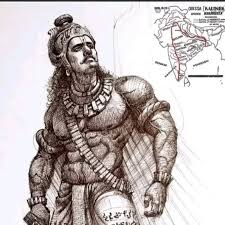
Personal Information
- Place of Birth: 3rd–2nd century BCE (exact dates unknown), Kalinga region (Eastern India, present-day Odisha)
- Place of Death: Dates not recorded (ancient kings; only dynastic records survive), Kalinga (Eastern India)
- Occupation: Maharaja
Summary
Biography
The Mahameghavahana dynasty was one of the earliest and most influential royal families of ancient Kalinga (modern Odisha).
While the most famous ruler of this dynasty was Emperor Kharavela, the early chiefs laid the foundation of this dynasty long before him.
These early kings ruled Kalinga during a time when the region was recovering from the devastation of the Kalinga War (261 BCE) fought against Emperor Ashoka.
Their governance restored Kalinga’s pride, culture, and political identity.
Origins of the Mahameghavahana Dynasty
The dynasty's name Mahameghavahana means:
“He who is carried by great clouds”
or
“The one with the majestic cloud-chariot”
This symbolizes divine or celestial lineage, common in ancient Indian dynasties.
Early chiefs descended from a prestigious Kalinga royal lineage known for:
- Courage
- Naval trade
- Cultural patronage
They were the rebuilders of Kalinga after Ashoka’s invasion.
Rise of the Early Mahameghavahana Chiefs
After the Kalinga War:
- The region lost sovereignty temporarily.
- Ashoka’s Mauryan rule controlled Kalinga for a few decades.
- After the decline of Mauryas (around 185 BCE), local chiefs reclaimed independence.
The early Mahameghavahana chiefs emerged during this transitional period.
Their Contributions:
- Rebuilt destroyed cities
- Restored ports and maritime trade
- Revived local governance
- Promoted Jainism and pre-Vedic traditions
- Strengthened Kalinga’s identity
They laid the political base later expanded by Kharavela.
Political Structure
The early chiefs governed:
- Kalinga (coastal)
- Utkala (northern region)
- Mahakantara (hilly forests)
Their rule was decentralized yet prosperous.
Administration & Culture
1. Economic Revival
They revived:
- Ports
- Maritime trade
- River-based commerce
- Agriculture and iron industries
2. Religious Patronage
They encouraged:
- Jainism
- Local tribal faiths
- Early Hindu traditions (Shaivism)
This cultural mix later deeply influenced Kalinga architecture.
3. Art and Architecture
The early chiefs contributed to:
- Early cave shelters
- Local temple traditions
- Rudimentary rock-cut structures that later inspired Udayagiri-Khandagiri caves.
Legacy
The greatest legacy of the early Mahameghavahana chiefs is:
They paved the way for the rise of Emperor Kharavela,
one of the greatest kings in Indian history.
Under them:
- Kalinga regained autonomy
- Its culture flourished
- Its maritime supremacy returned
Their dynasty became the backbone of Eastern India’s political resurgence.
Relation to Emperor Kharavela
The Hathigumpha Inscription mentions:
Kharavela was the descendant of the Mahameghavahana family.
This confirms:
- The dynasty existed long before Kharavela
- Early chiefs formed the royal background for his rise
- They restored Kalinga’s identity after the Ashokan conquest
Thus, Kharavela inherited a kingdom revived by these early rulers.
Historical Limitations
Because they ruled in an ancient era (possibly 300–200 BCE), details such as:
- Exact names
- Chronology
- Birth/death places
- Family details
are not preserved in inscriptions.
Only the dynastic identity is known.
Conclusion
The Mahameghavahana Kings (Early Chiefs) played a foundational role in shaping early Kalinga’s political and cultural landscape.
Their rule marked the revival of Kalinga after the Ashokan invasion and created the conditions for the rise of the empire under Kharavela.
They stand as silent architects of an era that influenced:
- Eastern India's heritage
- Jain culture
- Maritime trade
- Temple traditions