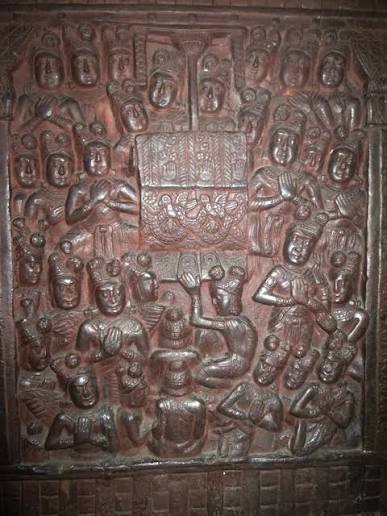
Ajatashatru
Ancient India | c. 525 BCE - c. 460 BCE
"Ajatashatru was one of the most powerful rulers of ancient India and a king of the Haryanka Dynasty. He expanded the Magadha Kingdom through military conquests and strategic governance, laying the foundation for Magadha's rise as the dominant power in northern India. He is also remembered for his association with Buddhism and Jainism."
Born
c. 525 BCEBirthplace
Rajagriha (Rajgir), Magadha Kingdom, Ancient India (Present-day Bihar, India) Date Of Death: c. 460 BCEDied
c. 460 BCEPlace of Death
Rajagriha (Rajgir), Magadha Kingdom (Present-day Bihar, India)Nationality
Magadhan (Ancient Indian)Gender
MaleAjatashatru Biography
Ajatashatru was one of the most influential rulers of ancient India and a prominent king of the Haryanka Dynasty. He succeeded his father, King Bimbisara, and transformed the Kingdom of Magadha into the most powerful state of northern India. Through military strength, strategic planning, and administrative reforms, Ajatashatru laid the groundwork for the future expansion of the Magadhan Empire.
Early Life
Ajatashatru was born around 525 BCE and was the son of King Bimbisara, the renowned ruler of Magadha. He was raised in the royal court of Rajagriha and trained in warfare, governance, diplomacy, and administration from an early age.
Historical accounts from Buddhist and Jain traditions provide valuable information about his life and reign.
Accession to the Throne
Ajatashatru's rise to power remains one of the most debated episodes in ancient Indian history. According to several historical and religious sources, he imprisoned his father, Bimbisara, and later assumed the throne of Magadha.
Although the exact details differ among traditions, Ajatashatru eventually became the ruler of one of the most prosperous kingdoms in India.
Expansion of the Magadha Kingdom
After becoming king, Ajatashatru focused on expanding Magadha's territorial influence. His reign was marked by several successful military campaigns that significantly strengthened the kingdom.
He pursued aggressive policies against neighboring states and worked to establish Magadha as the dominant political power in northern India.
War with Kosala
One of the major conflicts during Ajatashatru's reign was the war with the Kingdom of Kosala. The dispute centered on the region of Kashi, which was strategically and economically important.
After prolonged fighting, peace was established, and Magadha emerged stronger. This victory increased Ajatashatru's influence and prestige among neighboring kingdoms.
Conquest of the Vajji Confederacy
Ajatashatru is best known for his long and difficult war against the Vajji Confederacy, a powerful alliance of republican states led by the Licchavis.
The conflict lasted for many years and required both military force and diplomatic strategies. Ajatashatru employed innovative tactics to weaken the confederacy and ultimately secured victory.
The conquest greatly expanded Magadha's territory and established it as the most powerful kingdom in northern India.
Military Innovations
Ajatashatru introduced several military innovations that enhanced the effectiveness of his army.
- Use of fortified war chariots.
- Development of advanced siege weapons.
- Strengthening of military infrastructure.
- Improved defensive fortifications.
These innovations contributed significantly to his military successes.
Administrative Reforms
In addition to warfare, Ajatashatru focused on administrative efficiency. He strengthened central authority, improved revenue collection, and ensured better governance across his kingdom.
His policies increased economic prosperity and enabled Magadha to sustain its growing military and administrative systems.
Association with Buddhism
Ajatashatru is closely associated with the history of Buddhism. Although his early actions were criticized in Buddhist texts, he later became a supporter of Gautama Buddha and his teachings.
After the Buddha's death, Ajatashatru is believed to have supported the First Buddhist Council, held at Rajagriha. This council played a crucial role in preserving and organizing Buddhist teachings.
Association with Jainism
Ajatashatru also maintained connections with Jainism and is mentioned in Jain literature as a contemporary of Lord Mahavira.
His reign reflected the religious diversity of ancient India, where different philosophical and spiritual traditions flourished side by side.
Capital and Development
Rajagriha remained the capital during much of Ajatashatru's reign. The city developed as a major center of politics, trade, and religion.
Some historical sources also credit him with strengthening the fortifications of Pataligrama, a settlement that later evolved into Pataliputra, one of the greatest cities in ancient India.
Death
Ajatashatru died around 460 BCE after a successful reign that lasted several decades. He was succeeded by his son and left behind a powerful and expanded kingdom.
Legacy
Ajatashatru is remembered as one of the most successful kings of ancient India. His military victories, administrative reforms, and territorial expansion transformed Magadha into the dominant political power of the region.
The foundations established during his reign paved the way for later dynasties and the rise of great empires, including the Mauryan Empire.
Historical Significance
Historians regard Ajatashatru as a key architect of Magadha's growth. His victories over powerful rivals enabled Magadha to emerge as the center of political authority in ancient India.
His interactions with Buddhism and Jainism also make him an important figure in the religious history of the Indian subcontinent.
Honours and Recognition
- One of the greatest rulers of the Haryanka Dynasty.
- Conqueror of the Vajji Confederacy.
- Key figure in the expansion of Magadha.
- Associated with the First Buddhist Council.
- Remembered as one of the most powerful kings of Ancient India.
Conclusion
Ajatashatru was a visionary ruler whose military success, political leadership, and administrative reforms elevated Magadha to unprecedented heights. His contributions shaped the course of ancient Indian history and laid the foundations for future empires. As a conqueror, statesman, and patron of religious traditions, he remains one of the most significant figures of Ancient India.
Comments & Tribute (0)